The Power of Reciprocity: Growing Through Professional Communities in World Language Education

professional

by Carmen Reyes (LTL Contributor)

In the world of teaching, growth doesn’t happen in isolation—it happens in reciprocity.

Before writing this article, I found myself reflecting on a simple but powerful question: What does networking really mean to me as a World Language educator?

This reflection was sparked by a recent invitation from NNELL to participate in a networking session with fellow educators. As I prepared to share my thoughts, I realized I wasn’t just thinking about networking—I was reflecting on my journey.

On how my practice began to transform the moment I stepped into professional communities. It started with ACTFL and grew as I became more connected through NNELL, GWATFL, SCOLT, NECTFL along with other professional spaces that have shaped my path as an educator.
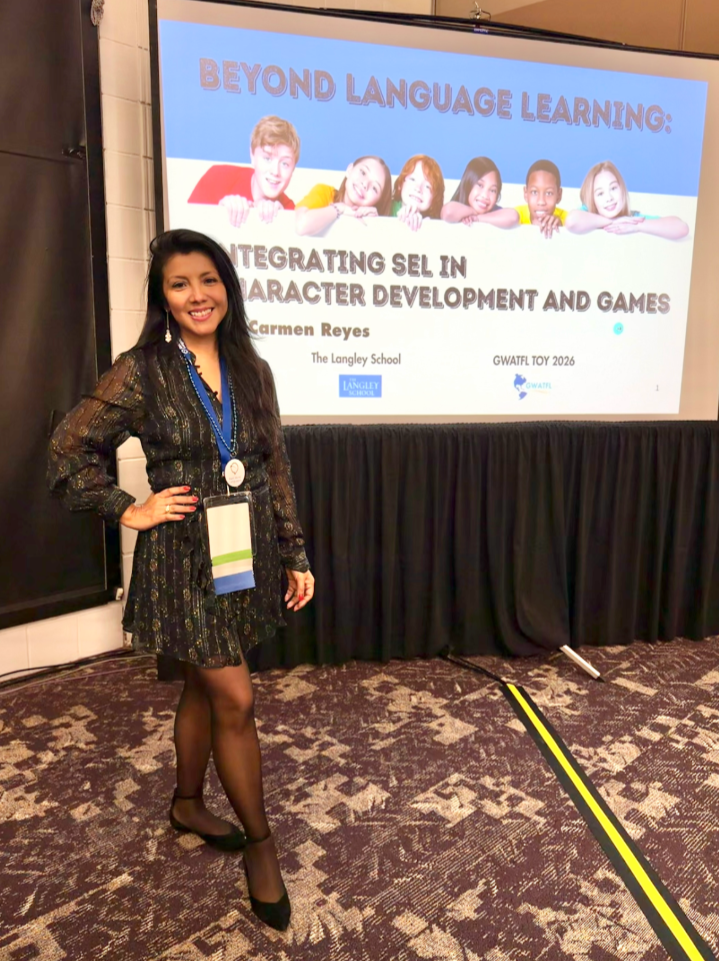
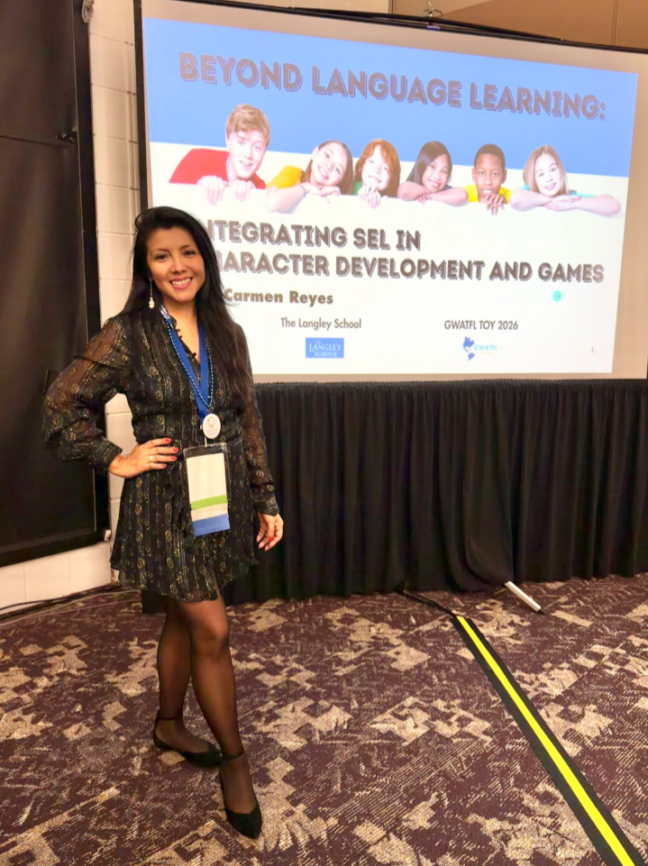
Photo 1: Presenting at ACTFL 2025 (New Orleans)

What once felt like simply “joining” organizations became something much deeper—something that shaped the way I teach, connect, and grow.

From Teaching Alone to Growing Together

I still remember what it felt like early in my career—closing my classroom door at the end of the day and wondering if what I was doing was enough.

I cared deeply about my students. I wanted them not only to learn Spanish, but to feel it—to connect, to communicate, to see themselves in the language.

And yet… something was missing.

I didn’t have a space to process my questions. I often found myself navigating challenges independently and searching for support.

That realization pushed me to seek spaces where I could grow—not alone, but alongside others. For me, professional organizations became the place where those doors opened.

When Your Questions Find an Echo

I remember attending sessions and thinking, “This is exactly what I’ve been wondering.”

I heard educators describe challenges that felt so familiar—the same questions I had been asking myself in silence.

And in that moment, something shifted. I realized that my questions were not mine alone.

They had an echo.

A Space to Learn… and to Give

What I did not expect was how much these communities would invite me not only to learn—but also to give.

At first, I was listening, observing, and absorbing: how to make input more meaningful, how to integrate culture in authentic ways, and how to create classrooms where students feel safe and confident.

But gradually, I began to share—how I used drama and play-based learning to build confidence, integrated music and storytelling to bring language to life, and designed experiences that connected students to real-world contexts and Spanish-speaking communities.

And something beautiful happened.

Other educators began to respond:

  • “I tried that.”
  • “That worked in my classroom.”
  • “That helped me rethink my approach.”

That’s when I understood the true power of these spaces. They are built on reciprocity.

We learn. We share. We support. We inspire.

And in doing so, we grow together!

Finding My Voice Through Community

Over time, being part of these organizations gave me something I didn’t even realize I needed: a professional voice.

I moved from attending… to presenting.

From listening… to contributing.

From learning… to leading.
Photo 2: After presenting on social-emotional learning at ACTFL 2025 (New Orleans) 

Through conferences, webinars, and collaborations, I had the opportunity not only to share my work, but to grow alongside other educators. 

These experiences transformed the way I see my role as an educator. They strengthened my commitment to creating learning experiences that go beyond language—experiences that foster connection, cultural understanding, and authentic communication.

A Recognition That Represents a Community

Along this journey, I experienced a deeply humbling moment: being recognized as a 2026 GWATFL Teacher of the Year. But what I have come to understand is that this recognition is not just about me.

It represents a community.

It carries the voices of teachers who are asking important questions, seeking support, navigating challenges, and showing up every day with dedication and care.

Within this recognition live the shared hopes of our profession:

  • the commitment to meaningful, student-centered instruction
  • the desire to teach with creativity, joy, and purpose
  • the need to feel supported, valued, and connected

With that recognition comes responsibility.

A responsibility to continue learning, sharing, and to advocate for our profession. And above all, to remain deeply connected to the educators who inspire this work every day.

It Always Comes Back to Our Students

Everything I have gained through these professional communities lives in my classroom—every day at The Langley School.

  • It lives in the way my students engage with language.
  • In the confidence they build when they speak.
  • In the connections they make between their lives and the world around them.
  • It lives in the joy.

Because when teachers are inspired, supported, and connected—students feel it.

An Invitation

If you are a World Language educator reading this, I invite you to step into a professional community—not because you have to, but because you deserve to grow alongside others.

Bring your questions, your ideas, and your voice.

You will discover that your experiences matter, that your challenges are shared, and that what you bring may be exactly what another educator needs. Because when educators connect, something powerful happens: we don’t just grow—we grow together.


How to Bring Real-World Context into Your Curriculum

real-world

by Carmen Reyes (LTL Contributor)

This article is based on one section of my presentation Embedding Real-World Context in Curricular Design, delivered at the Back to School ’25 Conference for Klett World Languages.

World language teachers everywhere share the same challenge: how do we make language authentic, relevant, and motivating for our students? While grammar drills and vocabulary lists may help students memorize forms, they rarely inspire them to use the language beyond the classroom walls.

One powerful solution is teaching through real-world contexts—placing students in situations where language is a tool for solving problems, connecting with others, and creating meaning. Instead of approaching language from the outside as a system of forms and rules, learners experience it from the inside out. 

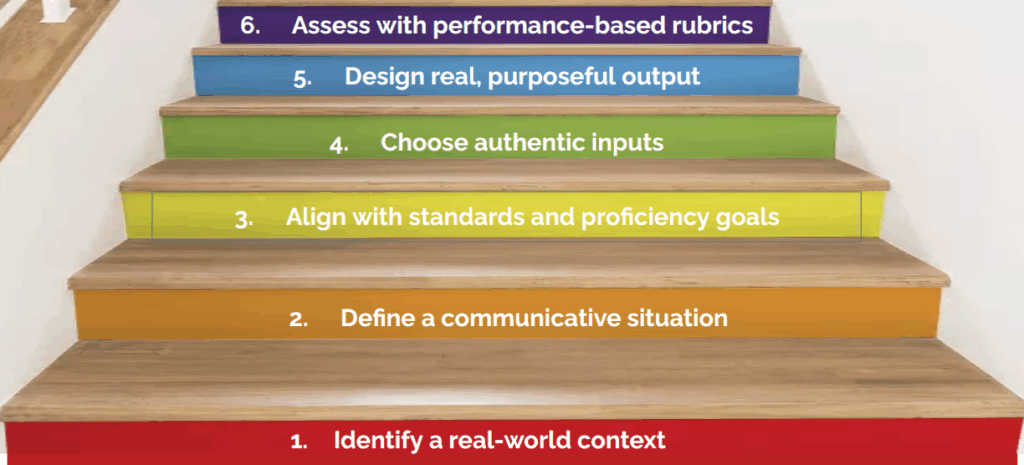
Based on my own experience designing curriculum, I have found that bringing real-world context into the classroom works best when I follow a clear process. Over time, I have designed six practical steps that help connect language learning to authentic situations while keeping lessons structured, engaging, and aligned with proficiency goals.

Let’s explore these six steps for bringing real-world context into your curriculum, using a concrete example: planning and shopping for a party at a grocery store.

Step 1. Identify a Real-World Context

Choose contexts that mirror life beyond school walls. A grocery store is a perfect fit: it’s universally familiar, culturally rich, and loaded with communicative possibilities.

Leverage authentic materials such as supermarket websites:

By working with authentic grocery websites, students see real products, real prices, and even cultural differences in shopping habits and food choices

Step 2. Define the Communicative Situation for a Real-World Context

Rather than passively learning vocabulary, students are placed inside a real-world problem:

“You and your classmates are planning a party. Using a budget, you must buy groceries in Spanish. What will you buy? How much can you spend? How do you ask for help at the store?”

This transforms the classroom into a simulation of real life where students:

  • Ask and answer questions about prices, quantities, and items.
  • Negotiate choices in pairs or small groups.
  • Use polite expressions (por favor, gracias, quisiera, necesito) to interact respectfully.
  • Manage a budget, reinforcing numbers and currency vocabulary.

The task is social, practical, and full of meaningful opportunities for language use.

Step 3. Align with Standards and Proficiency Goals

ACTFL Proficiency Guidelines (Novice–Intermediate):

  • Interpersonal Communication: Requesting grocery items, asking about prices.
  • Presentational Speaking: Performing a role-play or presenting a shopping plan.
  • Interpretive Reading/Listening: Understanding flyers, labels, or website content.
  • Grammar/Vocabulary in Context: Food, numbers, currency, verbs like querer and necesitar, and polite requests.

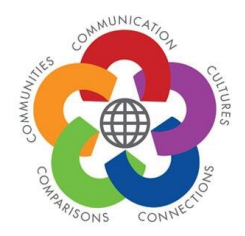
World-Readiness Standards for Learning Languages:

  • Communication: Real exchanges of needs and information.
  • Cultures: Understanding cultural practices of grocery shopping and celebrations.
  • Connections: Using authentic websites and media to link the classroom with the real world.
  • Comparisons: Seeing how shopping practices in the target culture differ from the students’ own.

Step 4. Choose Authentic Inputs for Real-World Context

Students thrive on real input because it shows them the living language, not a textbook version. Some ideas include:

  • Grocery websites with product images and prices.
  • Flyers or supermarket ads.
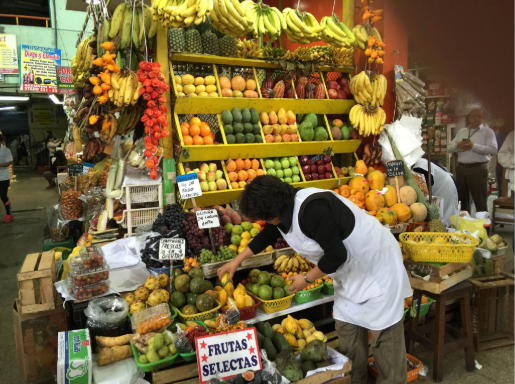
  • Photos/videos of open-air markets.
  • Party menus or packaging from authentic products.

These resources not only build vocabulary but also expose students to cultural perspectives—like why Peruvian markets might sell dozens of potato varieties or why French stores feature cheeses and wines.

Step 5. Design Real, Purposeful Output

Language acquisition sticks when learners produce something with meaning. In this case, students can:

  • Create a grocery list with items for a chosen type of party (birthday, picnic, holiday).
  • Write a short dialogue simulating a shopping interaction.
  • Role-play buying groceries, practicing questions and polite requests.
  • Present their “party plan” orally or in writing, justifying food choices.

Example:
“Para la fiesta de cumpleaños necesitamos un pastel, tres refrescos, y frutas. Compramos en Wong porque los precios son buenos.”

This output is purposeful, contextual, and fun—students are not just learning words, they’re planning a celebration in another language.

Step 6. Assess with Performance-Based Rubrics

Rather than focusing on grammar accuracy alone, measure success through communicative effectiveness. Criteria may include:

  • Use of target vocabulary (food, numbers, polite expressions).
  • Ability to ask/answer basic questions.
  • Collaboration and participation in the role-play.
  • Clarity in presenting their shopping plan.

A simple rubric with categories like Interpersonal Communication, Vocabulary Use, and Cultural Understanding keeps assessment meaningful and aligned with ACTFL.

Why This Works

When students learn through real-world contexts, they begin to see the target language as a living, breathing tool for communication. They gain confidence because they know what to say in a situation that feels real. At the same time, they’re exploring cultural practices and making connections to their own lives.

The grocery-store project illustrates how purpose, culture, and communication can come together in one unit:

  • Purpose: Plan and purchase for a real event (a party).
  • Culture: Explore food practices in Spanish- or French-speaking countries.
  • Communication: Use the language actively to solve problems and share ideas.

As teachers, our challenge is to open the classroom door to the world beyond, giving students the gift of authentic communication and the confidence that comes with it.