R.E.S.T. During Any Break 

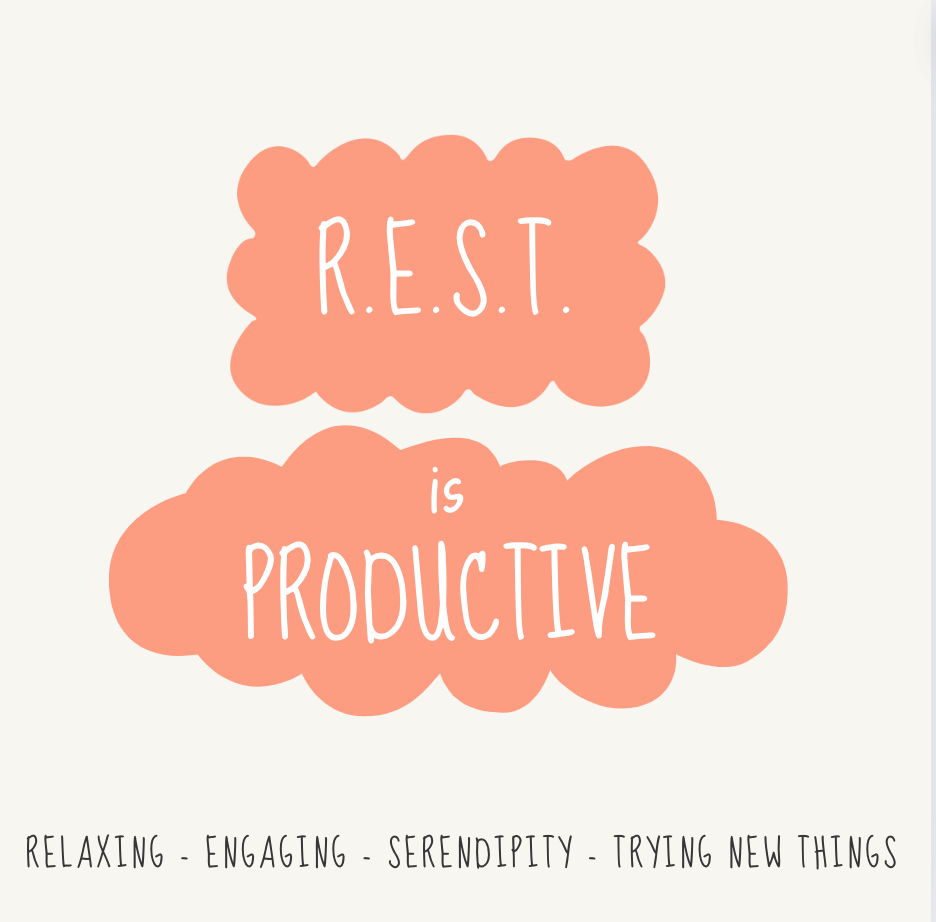
R.E.S.T.

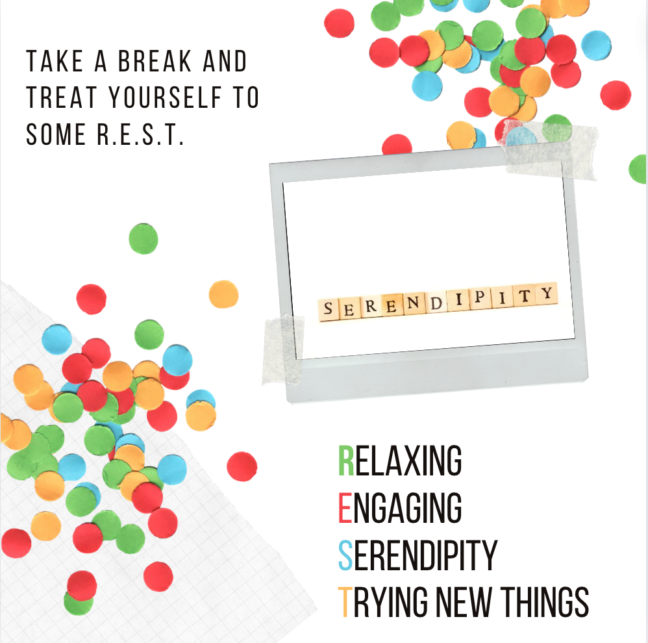
What’s your favorite part of a summer, winter or any break? For me, it’s all about R.E.S.T.

Yes, taking time to rest during a break is essential for my well being. While physical rest, like slowing down and having periods of inactivity is not only needed but also important, I’m referring here to a different kind of rest— R.E.S.T

The “R” is about Relaxing, Recharging, Renewing, and Reviewing my goals 

According to the Cambridge dictionary, relaxing is a “pleasant activity that makes you become calm and less worried.” When you unwind and set aside your duties, it’s easier to recharge and rethink what you want to accomplish next. It helps you organize your ideas and focus on what truly matters. During your next break, renew yourself and consider the big questions: What have I achieved so far? Where has it taken me? Where am I going?

The “E” in R.E.S.T. is about Engaging, Enjoying, and Evaluating

The Merriam Webster Dictionary defines engaging as “having emotional involvement or commitment.” When you are fully engaged, you enjoy what you are doing more and can evaluate your progress with a new light. This helps you find your purpose and move forward with clarity. 

The “S” is about Serendipity

As defined by the Cambridge dictionary, serendipity is “the fact of finding valuable things by chance.” Breaks are perfect times to discover unexpected treasures! I wrote about how ‘serendipity’ inspired me in “Professional and Personal Experiences Inform My Language Curriculum.” Whether meeting new people, visiting new places, or participating in professional learning communities these experiences can inspire you to do something different, thoughtful, and maybe also fun. You never know where your next inspiration will come from.

The “T” in R.E.S.T. is about Trying new things and Trusting yourself

I love learning and being with people, so visiting different places in good company is a must during breaks. Trying new things can open doors to new adventures!—whether it’s a walk on the beach, a visit to a new spot in town, listening to Calm, or tasting a new dish. Inspiration comes in many shapes and forms!

Have confidence in yourself. You’ll make the right choices and create lasting memories from your experiences. Trust yourself; you have it in you! 

Next time you are on a break, think R.E.S.T. You’ll return refreshed and ready for teaching with a new perspective.

La Influencia Árabe en la Lengua Española

https://euroidiomas.eu/

by Alonso Cano (LTL Contributor)

La lengua española, también conocida como castellano, es un reflejo vivo de la historia y la rica interacción cultural que ha tenido lugar en la península ibérica. Una de las influencias más significativas y duraderas en el español es la del árabe, una lengua que dejó una profunda huella durante los más de 700 años de presencia musulmana en España, desde el siglo VIII hasta el XV.

Según el filólogo español Rafael Lapesa, más de 4.000 palabras de nuestro léxico (incluidos los topónimos) provienen del árabe, lo que supone en torno a un 8 % del vocabulario total del castellano.

Contexto Histórico de la Influencia Árabe

La influencia árabe comenzó con la conquista musulmana de la península ibérica en el año 711 y se extendió durante la dominación de al-Ándalus, el territorio gobernado por musulmanes. Durante este periodo, hubo un intercambio cultural y lingüístico intenso entre los habitantes musulmanes y los cristianos y judíos que convivían en la región.

https://euroidiomas.eu/

Aportaciones Léxicas

El legado más evidente de esta convivencia es el vasto número de palabras de origen árabe que se han incorporado al español. Se estima que alrededor de 4.000 palabras en el español moderno tienen raíces árabes. Estas palabras abarcan diversas áreas del conocimiento y la vida cotidiana, reflejando la avanzada cultura y tecnología de al-Ándalus. Algunos ejemplos notables incluyen:

  • Almohada (al-mujadda): Refiriéndose al cojín o almohada.
  • Almendra (al-majroud): La fruta seca del almendro.
  • Aceituna (al-zaytūna): La fruta del olivo.
  • Algodón (al-qutn): Material textil obtenido de la planta de algodón.
  • Alcohol (al-kuḥl): Sustancia química que se encuentra en bebidas fermentadas.
  • Alcalde (al-qāḍī): Funcionario que preside un ayuntamiento.

Influencia Árabe en Términos Científicos y Técnicos

La influencia árabe es especialmente notable en términos científicos y técnicos. Durante la Edad Media, los eruditos musulmanes hicieron avances significativos en campos como la matemática, la astronomía, la medicina y la química. Muchas de las palabras relacionadas con estos campos provienen del árabe, como:

  • Azimut (al-sumūt): Término de navegación y astronomía.
  • Cero (ṣifr): Número que representa la nada.
  • Jirafa (zarāfa): El animal africano de cuello largo.
  • Química (al-kīmiyā): La ciencia que estudia la composición y propiedades de la materia.

Influencia Árabe en la Toponimia y la Nomenclatura

La presencia árabe también se refleja en los nombres de lugares. Muchos topónimos en España tienen origen árabe, como:

  • Guadalquivir (al-wādi al-kabīr): El gran río.
  • Guadalajara (wād al-ḥijāra): El valle de las piedras.
  • Almería (al-Marīyya): La atalaya o torre vigía.

Impacto en la Gramática y Fonética

Además del léxico, el árabe ha influido en la fonética y la sintaxis del español. Algunos sonidos presentes en el español, como la aspiración de la “h” en ciertas regiones, pueden rastrearse hasta la influencia árabe. Asimismo, la estructura de algunas expresiones y la incorporación de partículas como “ojalá” (inshallah, que significa “si Dios quiere”) reflejan esta herencia.

https://euroidiomas.eu/

Legado Cultural

Más allá de la lengua, la influencia árabe se extiende a la arquitectura, la música, la gastronomía y otras áreas de la cultura española. Este legado cultural enriquece y define la identidad única del mundo hispanohablante.

La Influencia Árabe

La influencia árabe en la lengua española es un testimonio de la rica historia de interacción y convivencia en la península ibérica. Este legado lingüístico no solo añade profundidad y riqueza al español, sino que también nos recuerda la importancia del intercambio cultural en la formación de las lenguas y las sociedades. Hoy, las palabras de origen árabe en el español son un puente hacia un pasado compartido y una celebración de la diversidad cultural.

la influencia árabe

¿Cuál es tu palabra favorita de influencia o raíz árabe? A nosotros nos gustan muchas… Aceite o gazpacho entre nuestras preferidas.


Euroidiomas Escuela de Idiomas de Úbeda

20 Decisiones por minuto / 20 Decisions per Minute

by Justa Rebollo Paz (LTL Contributor)

20 Decisiones por minuto /20 Decisions per minute

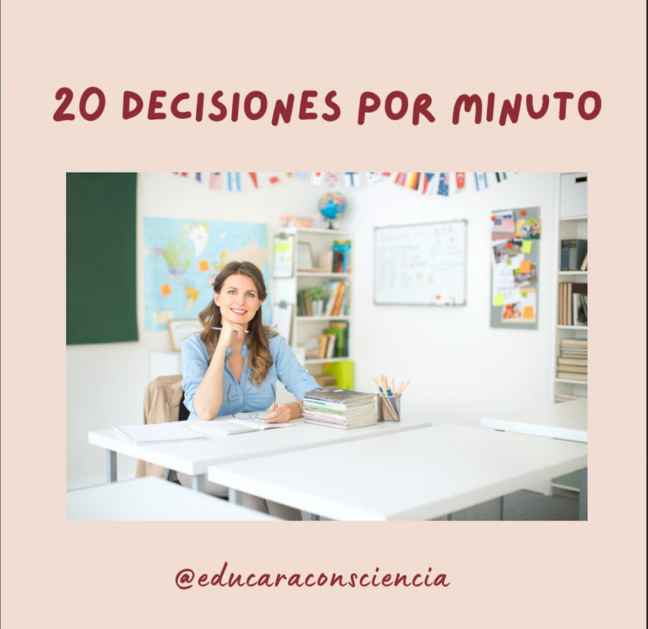
20 Decisiones por minuto

🤎 Débora Ball, de la Universidad de Michigan, afirma que los docentes toman un promedio de 20 decisiones en el lapso de un minuto y medio; y nos alerta sobre la necesidad de que éstas no queden libradas al azar, ya que de eso depende la calidad de lo que se enseñe.

🤎 De las decisiones que toma un docente en una clase, se calcula que el 97% se tomarán de forma rápida e inconsciente. 🤎Este tipo de decisiones, si bien son efectivas para resolver situaciones rápidas, son las más proclives a errores.

🤎 Muchas de ellas son decisiones pequeñas, de gestión en el aula, de motivar a ciertos alumnos de manera distinta que a otros, de intervenir frente a una situación disruptiva, de cambiar de estrategia cuando alguna no es suficiente, de tareas administrativas o de logística, de cómo transmitir conocimientos dejando que sus alumnos experimenten, planificación de actividades, cambio de voz, observaciones, etc.

🤎 Por otra parte la Dra. Bondie, profesora de la Escuela de Educación de la Universidad de Harvard, propone que los docentes analicen sus decisiones diarias, tomándose un tiempo para pensar en profundidad sobre las elecciones realizadas y los motivos que las llevaron a tomarlas.

🤎 Para esto es importante tener al día la planificación diaria o semanal.

🤎 Como directivos tenemos la responsabilidad de demandar y exigir la planificación, no solamente para supervisar y estar al tanto de lo que se hace, sino para colaborar con la efectividad y calidad de la enseñanza, y evitarles tanto estrés a los docentes.

🤎 La propuesta es que podamos reflexionar en cada comunidad educativa en la búsqueda individual y colectiva de mejora de nuestras decisiones en el aula, y en la escuela.


20 Decisions per Minute

🤎 Deborah Ball, from the University of Michigan, states that teachers make an average of 20 decisions in the span of a minute and a half; and alerts us to the need for them not to be left to chance, since the quality of what is taught/learned depends on that.

🤎 Of the decisions a teacher makes in a class, it is estimated that 97% will be made quickly and unconsciously. 🤎 These types of decisions, while effective in resolving quick situations, are the most prone to errors.

🤎 Many of them are small decisions: classroom management, motivating certain students differently than others, intervening in a disruptive situation, changing strategies when one is not enough, making tasks that are administrative in nature or about logistics, on how to transmit knowledge by letting your students experiment, activity planning, changing voices to grab students’ attention, observations, etc.

🤎 On the other hand, Dr. Bondie, a professor at the Harvard University School of Education at Harvard University, proposes that teachers analyze their daily decisions, taking time to think in depth about the choices made and the reasons that led them to making them.

🤎 For this, it is important to keep up with the daily or weekly planning.

🤎 As leaders we have the responsibility to demand and demand planning, not only to monitor and be aware of what is being done, but also to collaborate with the effectiveness and quality of teaching, thus, avoiding more stress to teachers.

🤎 The proposal is that we reflect in each educational community on the individual and collective quest to improve our decisions in the classroom, and at school.


El poder de la colaboración a través de murales colaborativos (in Spanish)

by Ramón Clavijo (LTL Contributor)

No vamos a descubrir nada nuevo si afirmamos que saber colaborar es fundamental para la formación integral de nuestros estudiantes 🤝. Sin embargo, a veces no es sencillo desarrollar y saber llevar esta idea a la práctica 🤔🤯.

Para conseguirlo, es preciso que los alumnos se impliquen en las distintas tareas y proyectos del aula. Y obtener tal implicación pasa, en primer lugar, por darles a conocer las diferentes herramientas colaborativas que la red pone a su disposición 🛠💻.

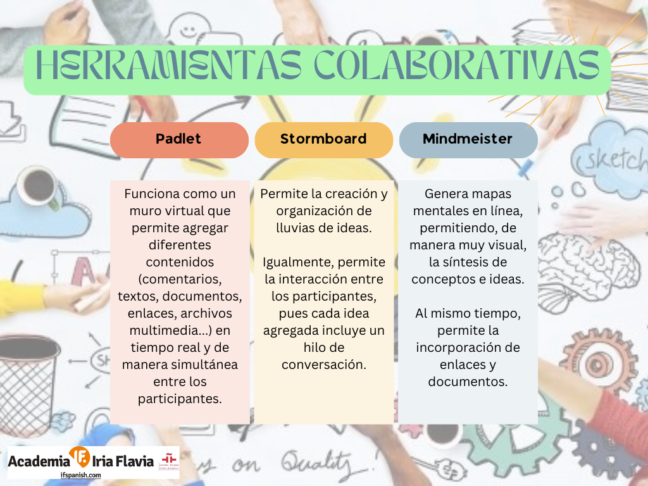
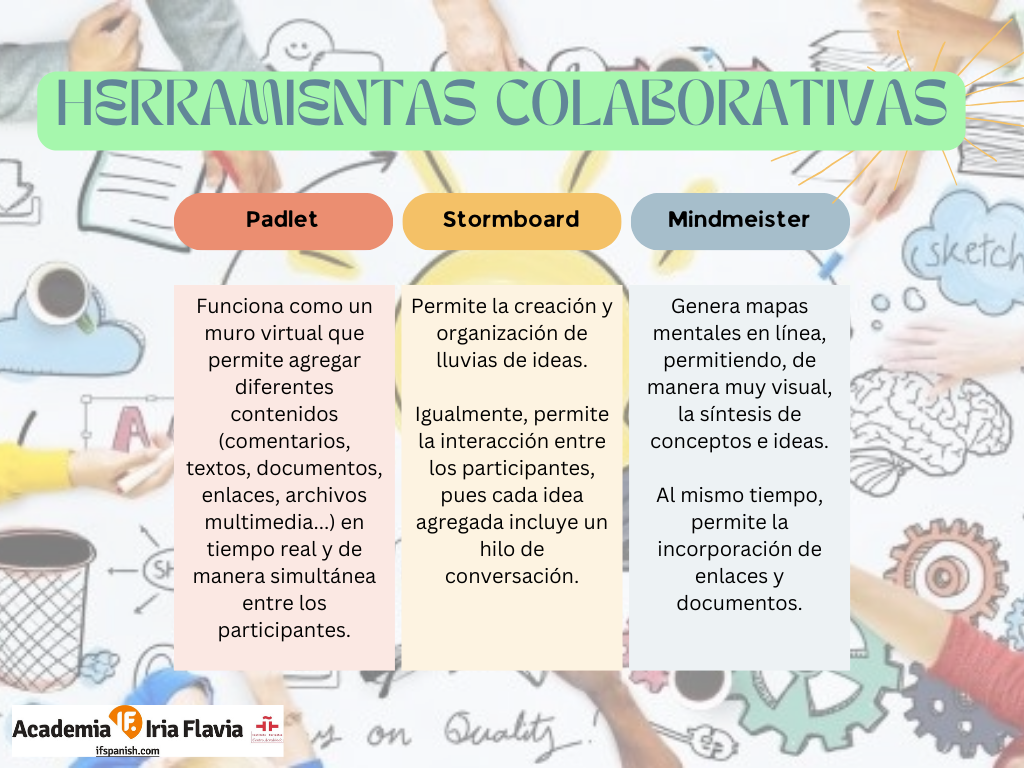
Hoy hablaremos de tres de ellas, que sin duda podrán servirte para que tus estudiantes puedan intercambiar puntos de vista respecto a la manera de enfocar las tareas que estén realizando en ese momento. Su rasgo en común es la idea de mural colaborativo ✏️🧱🖊, si bien cada una de ellas está “especializada” en un aspecto concreto de dicha colaboración. Todas ofrecen versiones gratuitas con restricciones en cuanto al uso de sus funcionalidades, que se pueden desbloquear accediendo a las versiones de pago 💳.

Plataformas de colaboración:

Padlet

👉 Así, por un lado, tenemos Padlet, quizás la más sencilla e intuitiva de las tres. Puedes asignar a cada grupo de trabajo un padlet desde el que podrán subir los resultados de sus investigaciones 📝, compartir recursos y enlaces 🔗 y comunicarse entre ellos y contigo 🗨.

Stormboard

👉 Si prefieres hacer mayor hincapié en las lluvias de ideas 🌧, tu plataforma es Stormboard, ya que está especialmente diseñada para ello. Con ella, podrás no solo plantear dichas tormentas de ideas ⛈️, sino también organizarlas y administrarlas (si bien las funcionalidades superiores están reservadas para las opciones de pago).

Mindmeister

👉 Y si lo tuyo son los mapas mentales 🗺💭, te recomendamos Mindmeister. En efecto, con esta última podrás generar mapas mentales en línea a partir de las aportaciones de tus alumnos. Se parte de una idea principal, desde la que se pueden crear subtemas ilimitados ♾️, que además se pueden ir enriqueciendo con archivos adjuntos 📎 o recursos multimedia 🔊🎞.

Además, la versatilidad de estas plataformas hace que no se ciñan a un contexto concreto. De esta manera, seguro que les encontrarás un hueco en cualquier punto de la secuenciación de tus clases: para introducir un tema, como repaso de contenidos ya trabajados o como actividad final.

Lograr la colaboración entre los estudiantes

Lo importante es hacer de ellas una herramienta con la que conseguir que tus estudiantes se impliquen en todas aquellas tareas que les propongas 🙋🏽🙋🏻‍♀️🙋🏻‍♂️.

El poder de la colaboración

Educator Wellness & Generative AI

Educator Wellness & Generative AI

by Noemí Rodríguez (LTL Contributor)

Wellness goes beyond simply being healthy – it’s the active pursuit of physical, social, emotional and mental well being. This can mean many different things – and ultimately, it comes down to what works for YOU! In my opinion, mindfulness is a key component of mental wellness and involves cultivating present-moment awareness without judgment of yourself and/or others. I appreciate and respect both the difficulty and clarity when practicing daily mindfulness. And now, at no cost, we can harness the power of Generative AI to assist us with our daily balancing act of all the things that consume our day to day and sometimes interfere with our wellness.

So how can Generative AI help educators gain wellness in their daily lives?

Large Language Model as Personal Assistant

First, a LLM (Large Language Model) can become your new personal assistant! There are many out there such as OpenAI’s ChatGPT, Google’s Gemini, Anthorpic’s Claude, or Microsoft’s CoPilot – they can prove to be very useful in both our personal and professional lives. By training your new assistant in learning YOU and your priorities- whether personal or professional- you are taking a necessary first step to allow this technology to begin to acclimate itself to you.

A simple way to connect is by asking your LLM of choice “Ask me twenty questions in getting to know me, my role in education and my focus for this school year.” Once you receive those questions and provide responses that are unique to you, the LLM will remember, recall and use this information going forward with the content that is uniquely designed for you. You are in the driver’s seat, controlling the outcome based on how you train the model.

Weekly Guidance & Planning for Wellness

If your home is anything like mine – there are many schedules to coordinate and a lot to keep track of, which can often cause stress and miscommunication. In tasking your LLM to assist you with coordinating schedules, consider a Sunday preparation system of communicating with your LLM, “what’s the best way to manage “x, y and z” this week based on these times and create a Monday to Friday schedule, in a table format with this information outlined” or “we have “x, y, z” in our fridge, plan out at least 5 evening meal recipes that are less than 20 minutes to make with these ingredients and consider the following dietary restrictions: _______.”

Whatever it is that you have on your horizon this coming week, see if a LLM can assist you with time management, planning and scheduling.

Coping Strategies & Self-Care for Wellness

That sudden feeling of overwhelm can take over quickly. Ultimately, it is always important to seek assistance from a mental health professional and check with them first. In a time crunch, when I feel unsure how to bring my anxiousness down in that present moment, I can ask ChatGPT for coping strategies for anxiety, stress, apprehension, etc. depending on what I am feeling. I can also ask ChatGPT to provide strategies for my own self-care.

For example, “Plan out at least three movement activities to help me take a five minute break at various points in my work day.” However, please remember to always check with your mental health professional before including ChatGPT suggestions in your strategy repertoire.

Meditations & Mindfulness for Wellness

Mindfulness is the basic human ability to be fully present, aware of where we are and what we’re doing, and not overly reactive or overwhelmed by what’s going on around us.” (Source: mindful.org) Mindfulness has positively impacted me in many ways. By setting up a Mindful Bot in a platform like Mizou– you can interact (or your students) and practice daily mindfulness in this space, without fear, judgment or criticism. Remember, a chatbot can be ANYONE, learn more in this previous blog post dedicated to chatbots.

Imagine being gently led through a meditation session, with a calming voice providing instructions to relax your body and focus your attention. That’s exactly what guided meditations can offer. I’ve always appreciated using apps like Calm, Headspace or Simple Habit.

With the help of ChatGPT and an AI recording, you can explore different techniques such as deep breathing, muscle relaxation, and visualization. Using an AI Tool such as TTS Maker or Narakeet – you can transform any text to speech, in multiple languages too. By first prompting ChatGPT to design a guided meditation “Create a five minute guided meditation for me that discusses the power of positive thinking and provides lots of breathing techniques.” Here is what Gemini designed for me, instantly.

Five-Minute Guided Meditation: Cultivating Positivity Through Breath

Find your calm: Settle into a comfortable position, sitting or lying down. Close your eyes or soften your gaze. Take a few moments to become aware of your breath and any sensations in your body.

Deep cleansing breaths: Inhale slowly and deeply through your nose, feeling your belly rise. Hold for a count of two, then exhale slowly through your mouth, releasing any tension. Repeat this breath three times, focusing on the rise and fall of your abdomen.

Breathing in positivity: Imagine yourself surrounded by a warm, golden light. With each inhale, picture this light filling your lungs and spreading throughout your body, replacing any negativity with confidence and peace. Exhale slowly, releasing any worries you might be holding. Repeat this breath visualization for a minute.

Positive affirmations: Silently repeat these affirmations with each inhale and exhale:

  • Inhale: “I am strong.” Exhale: “I am capable.”
  • Inhale: “I am worthy.” Exhale: “I am loved.”

Bringing it back: Gently bring your awareness back to the present moment. Notice the sounds around you and any sensations in your body. Take a few final deep breaths, inhaling positivity and exhaling anything that no longer serves you.

Ending with presence: When you feel ready, wiggle your fingers and toes, and slowly open your eyes, carrying this sense of calm and positivity with you throughout your day.

Remember, even five minutes of positive thinking and focused breathing can make a big difference. Make it a daily practice to cultivate optimism and inner strength.”

*An audio recording of the above thanks to TTS Maker.

Combating Procrastination

Guilty as charged – procrastination is real in my life. With tasks that I often dread or do not want to finalize, I sometimes wait and wait until the last minute. And, the anxiety builds and the looming deadline is mere hours away.

Where can I turn for assistance with designing a step by step plan to manage these tasks?

AI assistants can offer strategies for breaking down tasks into smaller, more manageable steps. They can also provide motivation and accountability strategies to help stay on track. A free tool such as GoblinTools can assist – providing a helpful “to-do” list. It requires no identifying information, so it is also a safe tool for our students to use. There are several helpful tabs to check out!

I also appreciate using both ChatGPT & Canva to design slideshows! By using the “bulk create” app within Canva, you can create a slideshow full of motivational tips for educators!

How can Generative AI assist you in the coming days, weeks, months either personally and/or professionally? 

My hope is that you will take that next first step and begin to experiment, play and develop your own system to harness its incredible power. Could you imagine other ways ChatGPT or other LLMs can assist you with your wellness & well being? Feel free to share below!

I invite you to say goodbye to those endless to-do lists and that feeling of racing to always catch up! Generative AI isn’t here to replace you, it’s here to assist you and work with you. I hope you will consider welcoming this technology and all of the amazing capabilities it has to assist you with your wellness.

*If you are interested in joining a unique community dedicated to exploring these ideas and many other topics related to Generative AI in language instruction, consider a membership to our AI Innovator Community for Language Educators.

A yearly subscription includes monthly themed GenAI workshops, access to several asynchronous courses dedicated to GenAI in the language classroom, a quarterly newsletter with the latest tips & insights and ongoing chats & collaboration amongst educators within the private AI Innovator discussion space. There are also several GenAI courses available to begin or continue your journey in learning about Generative AI as a language educator! Use LTL10 for $10 off!