Conversations Through Social Media

social media

by Victoria Berasaluce Guerra (LTL Contributor)

Why use social media in the WL classroom?

A way to engage students today is planning our lessons and class conversations around the social media they navigate. This will evolve from time to time and platforms available and trending topics will change (the evolution from Facebook, to Instagram, to Twitter or Snapchat, etc. makes a point). Teachers need to be aware of what is relevant and current and adapt the resources they use accordingly.

One of the reasons I wanted to talk about social media in a world language classroom became apparent after reflecting on my own practices. I realized that I am drawn not only to use language related to our curricula but also about life in general and topics that might interest students or that might expand our lessons beyond the scope of the material we always use.

So…how to go about this?

The beauty of social media today is that you can find examples of almost everything online. From funny videos, to memes, to quotes…, the possibilities are endless.

You may choose to use social media at any stage of your lesson delivery, either as a warm up activity, as the main part of your lesson, as a springboard or end of a unit, or extra practice to reinforce content knowledge.

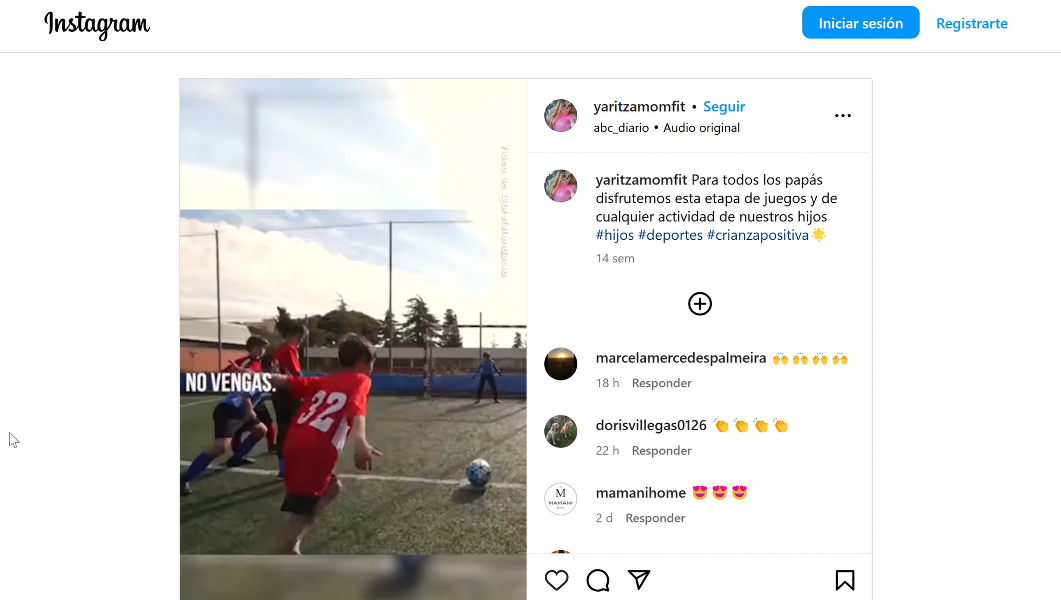
Take as an instance the following social media examples:

Videos

Before introducing the video…

  • You can have the students complete an introductory guided activity, frontloading some of the vocabulary they will encounter. 
  • As a class, you may discuss beforehand students’ opinions on the topic that will be covered and tap into their background knowledge to dissipate doubts.  
  • If you are using the video as a warm up activity, you might prefer to let them discover the content gradually to have some surprises regarding the message. 
  • Listen to students to hear what they are bringing to the table, their ideas many times can lead to interesting conversations you might not have considered, or they might choose to share some personal story. 
  • After the discussion, you can opt to go deeper by creating a mini project related to what students just watched.
A screenshot of a social media postDescription automatically generated

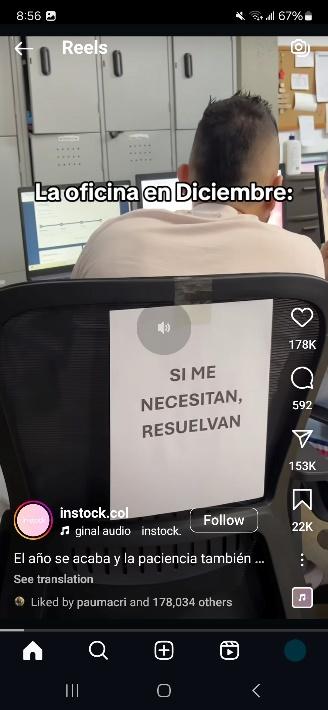
Jokes or Quotes

Social media jokes or quotes can be used to practice grammar and decipher meaning, seeing the language in use by different speakers around the world. For example, you can play with pronunciation posts, dialects, famous personalities or to explain idioms.
A person sitting in a chair with a sign on the backDescription automatically generated

Conversations around cultural topics

To delve into cultural comparisons, you can choose a specific social media post introduced in class and give more examples of cultural products, practices and perspectives for students.

A person in a purple dressDescription automatically generated

Some tips and questions to consider when using social media

#1 Screenshots and Videos

Because of the nature of these platforms, it is always good to take screenshots of pictures and screen record videos; to avoid pitfalls such as unwanted comments or images appearing in front of students. That way you get better control over the material and no surprises.

#2 Questions and Questioning 

Think about how the material connects to what you are teaching.

  • What questions could the students have? 
  • What questions would you use to guide the students in understanding the language and topics covered?
  • What other resources could you use to complement the social media content chosen?

#3 Paratext

Don’t disregard the paratext that accompanies the media posts since it enriches the students’ experiences around common vocabulary and expressions. For example, common textual and visual elements that surround the posts, such as comments, can serve as a starting point to expand the discussion into what people think of the publication.

In conclusion, using social media to promote conversations in the classroom can be a powerful tool to engage students and help them connect what they are learning within the classroom with the outside world. It is a unique opportunity for teachers to take advantage of making their scrolling productive and reignite their passion for language and culture.
Hagamos que la Gramática Fluya

gramática

by Ramón Clavijo (LTL Contributor)

Es probable que hayas removido Roma con Santiago para que tus estudiantes dejen de confundir ser y estar o para que sepan combinar correctamente el imperfecto y el indefinido, recurriendo para ello a múltiples manuales, adaptando y creando materiales o echando mano de recursos de Internet.

Pero no solo de grandes cuestiones gramaticales vive el profesorado de ELE. Nuestros alumnos también tienen problemas para usar correctamente muy y mucho, saber cuándo usar qué y cuándo utilizar cuál o diferenciar entre más que y más de.

Uso correcto de la gramática

Estos son contenidos que no suelen ocupar un lugar central en las unidades de los manuales, por lo que la mayoría de las veces nos tenemos que contentar con recurrir a gramáticas de referencia que, si bien son útiles, suelen reducir estas cuestiones a una breve explicación y a unos pocos ejercicios de refuerzo.

Por eso, hoy nos gustaría hablarte de un libro 📚 que puede cubrir estas carencias. Nos referimos a Diagramática. Curso de gramática visual (A1/B2), en el que se reúnen algunas de las dudas gramaticales más frecuentes entre los estudiantes de español.

Diagramática

Una de sus novedades es que cada contenido es introducido a partir de una muestra de lengua acerca de algún tema de actualidad 🌍 (uso y abuso del móvil, inmigración, bulos en prensa, cuestiones ambientales, lenguaje inclusivo, obsolescencia programada…), lo cual lo distingue de las gramáticas de referencia al uso, permitiendo, además, el fomento del debate en clase 🗨👥️.

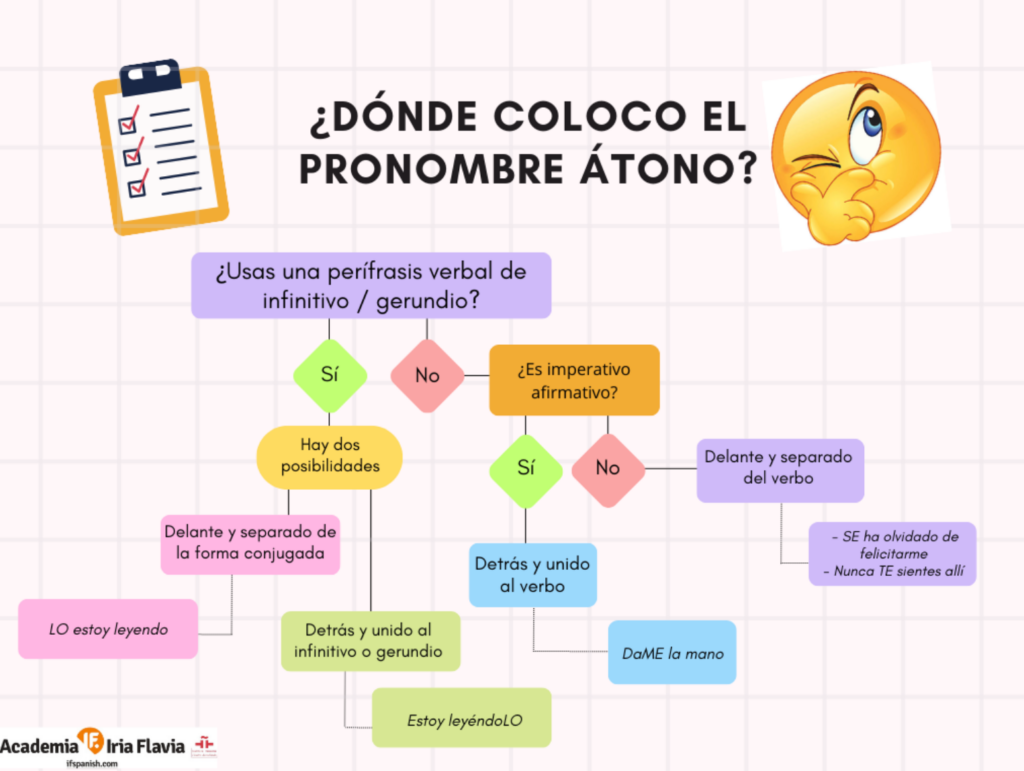
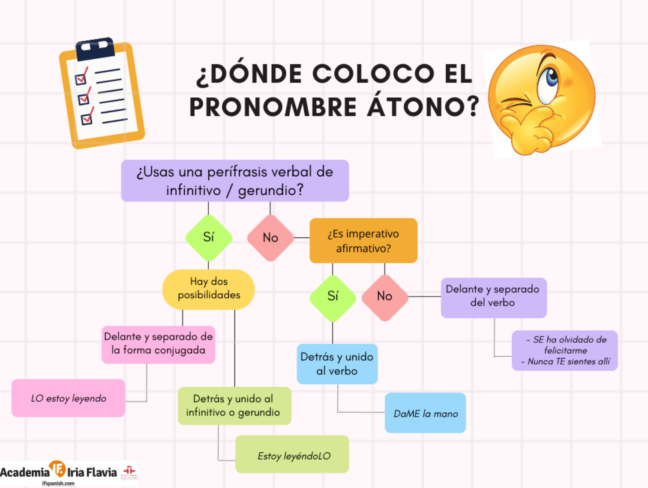
Otra de sus aportaciones es el uso de diagramas de flujo, herramientas visuales orientadas a la resolución eficaz de las dudas y confusiones que nuestros estudiantes suelen tener respecto a estos contenidos.

Un diagrama de flujo

Precisamente, con esta entrada te ofrecemos un diagrama de flujo 👇 sobre uno de los pocos temas que no se incluyen en el libro: la colocación de los pronombres. Esperamos que te sea de utilidad y que te permita hacer que la gramática fluya en tus clases.

Customized Learning with Generative AI: Safe Tools for Our Students

Generative AI

by Noemí Rodríguez (LTL Contributor)

Over the past few months, I’ve been exploring free Generative AI tools that empower educators to design customized and engaging learning experiences for their students. The key lies in crafting thoughtful prompts, as the “designer behind the scenes” is ultimately the human mind guiding the technology.

When implemented effectively, GenAI can create fascinating classroom interactions—though feedback from students is crucial to determine whether these tools enhance or detract from the learning process. And as with any lesson, it’s essential to use backward design, aligning AI-guided activities with the intended learning goals and outcomes.

While GenAI may not be the right fit for every lesson, it has exciting possibilities: allowing students to chat with historical figures, catch up on lectures through interactive podcasts, or receive ongoing support from an AI writing coach. And for my fellow language teachers, the best part is that these tools can be adapted to work in any language, opening up endless opportunities for language learning!

Chatbots

First, let’s unpack what they are. If you have used ChatGPT, then you are using a chatbot powered by Generative AI. It uses natural language processing to create humanlike conversational dialogue, which is why AI detectors don’t work well. Open AI’s ChatGPT is considered a LLM or large language model, which can respond to questions and compose various written content, including articles, social media posts, essays, code and emails. 

So, how can we use this type of technology with our K-12 learners in a safe, and doesn’t break any data/privacy laws learning environment? Select a platform that you can trust. Some of my favorites include Mizou, SchoolAI, BriskTeaching/Boost and Curipod. They are my top go-to tools for students because students can remain anonymous. I’ve highlighted how to use many of these (and more!) throughout the videos on my AI Tools for Educator Youtube playlist

Next, you have to consider the design of your chatbot – who do you want it to be and what role should it serve in your students’ learning journey? To dive a bit deeper, check out this previous blog post all about chatbots in your classroom with sample uses & prompts provided. The possibilities are truly endless with chatbot design!

Google’s Notebook LM

I really wish this had existed when I was in graduate school! Easy to use and understand that whatever content you provide, in the form of a slideshow, document, PDF, Youtube video – it will generate notes, outlines, and a podcast – all to help synthesize the intended outcome in your learning. It will take up to 50 sources and in just a few minutes, create an array of learning materials customized for you! It takes the idea of a research assistant to the next level and the more resources you provide, the more personalized output it can generate.

A fun workaround is to have it create sources in the language of your choice as shown in this video – and while the Spanish usually works, the experimenting continues with other languages. I imagine this to be especially useful for our multilingual learners, especially our newcomers who may need this initial support in their home language. 

Here are a few podcast episodes generated thanks to NotebookLM – La inteligencia artificial en nuestras aulas, Supporting Multilingual Learners in General Education Classes or Teaching Spanish

Custom GPTs or Gems

From the 18+ or older standpoint, designing a Custom GPT through Open AI’s ChatGPT or a Gem through Google’s Gemini to hone in on a particular skill or task can be incredibly helpful. I find that by designing a GPT to laser focus on designing integrated performance assessments, locating authentic resources or serving as an acquisition driven instruction colleague to brainstorm with – saves a lot of time as a language educator.

Another useful Custom GPT was created to assist general education teachers working with multilingual learners. By building these GPTs initially with resources that I feel are important, it knows and understands how to USE those resources as its knowledge files as it completes whichever task it is asked to complete. Although you need to pay a monthly subscription to design these custom GPTs, anyone who has a ChatGPT account can use these for free. Remember friends, we are training these models and they have learned quite a lot in a short amount of time. 

*A Generative AI tool like EduGPT has an array of already built “AI Faculty” designed to assist teachers – these are their custom GPTs or chatbots ready to use. 

Be Intentional with Generative AI

As we continue to experiment with Generative AI, it’s clear that its success in the classroom depends on intentional design and thoughtful implementation. The key is to approach it with curiosity, flexibility, and a willingness to learn alongside our students. GenAI has the potential to become a valuable addition to our instructional toolkit. After all, as educators, we’re not just teaching content—we’re preparing our students to thrive in a future shaped by this evolving technology.

Remember to use your Language Teaching Lab code with Team LoLogramos –-> Get a $5 off discount when you use the code LTL5 at checkout, exceptions may apply

If you would like to continue your learning and join our AI Innovator Community for Language Educators, learn more by visiting this page. A monthly subscription provides access to live virtual workshops, different asynchronous courses, a private community to ask questions/discuss ideas and a quarterly newsletter. Yes, we are happy to accept school district purchase orders!

You can also explore all of the available online courses dedicated to using Generative AI as a language teacher or check out my latest guide: AI Innovation in the Language Classroom either on Amazon or as a digital download! Our team also welcomes you to subscribe to our monthly newsletter or interact with us on Facebook or Instagram – let’s keep S.O.A.R-ing! 

El Uso de la Tecnología en la Enseñanza de Idiomas: Transformando el Aprendizaje Lingüístico

tecnologia

by Alonso Cano (LTL Contributor)

En las últimas décadas, la tecnología ha revolucionado numerosos aspectos de nuestras vidas, y la educación no es la excepción. En el ámbito de la enseñanza de idiomas, los avances tecnológicos han transformado las metodologías tradicionales, brindando a estudiantes y profesores herramientas innovadoras para optimizar el proceso de aprendizaje. Desde aplicaciones móviles hasta inteligencia artificial, la tecnología ha hecho que aprender un idioma sea más accesible, interactivo y personalizado.

Beneficios del Uso de la Tecnología en la Enseñanza de Idiomas

  1. Acceso a Recursos Globales
    La tecnología permite a los estudiantes acceder a una amplia gama de recursos en línea, como diccionarios digitales, videos, podcasts, ejercicios interactivos y bibliotecas virtuales. Esto facilita el aprendizaje autodirigido y permite a los alumnos explorar materiales auténticos como noticias, literatura o contenidos culturales en el idioma que estudian.
  2. Aprendizaje Personalizado
    Con la ayuda de plataformas digitales, los estudiantes pueden aprender a su propio ritmo y de acuerdo a sus necesidades específicas. Las aplicaciones de aprendizaje, como Duolingo o Babbel, utilizan algoritmos para adaptar los ejercicios a las habilidades del usuario, reforzando las áreas en las que necesita mejorar.
  3. Interacción en Tiempo Real
    Las videoconferencias y plataformas como Zoom, Google Meet o Skype permiten que los estudiantes practiquen con hablantes nativos sin importar su ubicación geográfica. Esto fomenta la fluidez y la confianza al hablar, al tiempo que expone a los estudiantes a diferentes acentos y estilos de comunicación.
  4. Práctica Autónoma y Gamificación
    Las herramientas tecnológicas ofrecen opciones para practicar vocabulario, gramática y comprensión auditiva de forma autónoma. Además, muchas plataformas incorporan elementos de gamificación, como recompensas, niveles y desafíos, lo que convierte el aprendizaje en una experiencia divertida y motivadora.
  5. Exposición a la Cultura del Idioma
    Internet permite a los estudiantes sumergirse en la cultura del idioma que están aprendiendo. Pueden ver series, escuchar música, leer blogs o interactuar en redes sociales con personas que hablan ese idioma, ampliando su comprensión cultural mientras practican.
tecnología

Herramientas Tecnológicas Clave en la Enseñanza de Idiomas

  1. Aplicaciones Móviles
    Las aplicaciones móviles han democratizado el acceso al aprendizaje de idiomas. Herramientas como Memrise, LingQ y Quizlet ofrecen prácticas interactivas, lecciones diarias y ejercicios personalizados que pueden realizarse en cualquier momento y lugar.
  2. Software de Reconocimiento de Voz
    El reconocimiento de voz ha mejorado la pronunciación de los estudiantes al permitirles escuchar y corregir su forma de hablar. Aplicaciones como Speechling o incluso asistentes virtuales como Siri o Alexa pueden ser utilizadas para practicar la comunicación oral.
  3. Realidad Virtual y Aumentada (VR y AR)
    La realidad virtual y aumentada están emergiendo como herramientas potentes en la enseñanza de idiomas. Estas tecnologías permiten crear entornos inmersivos donde los estudiantes pueden interactuar en situaciones reales, como pedir comida en un restaurante o visitar una ciudad extranjera, sin salir del aula.
  4. Plataformas de Aprendizaje en Línea
    Sitios como Moodle proporcionan espacios virtuales para que los profesores gestionen cursos, asignen tareas y organicen debates interactivos. Estas plataformas también facilitan la evaluación en línea y el seguimiento del progreso del estudiante.
  5. Inteligencia Artificial (IA)
    La IA está revolucionando la enseñanza de idiomas mediante chatbots conversacionales y asistentes virtuales que simulan interacciones reales. Herramientas como ChatGPT ayudan a los estudiantes a practicar la escritura y la conversación de manera natural y flexible.

Desafíos y Consideraciones del Uso de Tecnología en la Enseñanza de Idiomas

Aunque los beneficios son numerosos, el uso de tecnología en la enseñanza de idiomas también plantea ciertos desafíos:

  1. Acceso y Brecha Digital
    No todos los estudiantes tienen acceso a dispositivos tecnológicos o una conexión a internet estable, lo que puede limitar el alcance de estas herramientas.
  2. Dependencia de la Tecnología
    El uso excesivo de tecnología puede llevar a una dependencia en detrimento de las interacciones humanas, esenciales para el aprendizaje del idioma.
  3. Capacitación Docente
    Los profesores necesitan formación adecuada para integrar eficazmente la tecnología en sus clases. Sin esta preparación, las herramientas digitales pueden ser subutilizadas o mal empleadas.
  4. Calidad de los Recursos
    No todos los recursos en línea son fiables o de alta calidad. Es importante que los educadores seleccionen cuidadosamente las herramientas y materiales que utilizan.

El Futuro de la Tecnología en la Enseñanza de Idiomas

El futuro promete avances aún más emocionantes. Tecnologías emergentes como la inteligencia artificial avanzada, la traducción en tiempo real y la realidad aumentada están ampliando las posibilidades de aprendizaje. La personalización mediante big data permitirá experiencias de aprendizaje más precisas, adaptadas a las fortalezas y debilidades de cada estudiante.

Además, la integración de la tecnología con métodos de inmersión cultural y lingüística fortalecerá la conexión entre el aprendizaje digital y la interacción humana.

Conclusión

La tecnología ha cambiado para siempre la enseñanza de idiomas, haciéndola más accesible, dinámica y efectiva. Sin embargo, su éxito depende de cómo se integra en el proceso educativo, equilibrando las herramientas digitales con la interacción humana y los métodos pedagógicos tradicionales.

Con un enfoque bien estructurado, la tecnología puede empoderar a los estudiantes para que desarrollen no solo habilidades lingüísticas, sino también una comprensión cultural profunda, preparándolos para un mundo cada vez más interconectado.

T.A.L.K. Is Interpersonal Mode of Communication and More

Interpersonal

Many years ago (actually, 2015!) I read an article on T.A.L.K. by Mme. Blouwolff (Thank you!) which made me change how I implemented interpersonal communication in my classes. I loved the task she presented and the rubric she created, so I had to try it! 

What is T.A.L.K.?

T.A.L.K. is an acronym that stands for Talk, Accuracy, Listen, Kindness.

  • T is for Talk in the language for all the Time given. Try to communicate in the Target language. Stay on Topic. Prepare yourself by Thinking: 
  1. What vocabulary words can I use for this topic? 
  2. How do I communicate about this topic in full sentences? 
  3. What questions can I ask?
  • A is for Accuracy when using old and new language functions and structures and old and new vocabulary. A is also for Accountability
  • L is for Listen carefully to others’ answers and comments and build on them
  • K is for Kindness to all group members by contributing to the conversation without interrupting and by inviting others to participate. Be inclusive!

Use the Rubric

At the beginning of the year, I explicitly (and intentionally) use the rubric Mme. Blouwolff created for the first couple of T.A.L.K. ‘practices’ for students to self-evaluate themselves. They find it easier to start this new way of practicing interpersonal communication. It also helps them to understand the expectations of this task.

Explain the ‘Why’ of Interpersonal Communication

When I explain T.A.L.K. and what we are doing to my students I see an immediate positive change in their attitude towards speaking. They are not answering MY questions, they are answering questions their peers ask… They are in control of their interpersonal communication. They own it! T.A.L.K. empowers!

Preparing for T.A.L.K.

T.A.L.K. does not happen in a vacuum. Students practice having interpersonal communication in class every day. I use different resources, such as Amy Lenord’s Chat Mats or conversations based on art, a reading, or a clip they watch. I also vary the pairings using different classroom groupings such as, ‘Table for…’,  two rows, or four corners. 

Two things become apparent when I start T.A.L.K. in my classes. On the one hand, students need to learn how to ask questions, not just memorized phrases, but questions you would normally ask in a ‘real’ conversation. On the other hand, students realize that they need ‘connectors’ to express what they want to say more cohesively. To help them, I create a ‘world wall’ with some ‘connectors’ such as, because, so, when, however, although, etc., and ‘question words’ my students need to use in their conversations.

Interpersonal Communication: Pre, During, and Post T.A.L.K.

Before we start the T.A.L.K. assessment I use some T.A.L.K. routines to help students ease into the conversation:

  • ‘what are we TALKing about today?’ 
  • ‘tips for an amazing T.A.L.K.’, 
  • ‘follow one student’ during the conversation, and 
  • a ‘reflection’ after the T.A.L.K.

In my class, T.A.L.K. is a class activity in which we gather in a circle with a small group in the center and the rest of the students are placed around them (like ‘fishbowl’).

Pre-T.A.L.K.

Before we begin, I make sure students know the topics expected in the conversation by asking them ‘What are we TALKing about today?’ This way, we focus our brains on the vocabulary and functions we need to retrieve from our working memory. 

I continue with ‘tips for an amazing T.A.L.K.’ on how to have T.A.L.K. conversations. Doing this just before starting, also reminds students of the task expectations and helps them lower their affective filter. They might say,

  • If somebody is stuck or does not understand the question you are asking, give options, for example, if you ask ‘What do you do on the weekends?’ and the other student does not know the word ‘weekends’, you might say ‘Saturday? Sunday?’ That way, you are kind and it helps continuing the conversation without an odd silence
  • Invite all to be part of the conversation by asking a question to all the members in the group
  • Talk about things that you know but if you do not remember or do not know a specific word, use words to describe it so a friend can help you
  • Don’t repeat the same questions (‘What do you like?’ ‘How are you?’). Instead, try to ask new questions for the conversation to flow
  • Have three good questions ready in your head in case suddenly everybody is silent
  • Think that the T.A.L.K. assessment is a T.A.L.K. practice 

During T.A.L.K.

While the students in the center would be the ones talking, the ones in the outer circle have to ‘follow one student’ and jot down in their notebooks what he/she says. I can check students’ listening and spelling skills with this and realize who needs more practice on one or both. 

Post-T.A.L.K.

After students have done the T.A.L.K., the other component is a ‘reflection’ about their performance that can be written in their notebooks or using a form. I ask questions such as, 

  • What are you proud of? 
  • What went well for you today?
  • What did you learn about yourself? about your peers?
  • How are you going to prepare yourself for the next T.A.L.K.?  What is one thing that you would do differently next time we have a T.A.L.K.?
  • If you had to give yourself a grade on Talking. Accuracy, Listening, and Kindness about your performance, which would that be?
  • In your opinion, which level of proficiency did your reach for the most part during T.A.L.K.? What evidence do you have to support your self-assessment? What can you do to achieve the next level?
  • How can the teacher help you be more successful next time?

I love reading students’ deep thoughts and reflections on their performance! I learn a lot about them and it gives me hints on what I can do to help each of them.

Give T.A.L.K a Try!

Learning about each other while talking in another language is very satisfying for students. It provides an unimaginable sense of authenticity and pride. Give it a try in your classes!