SUNO: Your Personalized Music Library for the Classroom

suno

by Victoria Berasaluce Guerra (LTL Contributor)

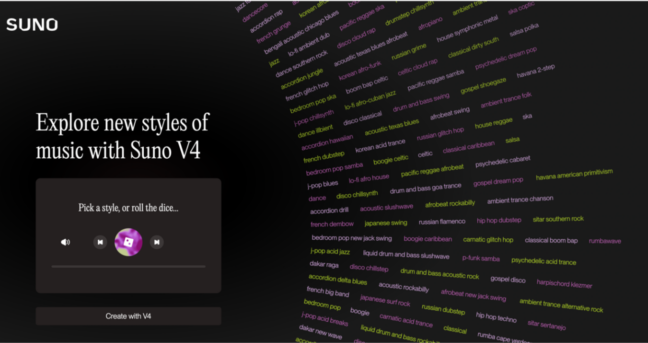
Looking for a creative way to bring music into your classroom? Suno is my go-to platform for generating AI-powered songs tailored to specific lessons. Whether you need a song in any language, with custom lyrics, or set to a particular genre, Suno makes it easy to create engaging, educational music.

From practicing vocabulary and grammar to reinforcing key concepts, Suno helps turn music into an interactive learning tool.

How to Integrate Suno into Your Curriculum

1. Define the Purpose of Your Song

Before generating a song, ask yourself:

  • Will it serve as a warm-up to introduce a grammar topic, vocabulary list, or theme?
  • Will it be used to review and practice concepts in a fun way?
  • Could it act as a form of assessment to check students’ understanding?

2. Choose the Theme and Style

Once you know the purpose, decide on the song’s focus. Suno lets you customize:

  • Topic – A specific grammar tense, a cultural theme, or a set of vocabulary words.
  • Music genre – Pop, jazz, reggaeton, classical—anything that fits your lesson!
  • Mood and occasion – Whether it’s an upbeat song for celebrations or a slow-paced tune for storytelling, Suno provides inspiration when needed.

3. Align It with Your Lesson Plan

Look at your curriculum and identify where a song could enhance student engagement. It is particularly useful for:

  • Difficult topics – If students struggle with a concept, a catchy song can help.
  • Project-based learning – Have students co-create lyrics based on what they’re studying.
  • Cross-disciplinary connections – Use music to blend language learning with history, literature, or culture.

Real Classroom Examples Using Suno

Here are some ways I’ve used it in my language classes:
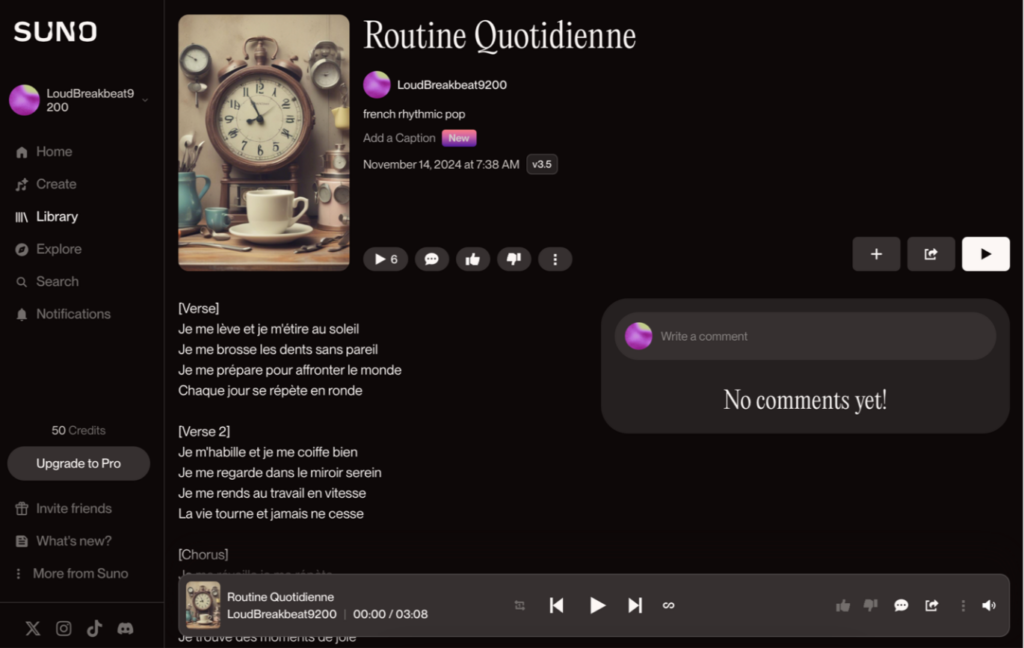
🎵 French: A song about daily routines, incorporating reflexive verbs and common vocabulary.
🎵 French: A song focused on the passé composé, helping students grasp past tense usage.
🎵 Spanish: A song that reinforces the subjunctive mood through engaging lyrics.
🎵 Co-Creation Activity: Students choose a genre and collaborate to edit AI-generated lyrics, sparking discussions on language and creativity.
suno

Bonus Tip: Save and Expand with Personas

Suno allows you to create personas, preserving a song’s essence, vocals, and style for future versions. This feature helps maintain consistency across multiple lessons. If you need inspiration, explore its library for ready-made ideas!

What’s New in Suno?

🔹 Comment & Reply – Engage with others by commenting on and discussing songs.
🔹 Workspaces – Organize your creations for easy access.
🔹 Mobile App – Now available on Android and iOS for convenient song-making anytime!

By integrating Suno into your lessons, you can make learning more dynamic, memorable, and interactive. Try it out and let your students’ creativity shine! 🎶✨
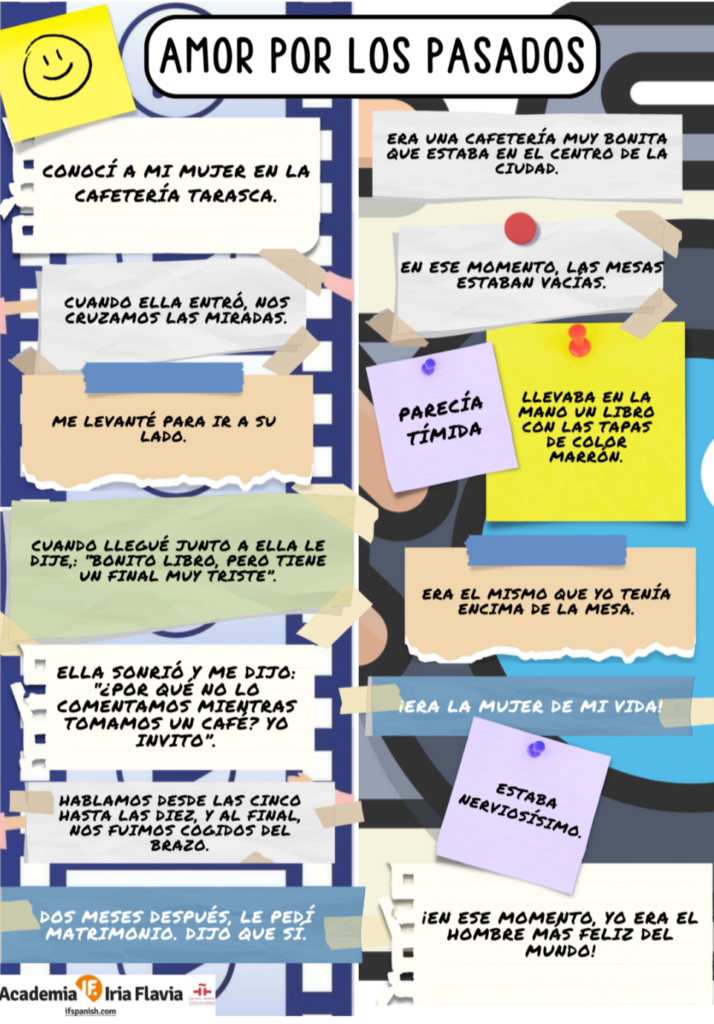
Gramática en movimiento – el indefinido y el imperfecto

indefinido

by Ramón Clavijo (LTL Contributor)

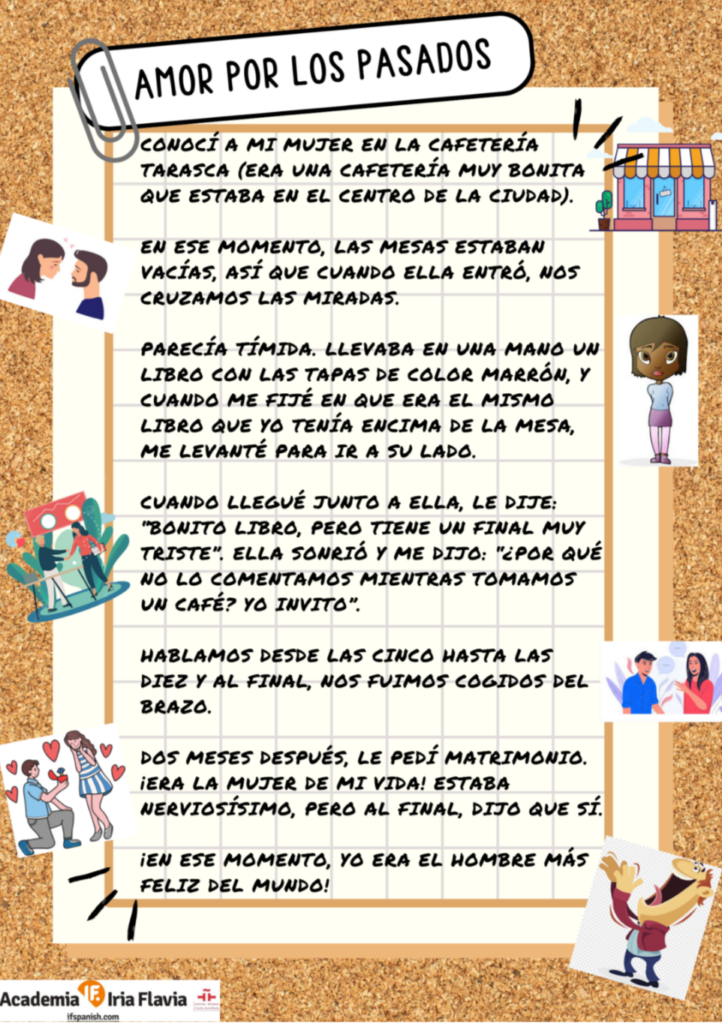
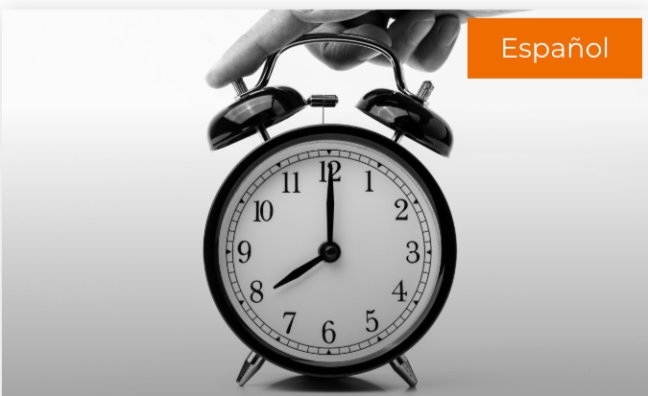
“Ver” la gramática es fundamental para entenderla. Y esto es especialmente importante a la hora de enseñar el contraste entre el indefinido y el imperfecto.

🎞 Cuando contamos una historia, usamos el indefinido para hacer avanzar el tiempo hasta una nueva situación. Es, por tanto, el tiempo principal, pues la combinación de acciones expresadas en indefinido crea el metraje de la “película”. Es la historia en movimiento.

📷 Con el imperfecto, “detenemos” la acción de la historia para describir una situación momentánea antes de continuar avanzando. Es decir, utilizamos este tiempo cuando “recuperamos” del pasado una imagen y describimos cómo eran ese objeto, esa persona, ese paisaje o esa situación de los que estamos hablando. Dicho de otro modo, estamos ante un único fotograma.

Con esta metáfora en mente, te traemos dos infografías 👇 con las que tus estudiantes podrán visualizar el contraste entre estos dos tiempos de pasado:

👉 En la primera, tienes una historia “seccionada” y contada en dos tramos verticales: en la columna de la izquierda, están los verbos en indefinido (son el metraje de la película); en la de la derecha, tienes los verbos en imperfecto, con los que contextualizamos la secuencia de acciones principales (son fotos que recrean una situación momentánea). Ninguna de las dos columnas, por sí misma, es suficiente para contar la historia: ambas se necesitan.

👉 En la segunda infografía, tienes la historia ya ensamblada y montada, con sus diferentes elementos (las acciones en indefinido y las descripciones en imperfecto) unidos mediante marcadores del discurso. Es decir, ya la tienes lista para ser contada e, incluso, representada. ¿Por qué no les pides a dos de tus alumnos que la escenifiquen mientras la vas relatando? De esta manera, sus compañeros podrán ver, a través de sus gestos, cómo la historia avanza, se detiene y se reanuda.

Y es que la gramática está para “ser vista” 👀.

indefinido
indefinido

Academia Iria Flavia: Get a 20€ off discount when you use the code LTL20 at checkout, exceptions may apply

Dejemos huellas / Let’s Make a Mark

mark

by Justa Rebollo Paz (LTL Contributor)

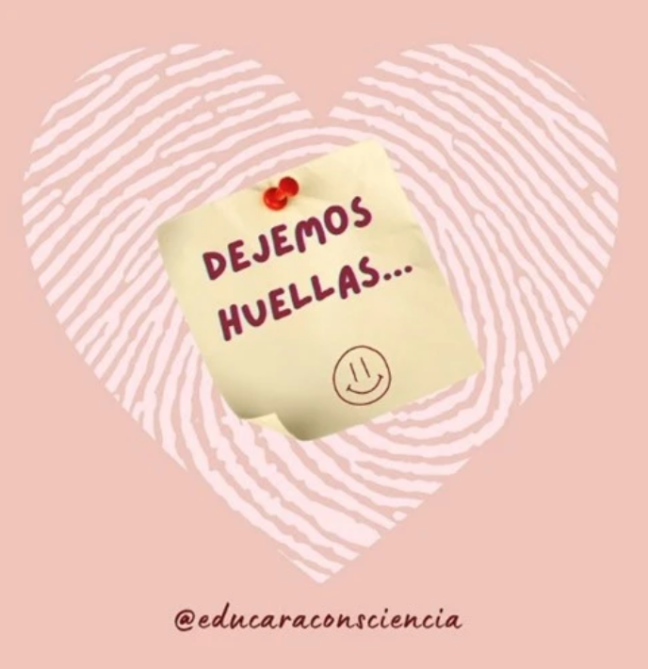
Dejemos huellas

Un día dejé este post it en la sala de maestras….

No sé qué les despierta a ustedes, a vos, pero a mí me dice que cada vez que “toquemos” el corazón de un niño (un alumno en este caso, pero puede ser cualquier persona) lo hagamos con la consciencia tal, de que nos aseguremos de dejar una huella en él.

  • Para así, crear posibilidades para que el aprendizaje suceda.
  • Para que involucremos nuestro corazón con el suyo y se forme ese vínculo tan necesario para poder aprender.
  • Para aprender siendo escuchado, siendo cuidado, siendo contenido, siendo empoderado, siendo motivado, siendo bien recibido…. así voy a dejar huella, y así ellos van a aprender (y nosotros también)

Probemos. Dejemos huellas en los corazones.


Let’s Make a Mark

One day I left this post-it note in the teachers’ lounge…

I don’t know what it awakens in you, but it tells me that every time we “connect with” a child’s heart (a student in this case, but it could be anyone), we do so with the awareness to make sure we leave a mark on them.

Let’s make a mark 

  • In order to create opportunities for learning to happen.
  • So that we engage our hearts with others’ and form that bond so necessary for learning.
  • So that they learn by being listened to, being cared for, being supported, being empowered, being motivated, being welcomed… 

That’s how I’ll make a mark, and that’s how they’ll learn (and in the process so will we).

Let’s give it a try. Let’s leave a mark on their hearts.


Justa’s post reminded me of the book ‘The Dot’ by Peter H. Reynolds and its message “Just make a mark and see where it takes you.”

Unlocking Fluency: Exploring SDG 16 Through Children’s Literature

unity

by Carmen Reyes (LTL Contributor)

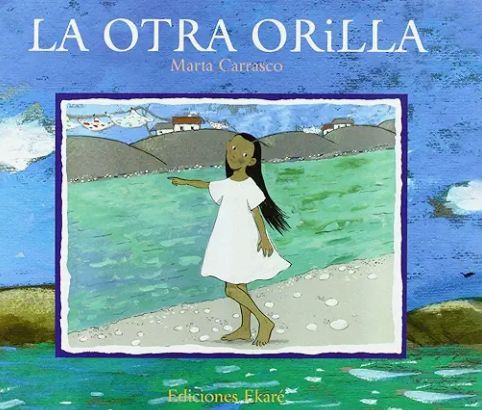
World language teachers can bring the United Nations Sustainable Development Goal (SDG) 16—Peace, Justice & Strong Institutions—to life in their classrooms through engaging literature. One powerful way to achieve this is by incorporating Marta Carrasco’s book La Otra Orilla, designed for Heritage Elementary students at an Intermediate Mid proficiency level.

La Otra Orilla fosters discussions on inclusivity, justice, and understanding across diverse communities. This work is based on my presentation during the ACTFL conference in Philadelphia, co-presented with NELL member Larissa Giacoman.

Interactive Activities for Various Proficiency Levels:

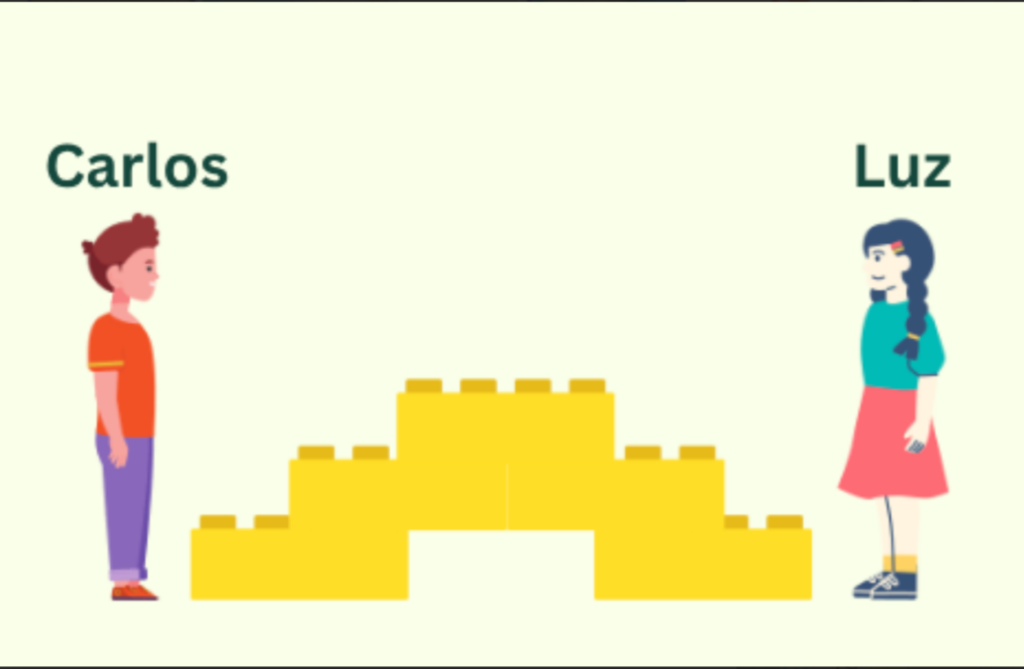
1. Novice Low: Building a Unity Bridge

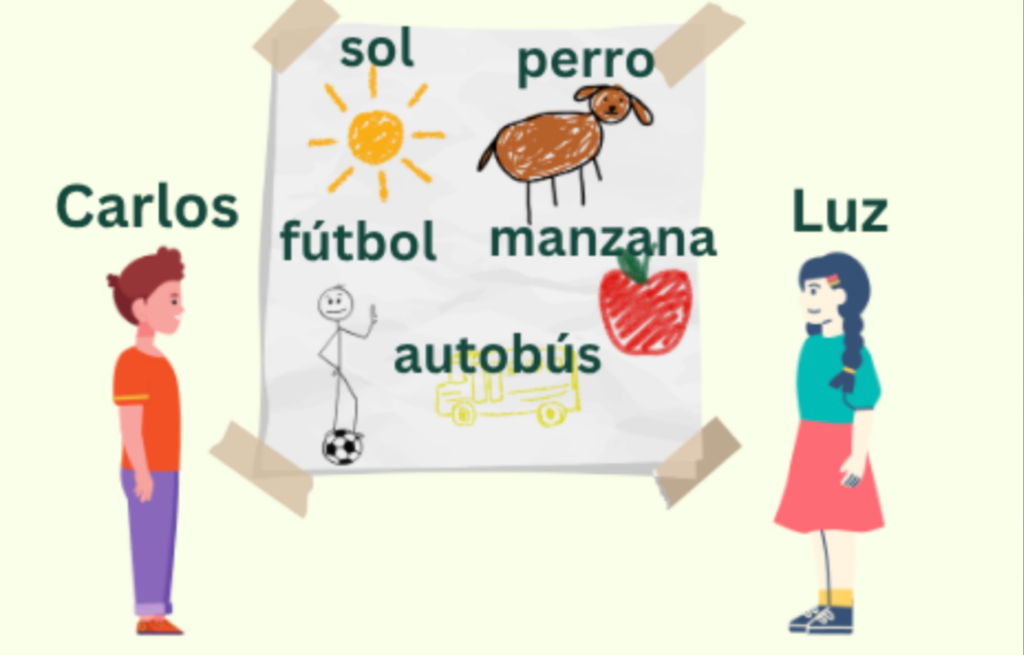
Students are divided into two large groups, each representing a different community. They pair up and identify at least five commonalities from suggested categories such as family, school, sports, food, colors, or pets. They then illustrate these similarities on paper.

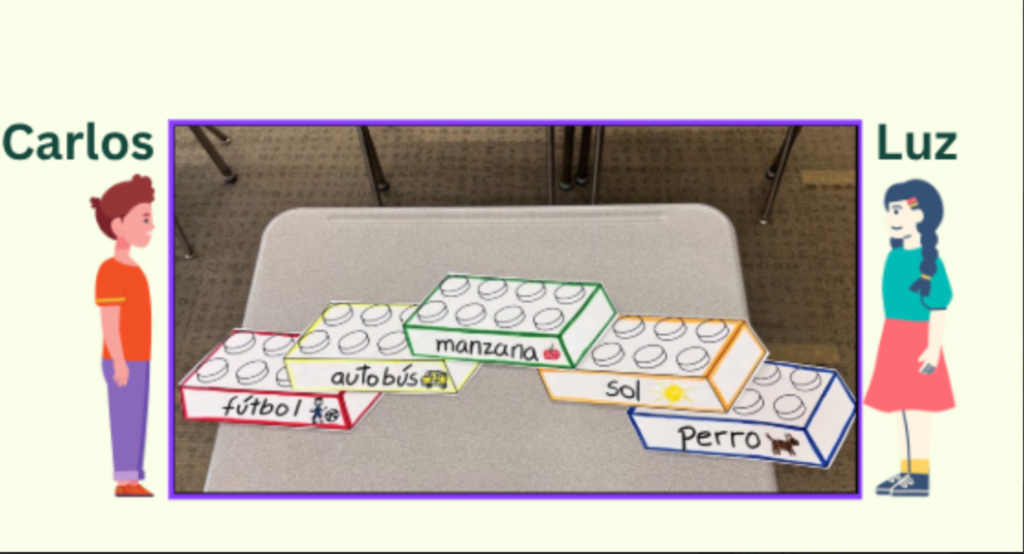
Each pair receives a LEGO brick for each similarity they find, using them to construct a “unity bridge” that symbolizes their shared connections.

If physical bricks are unavailable or as an alternative, students can use paper cutouts. In this case, they will write each similarity on a paper brick before assembling their bridge.

2. Novice Low-Mid: Cultural Expressions Unity Bridge

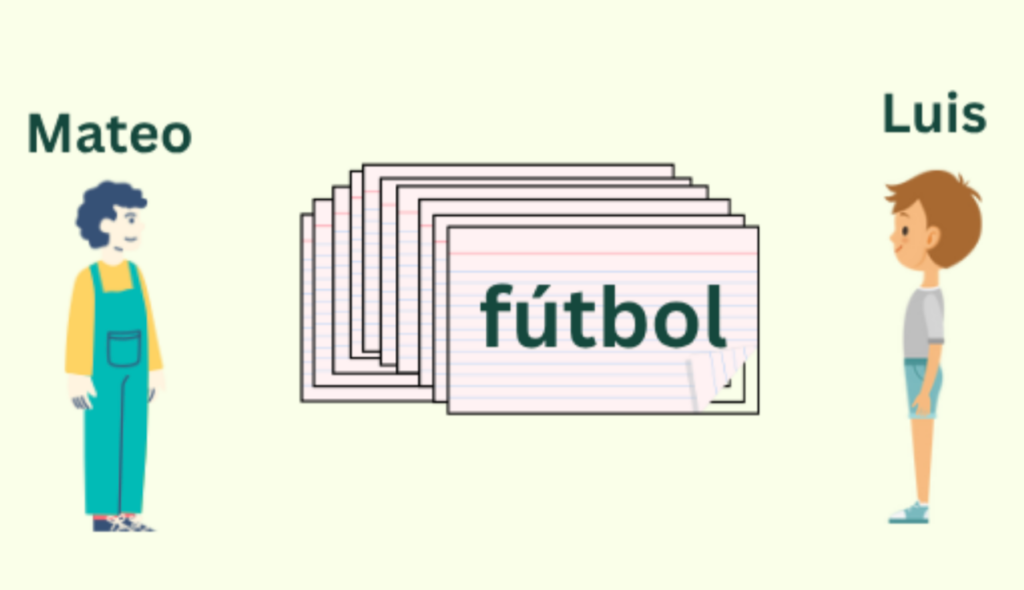
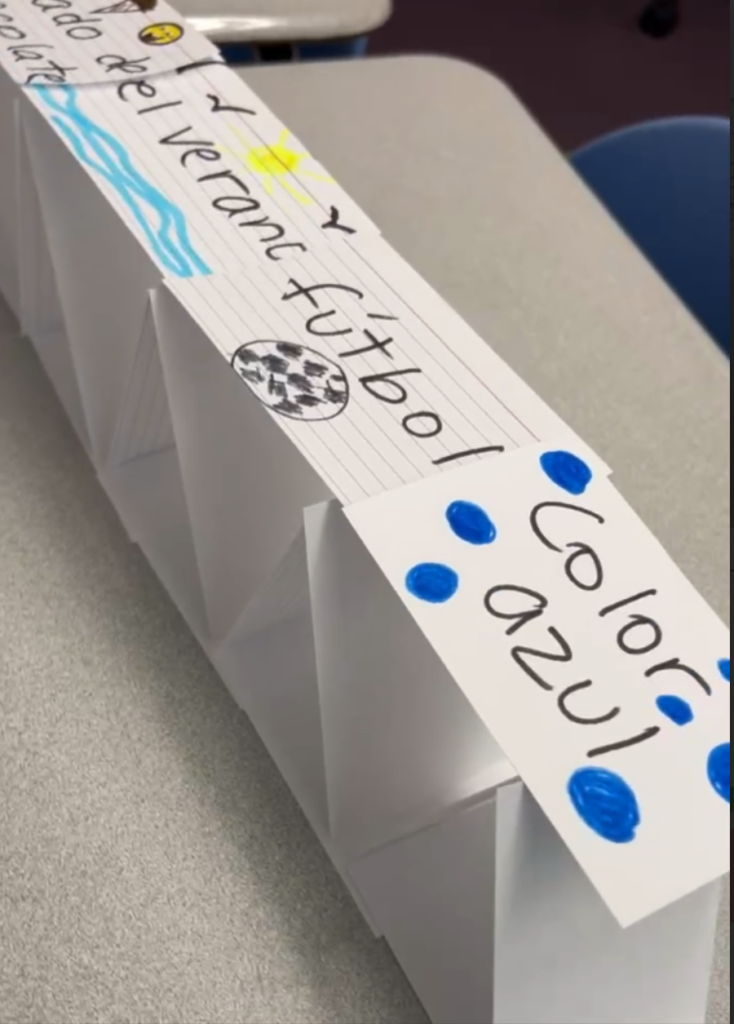
Students identify ten cultural expressions they share and write each one on an index card. These cards are then used to build a “unity bridge.” For added complexity, students can write full sentences. To present their work, students will read each card aloud while walking along their bridge, reinforcing cultural awareness by highlighting practices that reflect identity, values, and traditions.

As an alternative, students can physically construct a bridge using the index cards, as shown in the reference image. They will then place the cards with their shared cultural aspects on top of the bridge.

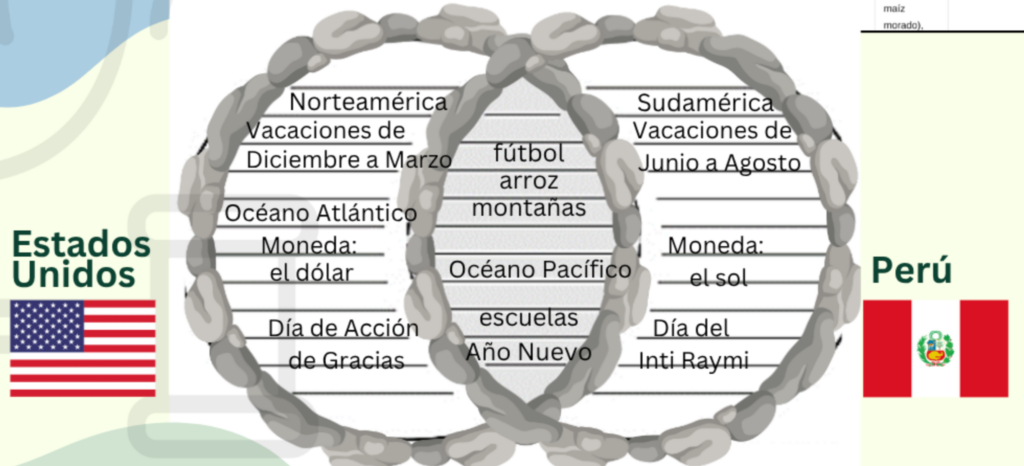
3. Novice Mid-High: Comparative Venn Diagram

Students analyze similarities and differences between their own community and a Spanish-speaking country, comparing aspects like traditions, food, and daily life. They create a Venn diagram to visually represent these cultural elements, encouraging a deeper understanding of global perspectives.

By incorporating these activities, language teachers create meaningful learning experiences that promote fluency, cultural understanding, and global citizenship while fostering inclusivity and reflection on diverse cultural experiences.