by Maria Martinez (LTL Contributor)
Beyond Translation: Teaching Learners to Think Across Languages
If you have taught or learned another language for any length of time, you have probably heard a question like this:
“How do you say this in English?”
Or perhaps:
“What’s the Spanish word for this?”
At first glance, these seem like straightforward questions. We often assume that language learning is a process of finding equivalents: one word in one language matched neatly to another word in another language.
But after more than twenty-five years of teaching languages, I have found that some of the most valuable learning happens precisely when that translation does not exist.
A Spanish student might ask how to translate sobremesa. An English learner might want a Spanish equivalent for awkward, cringe, or random. The difficulty is not vocabulary. The difficulty is that these words and expressions carry cultural assumptions, social habits, emotions, and ways of seeing the world.
A literal translation may be technically correct, yet still sound unnatural.
This is where language learning becomes far more interesting.
Moving beyond word-for-word translation encourages learners to ask different questions:
- What is the speaker really trying to express?
- How would a native speaker communicate this idea?
- What emotions, attitudes, or cultural references are hidden behind the words?
These questions develop something much deeper than vocabulary. They develop intercultural understanding.
Films, television series, music, social media, literature, and everyday conversations all reveal how languages organise reality in different ways. Learners quickly discover that fluency is not simply about knowing words. It is about understanding how people think, interact, and interpret the world around them.
Over the years, I noticed that the same expressions kept appearing in my classroom. Students repeatedly struggled with words that seemed simple but could not be translated naturally. The challenge was rarely linguistic alone; it was cultural.
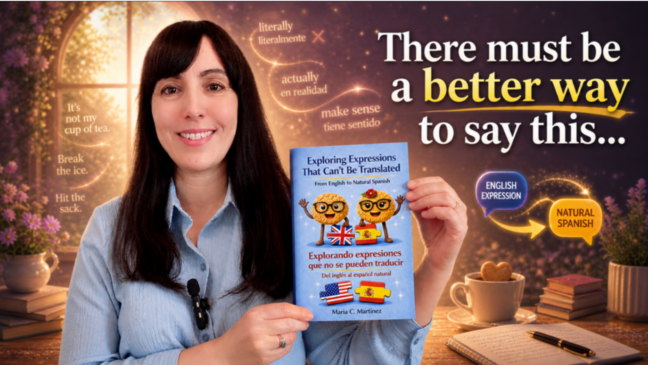
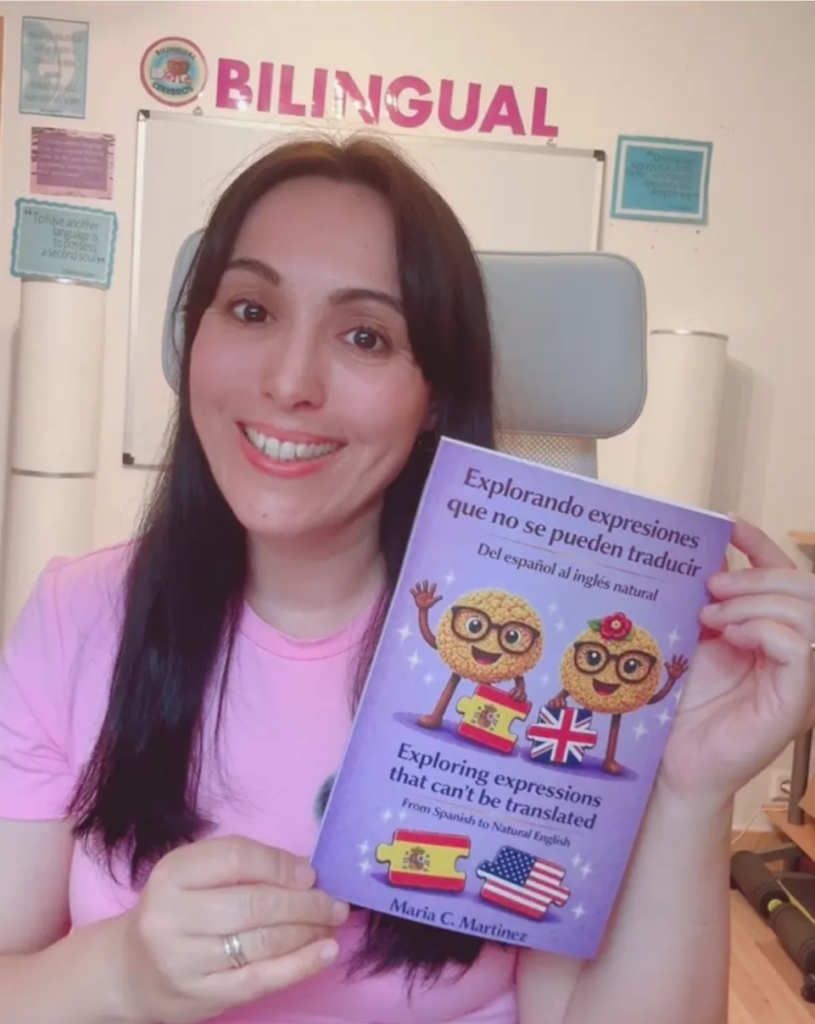
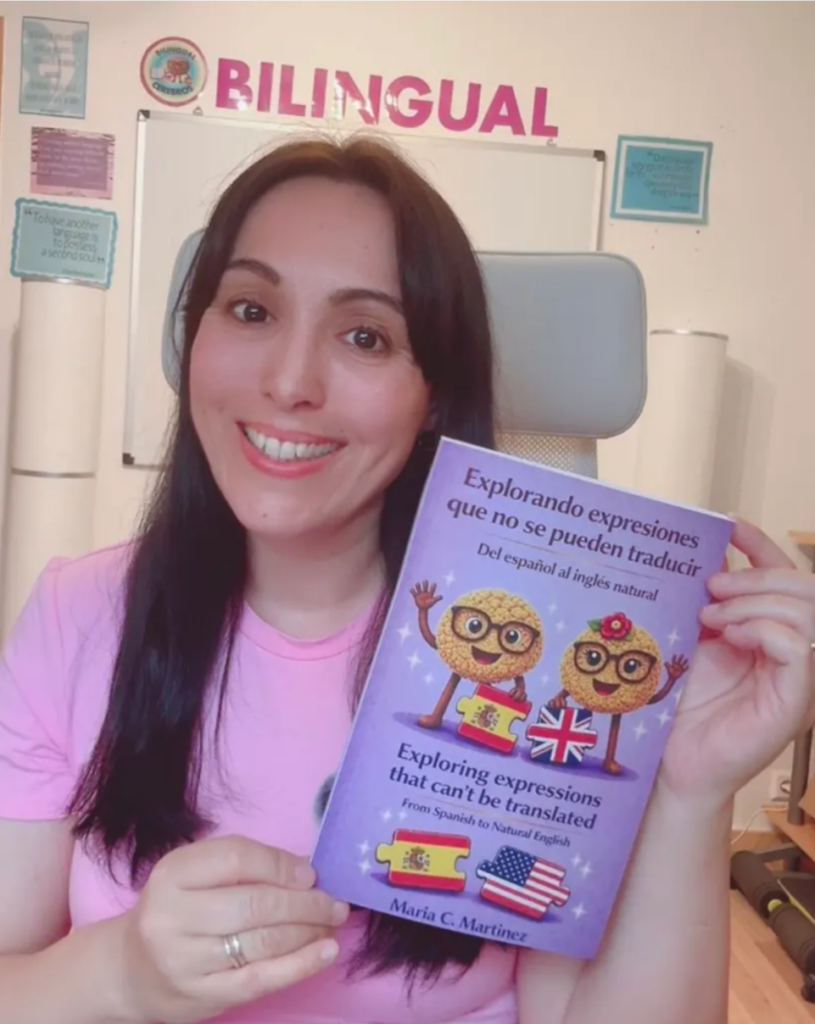
That observation inspired my latest book collection: one volume exploring English expressions that do not translate naturally into Spanish, and another exploring Spanish expressions that do not translate naturally into English.
The goal is not to provide perfect translations. In many cases, perfect translations do not exist.
Instead, the books encourage learners to explore context, intention, nuance, and culture. Through dialogues, situations, and practical examples, they invite readers to move beyond the dictionary and towards a more natural understanding of language.
Because ultimately, successful communication is not about translating words. It is about understanding people.
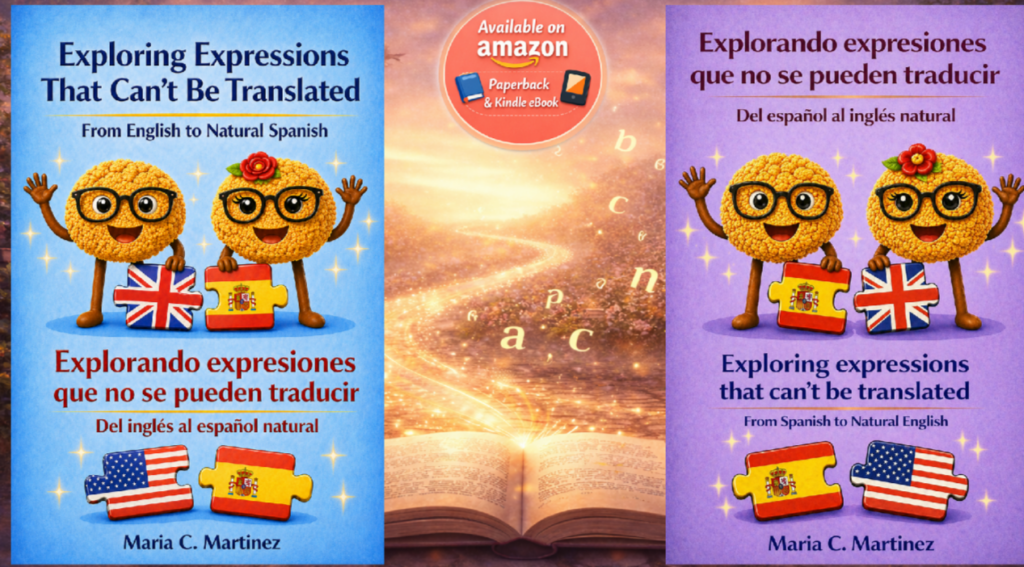
You can find them here:
Explorando expresiones que no se pueden traducir (del español al inglés natural)
Exploring Expression That Can’t Be Translated (From English to Natural Spanish)
Más allá de la traducción: enseñar a pensar entre idiomas
Si enseñas o aprendes idiomas desde hace tiempo, seguramente has escuchado alguna vez una pregunta como esta:
“¿Cómo se dice esto en inglés?”
O quizá:
“¿Cuál es la palabra en español para esto?”
A primera vista parecen preguntas sencillas. A menudo pensamos que aprender idiomas consiste en encontrar equivalencias: una palabra en una lengua que corresponde exactamente a otra palabra en otra.
Sin embargo, después de más de veinticinco años enseñando idiomas, he comprobado que algunos de los aprendizajes más importantes aparecen precisamente cuando esa traducción directa no existe.
Un estudiante puede preguntarse cómo traducir sobremesa. Otro puede buscar una equivalencia en español para palabras como awkward, cringe o random. El problema no suele ser el vocabulario.
El reto está en que estas palabras y expresiones contienen hábitos culturales, emociones, formas de relacionarse y maneras de interpretar la realidad.
Una traducción literal puede ser correcta y, aun así, sonar poco natural. Y ahí es donde el aprendizaje de idiomas se vuelve realmente interesante.
Cuando dejamos atrás la traducción palabra por palabra, empezamos a formular preguntas diferentes:
- ¿Qué quiere expresar realmente la persona que habla?
- ¿Cómo comunicaría esta idea un hablante nativo?
- ¿Qué emociones, matices o referencias culturales hay detrás de estas palabras?
Estas preguntas desarrollan algo mucho más profundo que el vocabulario. Desarrollan competencia intercultural.
Las películas, las series, la música, las redes sociales, la literatura y las conversaciones cotidianas nos muestran constantemente que cada idioma organiza la realidad de una forma distinta.
Los estudiantes descubren pronto que la fluidez no consiste únicamente en conocer palabras, sino en comprender cómo piensan, interactúan y se expresan las personas.
Con los años observé que ciertas expresiones aparecían una y otra vez en mis clases. Muchos estudiantes encontraban dificultades con palabras aparentemente sencillas que, sin embargo, no podían traducirse de forma natural. El desafío no era solamente lingüístico; también era cultural.
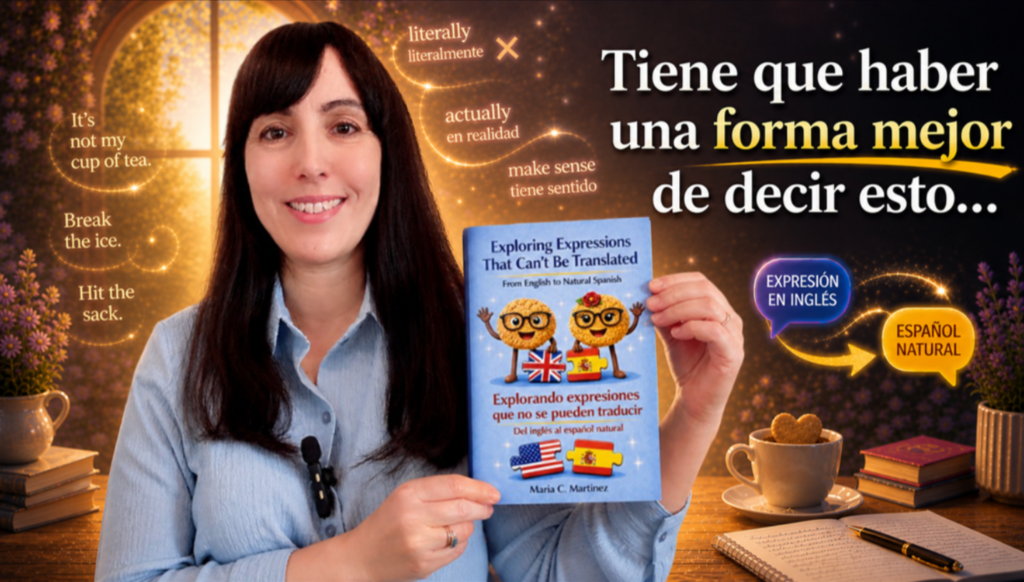
Esa observación me llevó a crear mi nueva colección de libros: un volumen dedicado a expresiones inglesas que no se traducen de forma natural al español y otro centrado en expresiones españolas que no encuentran una equivalencia directa y natural en inglés.
El objetivo no es ofrecer traducciones perfectas. En muchos casos, simplemente no existen.
La intención es ayudar a los estudiantes a explorar el contexto, la intención, los matices y la cultura que hay detrás de las palabras. A través de diálogos, situaciones reales y actividades de reflexión, los libros invitan a mirar más allá del diccionario y a desarrollar una comprensión más natural del idioma.
Porque, al final, comunicarse con éxito no consiste en traducir palabras. Consiste en comprender a las personas.
Puedes encontrarlos aquí:
Explorando expresiones que no se pueden traducir (del español al inglés natural)
Exploring Expression That Can’t Be Translated (From English to Natural Spanish)