by María Martínez (LTL Contributor)
As language teachers, we’ve all seen this: Students who can understand so much more than they dare to say.
They follow along in stories, laugh at jokes, and pick up vocabulary from songs and videos… but when it’s time to speak, they freeze. Or they default to their “stronger” language, even when they could already communicate in the target language.
The challenge is not a lack of input, but the need for support in turning listening and reading into authentic communication.
Today, with the rise of AI and global online interaction, this transition matters more than ever. Students need guidance on using languages in real contexts—at home, in their communities, and online.
This reflection is inspired by my recent collaboration and interview with Sabrina Sánchez from Ms Sabrina’s Bilingual Playtime. Our conversation reminded me of the emotional and human side of language learning: identity, belonging, confidence, and connection.
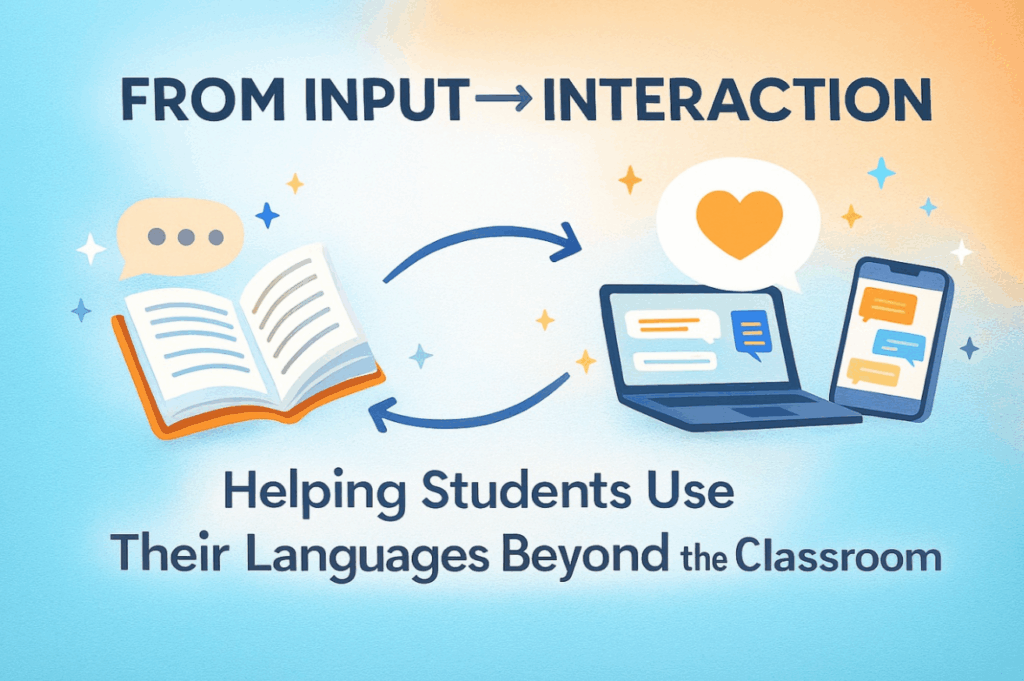
Helping Students Move From Passive Input to Active Use
Start With Low-Pressure Interaction
Instead of jumping from listening straight into a full speaking task, build micro-moments of participation:
- Thumbs-up/down reactions
- Predict-what-comes-next
- Simple call-and-response routines
These tiny steps help students feel like active participants long before they produce full sentences.
Use Guided Output Before Free Speech
Small scaffolds create big confidence:
- Sentence frames
- “Repeat and add one word”
- Matching visuals with short phrases
Guided output makes risk-taking less intimidating and builds a natural bridge toward
spontaneous communication.
Give Students a Real Audience
Speaking becomes meaningful when it has a purpose.
Some ideas:
- Record short audio notes for younger students
- Teach a topic to a partner class
- Create bilingual slides to present at home
When communication is purposeful, students shift from “using language for school” to using language for life.
How Families Can Encourage Authentic Use at Home
One of the most beautiful themes in my conversation with Sabrina was how families
can nurture languages gently, without pressure.
Give Each Language a Purpose
Mini rituals make languages come alive:
- “Buenos días” at breakfast
- Naming ingredients while cooking
- Counting down in the target language before starting a video or game
These small habits build a meaningful, emotional connection.
Create Safe Language Zones
Children speak more when they feel safe:
- “No corrections, just support” during certain times
- A weekly family language evening
- Letting children choose the song, game, or video
Safety builds confidence, and confidence builds language.
Make Content a Shared Experience
Instead of: “Watch this for homework.”
Try: “Let’s watch this together—teach me one word!”
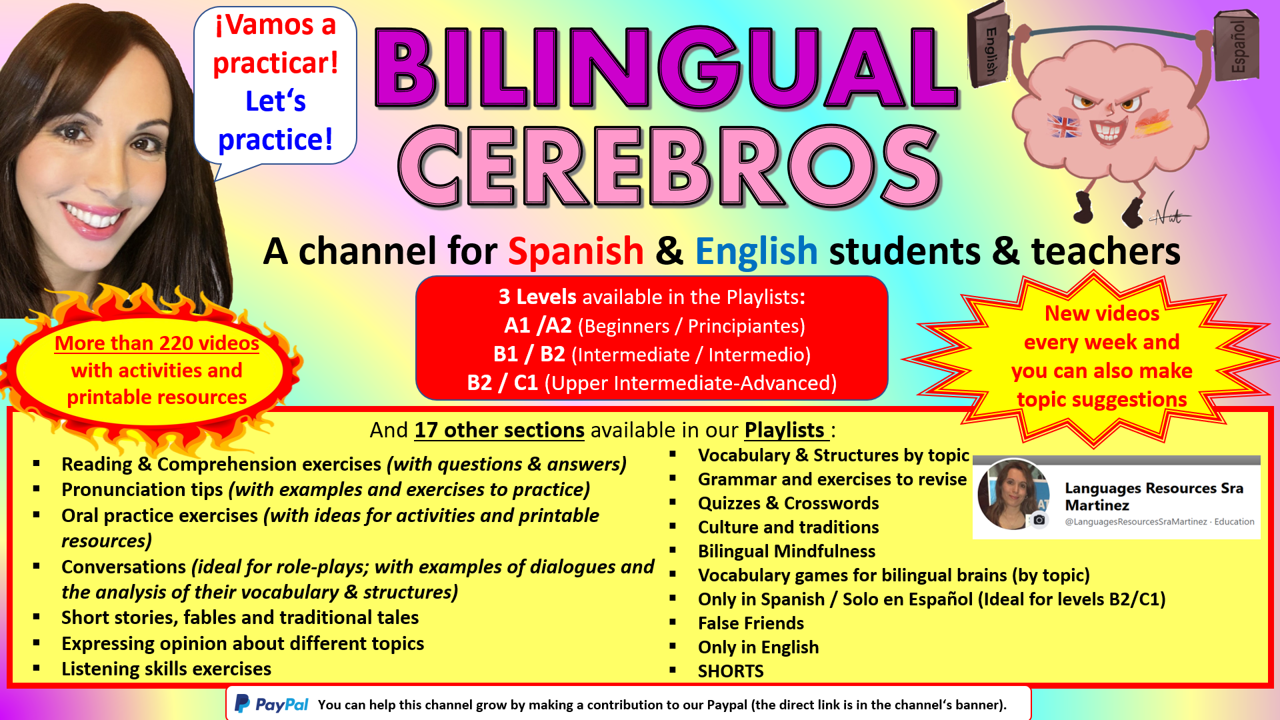
Resources from Bilingual Cerebros and Ms Sabrina’s Bilingual Playtime are intentionally designed for shared learning, so children can guide their families, not just follow instructions.
How Bilingual Cerebros Supports the Input → Output Journey
In my own content, I always ask: “How will this help a student use the language with someone else?”
Some ways I design for that:
- Stories paired with meaningful speaking tasks
- Bilingual printables that travel between school and home
- Slides and visuals that invite comparison, retelling, and explaining
- Activities that promote conversation, not just comprehension
My goal is to help students turn input into interaction—gently, confidently, and joyfully.
A Heart-Warming Reminder From My Conversation With Sabrina
What stayed with me most from talking with Sabrina was not a list of strategies, but the shared belief that:
Every child’s languages are a gift.
Every attempt—imperfect or hesitant—is progress.
Languages grow strongest in relationships, not just in classrooms.
Parents sometimes worry they’re not doing enough. Teachers sometimes wonder if students will ever really use the language outside school. Students often fear mistakes more than lack of understanding.
Our message, together, is simple:
You are doing more than you think.
Connection matters more than perfection.
Every small moment counts.
And when a student uses a phrase at home, online, or with a friend—even if the sentence isn’t perfect—that is the magic of input becoming interaction.
That’s where languages truly come alive.
Want to Dive Deeper? Watch the Full Collaboration with Sabrina Sánchez
If you’d like to hear more practical ideas, heartfelt stories, and advice for parents, teachers, and students, I warmly invite you to watch our full collaboration interview.
We recorded two versions, so you can enjoy it in the language you prefer—or share
it with your students and families:
Both conversations are filled with insights, encouragement, and real-life reflections on raising, teaching, and supporting multilingual learners. We hope they bring you inspiration, reassurance, and a few smiles along the way.
Meet the guests
- Maria (Bilingual Cerebros):
- Sabrina (Ms. Sabrina’s Bilingual Playtime):
Let’s keep the conversation going! Share your questions or tips about raisin
bilingual kids in the comments below.
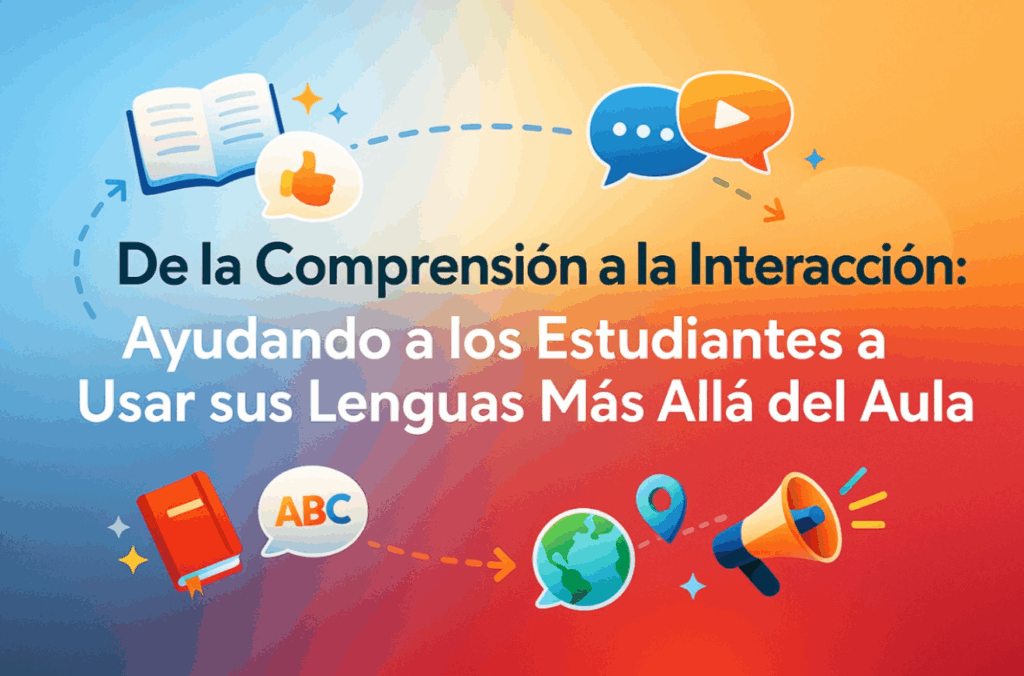
De la Comprensión a la Interacción: Ayudando a los Estudiantes a Usar sus Lenguas Más Allá del Aula
Como docentes de lenguas, todos hemos visto esto: estudiantes que entienden muchísimo más de lo que se atreven a decir.
Siguen las historias, se ríen de los chistes y reconocen vocabulario en canciones y vídeos… pero cuando llega el momento de hablar, se bloquean. O recurren automáticamente a su lengua más fuerte, aunque ya podrían comunicarse en la lengua meta.
El reto no es la falta de input, sino la necesidad de ayudarles a convertir lo que escuchan y leen en comunicación auténtica.
Hoy, con el auge de la IA y la interacción global en línea, esta transición es más importante que nunca. Los estudiantes necesitan orientación para usar las lenguas en contextos reales: en casa, en sus comunidades y en los espacios digitales donde participan.
Esta reflexión surge de mi reciente colaboración y entrevista con Sabrina Sánchez de Ms Sabrina’s Bilingual Playtime. Nuestra conversación me recordó el lado profundamente humano del aprendizaje lingüístico: identidad, pertenencia, confianza y conexión.
Cómo Pasar de Input Pasivo a Uso Activo
Empieza con Interacciones de Baja Presión
En lugar de pasar directamente de escuchar a una tarea de expresión oral completa, crea pequeños momentos de participación:
- Reacciones con pulgar arriba/abajo
- Predecir lo que sucederá
- Pequeñas rutinas de llamada y respuesta
Estos gestos ayudan al estudiante a sentirse participante, mucho antes de producir
frases completas.
Utiliza Output Guiado Antes de Habla Libre
Pequeños andamiajes o apoyos linguísticos con modelos pueden generar gran confianza:
- Oraciones modelo
- “Repite y añade una palabra”
- Relacionar imágenes con frases cortas
El output guiado reduce la ansiedad y crea un puente natural hacia la comunicación espontánea.
Ofréceles una Audiencia Real
Hablar cobra sentido cuando hay un propósito. Algunas ideas:
- Grabar mensajes de audio para estudiantes más pequeños
- Enseñar un tema a otra clase
- Crear diapositivas bilingües para presentar en casa
Cuando la comunicación tiene un destinatario real, los estudiantes pasan de “usar la
lengua para la escuela” a usar la lengua para la vida.
Cómo las Familias Pueden Fomentar un Uso Auténtico en Casa
Uno de los temas más bonitos de mi conversación con Sabrina fue cómo las familias
pueden nutrir las lenguas de manera suave, sin presión.
Darle un Propósito a Cada Lengua
Pequeños rituales hacen que las lenguas cobren vida:
- “Buenos días” durante el desayuno
- Nombrar ingredientes mientras cocinan
- Contar en la lengua meta antes de empezar un vídeo o un juego
Estos hábitos generan una conexión emocional significativa.
Crear Zonas de Lengua Segura
Los niños hablan más cuando se sienten seguros:
- “Sin correcciones, solo apoyo” en ciertos momentos
- Una noche familiar dedicada a la lengua
- Dejar que ellos elijan la canción, el juego o el vídeo
La seguridad genera confianza, y la confianza genera lenguaje.
Convertir el Contenido en una Experiencia Compartida
En lugar de decir: “Mira esto para los deberes.”
Prueba: “Veámoslo juntos—¡enséñame una palabra!”
Los recursos de Bilingual Cerebros y Ms Sabrina’s Bilingual Playtime están diseñados para un aprendizaje compartido, donde los niños pueden guiar a sus familias, no solo seguir instrucciones.
Cómo Bilingual Cerebros Acompaña el Camino de Input → Output
Cuando creo contenido, siempre me pregunto: “¿Cómo ayudará esto al estudiante a usar la lengua con otra persona?”
Algunas maneras en que diseño pensando en esta transición:
- Historias acompañadas de tareas orales significativas
- Materiales bilingües que funcionan tanto en casa como en el aula
- Diapositivas visuales que invitan a comparar, volver a contar y explicar
- Actividades centradas en la conversación, no solo en la comprensión
Mi objetivo es ayudar a los estudiantes a convertir el input en interacción—de manera suave, segura y feliz.
Un Recordatorio de Mi Conversación con Sabrina
Lo que más me quedó de nuestra charla no fue una lista de estrategias, sino una creencia compartida:
Las lenguas de cada niño son un regalo.
Cada intento—imperfecto o dudoso—es progreso.
Las lenguas crecen más en las relaciones que en los libros.
Los padres a veces sienten que no hacen lo suficiente.
Los docentes se preguntan si los estudiantes realmente usarán la lengua fuera del aula.
Los estudiantes temen cometer errores más que no entender.
Nuestro mensaje, juntas, es sencillo:
Estás haciendo más de lo que crees.
La conexión importa más que la perfección.
Cada pequeño momento cuenta.
Y cuando un estudiante usa una frase en casa, en línea, o con un amigo—aunque
no sea perfecta—ahí es donde sucede la magia del input convirtiéndose en
interacción.
Ahí es cuando las lenguas realmente cobran vida.
¿Quieres Profundizar? Mira la Colaboración Completa con Sabrina Sánchez
Si te gustaría escuchar más ideas prácticas, historias sinceras y consejos para
familias, docentes y estudiantes, te invito a ver nuestra entrevista completa.
Grabamos dos versiones, para que elijas tu lengua preferida o la compartas con
tus estudiantes y comunidades:
Ambas conversaciones están llenas de ideas, ánimo y experiencias reales sobre cómo criar, enseñar y acompañar a aprendices multilingües.
Esperamos que te inspiren, te reconforten y te hagan sonreir.
Conoce a las invitadas:
- María (Bilingual Cerebros)
- Sabrina (Ms. Sabrina’s Bilingual Playtime)
¡Sigamos la conversación! Comparte tus preguntas o consejos sobre cómo criar
niños bilingües en los comentarios.