by Sabrina Sanchez (LTL Contributor)
Language learning becomes more meaningful when social-emotional learning is integrated into it.
In bilingual environments, we often begin with simple feelings such as happy, sad, or angry. However, children benefit most when emotional language is functional, helping them express how they feel and what they need.
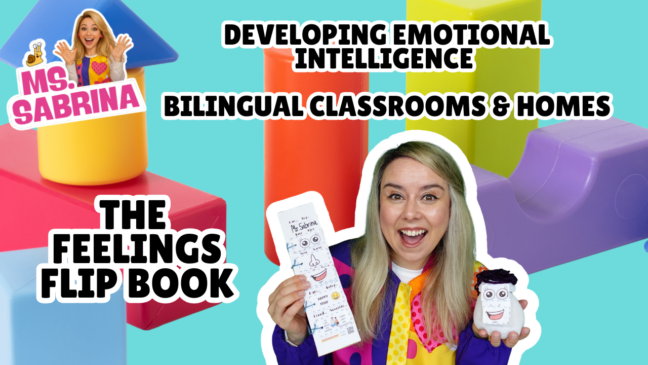
One simple and effective tool is a bilingual Feelings Flip Book.
At the top of the flip book, children write:
I am + name.
Soy + nombre.
Then they build emotional language using:
I am + feeling.
Estoy + sentimiento.
This structure is especially important for young bilingual learners who are practicing the difference between ser and estar. Instead of translating word by word, they internalize:
- I am + John. / Soy + John.
- I am + sad. / Estoy + triste.
From there, they continue with their need:
- I need + to take a quiet break.
Necesito + tomarme un descanso tranquilo.
By physically flipping and combining expressions, students move from vocabulary to meaningful communication. Why it works:
- It supports expressive language in both English and Spanish.
- It reinforces sentence structure in a concrete, visual way.
- It encourages self-regulation by linking feelings to needs.
- It reduces frustration by providing functional communication tools.
Teachers can use the Flip Book during circle time, morning meetings, calm-down corners, writing centers, or conflict resolution moments.
A child can say:
I am + frustrated. I need + help.
I am + scared. I need + a hug.
Families can also use this tool at home. Children can create a paper flip book or a simple rice-filled sock “feelings doll,” adjusting facial expressions to match how they feel and pairing it with a small “needs” flip book. These hands-on tools invite conversation and make emotional language part of everyday life.
In many settings, behavioral challenges are often communication challenges in disguise. When children can name their emotions and express what they need in two languages, they are not just learning words. They are growing into confident, emotionally intelligent, and capable human beings. That is bilingual education with heart.
For more, you can watch Ms. Sabrina’s Feelings Flip Book episode on YouTube (see below), and download the free printable flipbook template at MsSabrina.com.
Una herramienta práctica de Aprendizaje Socioemocional para aulas y hogares bilingües: El Libro de Caritas de las Emociones
El aprendizaje de idiomas se vuelve más significativo cuando el aprendizaje socioemocional se integra en él.
En entornos bilingües, a menudo comenzamos con emociones simples como feliz, triste o enfadado. Sin embargo, los niños se benefician más cuando el lenguaje emocional es funcional y les ayuda a expresar cómo se sienten y qué necesitan.
Una herramienta sencilla y eficaz es el libro de caritas de las emociones bilingüe. En la parte superior, los niños escriben:
I am + name.
Soy + nombre.
Después construyen el lenguaje emocional utilizando:
I am + feeling.
Estoy + emoción.
Esta estructura es especialmente importante para los pequeños aprendices bilingües que están practicando la diferencia entre ser y estar. En lugar de traducir palabra por palabra, comienzan a interiorizar:
- I am + Maria. / Soy + Maria.
- I am + sad. / Estoy + triste.
A partir de ahí, continúan expresando su necesidad:
- I need + to take a quiet break.
Necesito + tomarme un descanso tranquilo.
Al girar y combinar las expresiones físicamente, los estudiantes pasan del vocabulario aislado a la comunicación significativa. Por qué funciona:
- Favorece el lenguaje expresivo en inglés y español.
- Refuerza la estructura de las oraciones de manera concreta y visual.
- Promueve la autorregulación al vincular emociones con necesidades.
- Reduce la frustración al proporcionar herramientas de comunicación funcional.
Los docentes pueden utilizar el libro durante la asamblea de la mañana, en el rincón de la calma, en centros de escritura o en momentos de resolución de conflictos.
Un niño o una niña puede aprender a decir:
Estoy + frustrado/a. Necesito + ayuda.
Estoy + asustado/a. Necesito + un abrazo.
Las familias también pueden utilizar esta herramienta en casa. Los niños pueden crear un libro de caritas o un sencillo muñeco de emociones con un calcetín relleno de arroz, ajustando las expresiones faciales según cómo se sienten y combinándola con un pequeño libro de “necesidades”. Estas herramientas prácticas fomentan la conversación e integran el lenguaje emocional en las rutinas diarias.
En muchos entornos, los problemas de conducta suelen ser problemas de comunicación disfrazados. Cuando los niños pueden identificar sus emociones y expresar lo que necesitan en dos idiomas, no solo están aprendiendo palabras. Se están convirtiendo en seres humanos seguros, emocionalmente inteligentes y capaces. Eso es educación bilingüe con el corazón por delante.
Para más información, puedes ver el episodio del Libro de Caritas de las Emociones de Ms. Sabrina en YouTube y descargar la plantilla gratuita en MsSabrina.com.