No, no vamos a hablar de psicología. Pero… ¿verdad que queda chulo el título?
De todas formas, si bien no hablaremos de Freud, sí lo haremos de un superpronombre: el “yo”.
De todos es sabido que, a diferencia de otras lenguas, en español no es necesario incluir el “yo” para expresar la persona del hablante, ya que con la desinencia verbal es suficiente.
Sin embargo, en la lengua coloquial, con frecuencia recurrimos a él. Entonces, si no es necesario desde el punto de vista gramatical, ¿por qué lo usamos en ciertos contextos? . Pues muy sencillo: porque así nos lo exige nuestra amiga la pragmática. En efecto, lo que pretendemos en estos casos es hacer valer el propio criterio, individualizando al hablante frente a otras personas.
Tranquilidad, ya os lo explico yo…
Y es que yo pienso que la pragmática debe condicionar el uso que hagamos de la gramática. Vamos, creo yo. Porque, vamos a ver… ¿cómo lo diría yo?… . Es que, de otra forma, no podríamos alcanzar nuestros objetivos comunicativos. Os lo digo yo, que algo he leído sobre esto… .
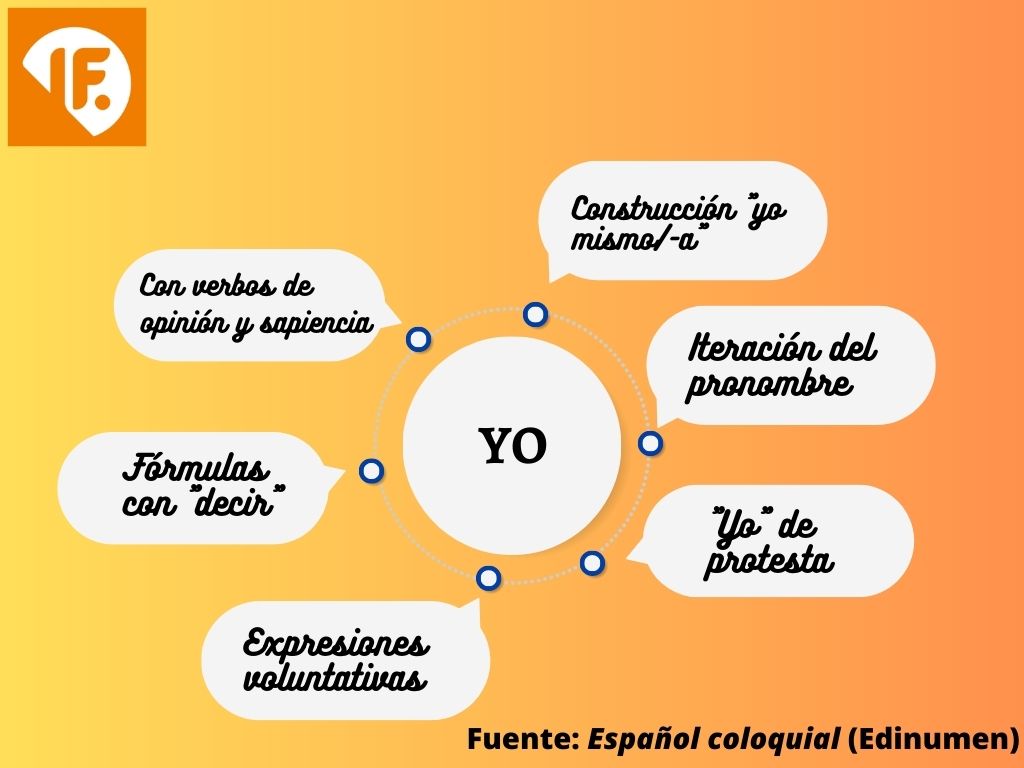
Bueno, te dejamos aquí abajo una pequeña infografíasobre el tema (está chula, la he hecho yo mismo), para que puedas relacionar los usos de “yo” con los ejemplos que aparecen en este texto. Y yo, yo me voy a descansar ahora un rato. . ¿Qué dices? ¿Que soy un vago? ¿Yo?. ¡Eso lo será el señor Freud!
FREUD, THE SPANISH AND THE SUPEREGO
No, we’re not going to talk about psychology. But … isn’t the title cool? 🤨
In any case, although we will not talk about Freud, we will talk about a superpronoun: the “I”. 😎
Everyone knows that, unlike other languages, in Spanish it is not necessary to include the “I” to express the person of the speaker, since verbal desinence is enough.
However, in the colloquial language, we often resort to it. So, if it is not grammatically necessary, why do we use it in certain contexts? 🤔. Well, very simple: because that’s what our pragmatic friend demands of us. Indeed, what we intend in these cases is to assert one’s own criteria, individualizing the speaker in front of other people. ➡️➡️ 😊 ⬅️⬅️
Tranquility, I explain it to you … 😌
And I think that pragmatics should condition the use we make of grammar. Come on, I think. Because, let’s see… how would I say it?… 🤔. It is that, otherwise, we could not achieve our communicative objectives. I tell you, I’ve read something about this… 🤥.
Well, we leave you here a small infographic on the subject (it’s cool, I’ve done it myself), so you can relate the uses of “I” with the examples that appear in this text. And I, I’m going to rest now for a while. 🛋. What are you saying? That I’m lazy? I? 😤. That will be Mr. Freud!
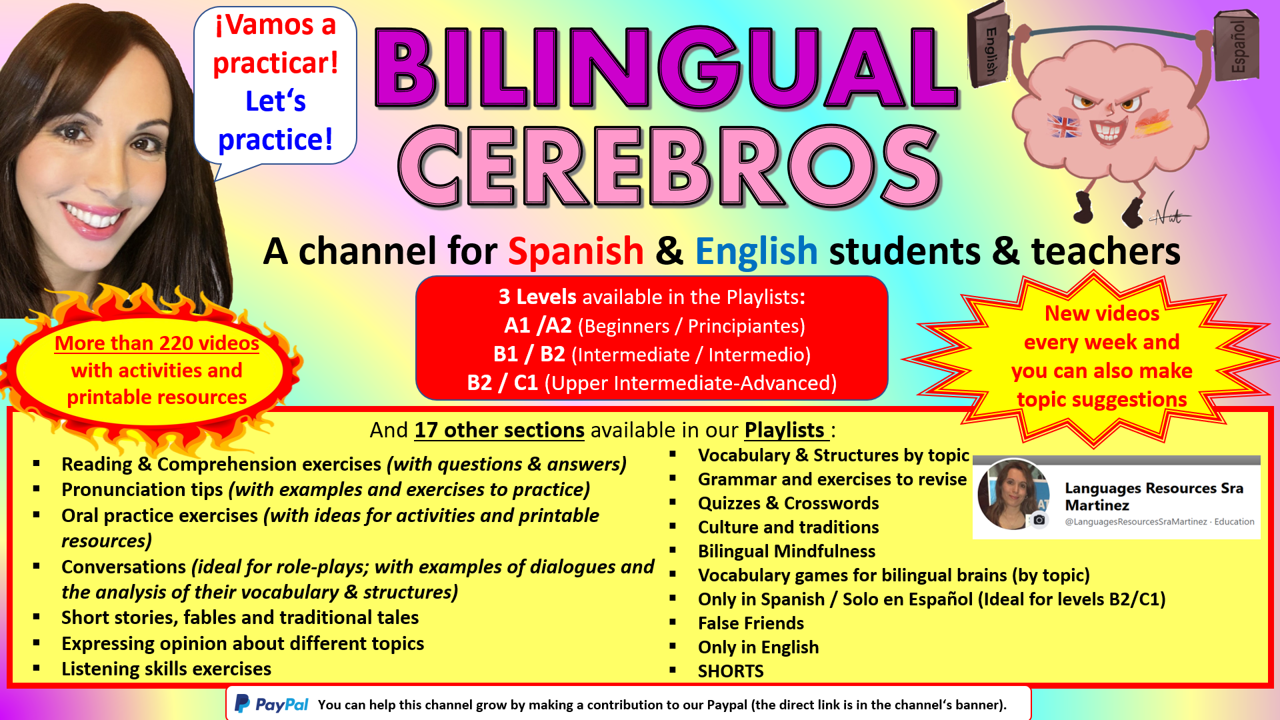
It all started with the pandemic and the boredom during lockdown. I have been a teacher for 23 years and creating my channel BILINGUAL CEREBROS was, especially during the pandemic, a way to motivate and support my students and keep my mind occupied.
However, once our lives went back to normal, I decided to continue with this channel as it had grown into a large community, currently more than 7,000 subscribers from all over the world, Spanish and English students and teachers.
My actual students have given me great feedback and encouraged me to carry on with the project as it really helps them revise the content from our lessons and even practice before exams.
I have also received very positive feedback from independent students from all over the world, thanking me because my videos and resources help them learn and many can’t afford to pay for private lessons, so they find my channel very helpful.
Teachers from all over the world have also given fantastic feedback to the channel as the resources shared help them save planning and preparation time. I also share the PowerPoint versions from the videos shared in the channel and they are all free.
In BILINGUAL CEREBROS you can find different sections in the playlists, including: short stories and fables to reflect on, vocabulary and grammar quizzes, reading and comprehension texts including questions and answers, tasks to train listening skills, cultural texts, bilingual mindfulness, songs and some more. There are more than 240 videos with activities and links to printable resources and I upload new content weekly. You can see in the photo below a summary of the different sections in the Playlists.
I love creating and sharing resources. For me it is a real pleasure to know that my resources help not only my students but also many others, and that this help can have an impact in someone’s life and their future. As we all know, languages open many doors, and if my contribution to improve someone’s language skills can have a role in their future, that is the best feeling in the world.
I can’t stress enough the importance of professional development, as once we do not feel that need, it might indicate that it is time to move forward. What attracts me to professional development (workshops, webinars, book clubs, or conferences) is two-fold. On the one hand I attend professional development for student learning (for a student-centered approach to education). On the other hand, as teachers, we are master learners (as we read in Innovate Inside the Box): We seek instances to learn.
Value of PD and PLC
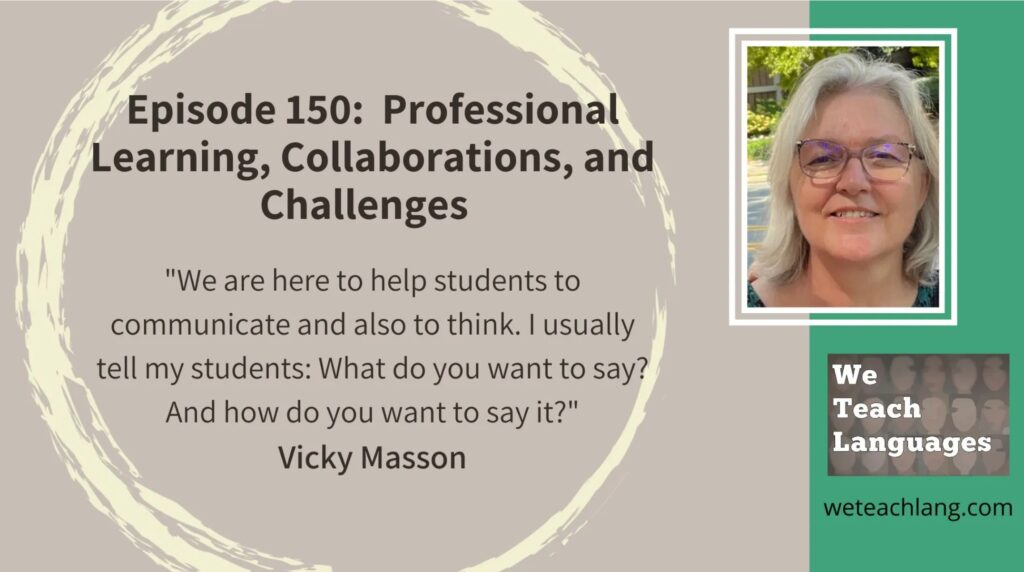
Throughout my teaching career, I have not only sought professional development but I have humbly presented as well. Lately, I appeared in We Teach Language Episode 150 (who doesn’t like round numbers?).
It made me think how much I cherish and value professional development but even more so, I value Professional Learning Communities.
What are Professional Learning Communities?
Professional Learning Communities are groups of people who get together in person or virtually with a purpose. We all share something in common and we care about it. For example, we might all share the passion of teaching with technology (or want to learn more about it). We might share the need to connect with a diverse group of educators from our state, our nation, or the world. We have different perspectives and we all learn together.
Being part of PLCs opens doors to new avenues for growth, learning, and development. It usually moves us out of our comfort zone and gives us, at times, unexpected instances of leading, both in small and in big projects. Language Teaching Lab, was a seed planted in one of these PLCs.
The PLC I Have Been the Longest with
I especially want to mention the PLC that I have been the longest with: GWATFL. I attended GWATFL for many years before becoming more involved in the organization. Since 2017, I have grown together with GWATFL. Now I have the fortuity of giving back with the GWATFL Member Action Program.
https://gwatfldc.org
The GWATFL MAP started as a project looking “for ways to create more opportunities to connect with and impact our community of language educators.” GWATFL MAP gives its members a chance to participate, lead, and act on GWATFL initiatives. It also gives its members a voice in the organization. A community of like-minded educators has begun and little by little, the program is growing and the impact of its members is becoming more palpable.
Professional Learning Communities: Bigger than Ourselves
In PLCs, we belong to a group bigger than ourselves. We count on and push each other to advance the mission and vision of such an organization, as well as our own. What are you waiting for to begin your own journey in a PLC? Attend professional development opportunities and join a professional learning community. You will not regret it.
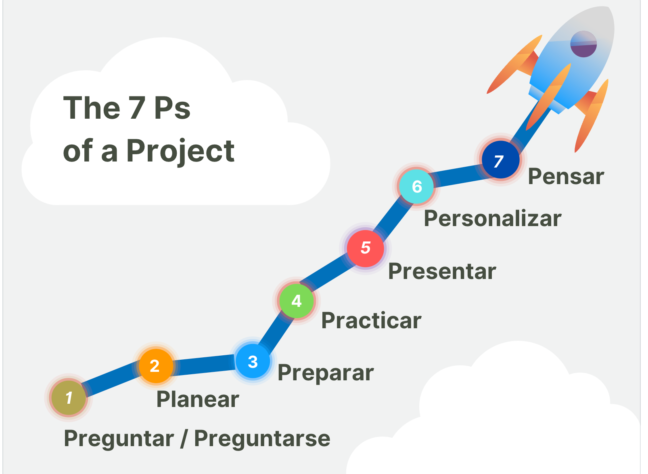
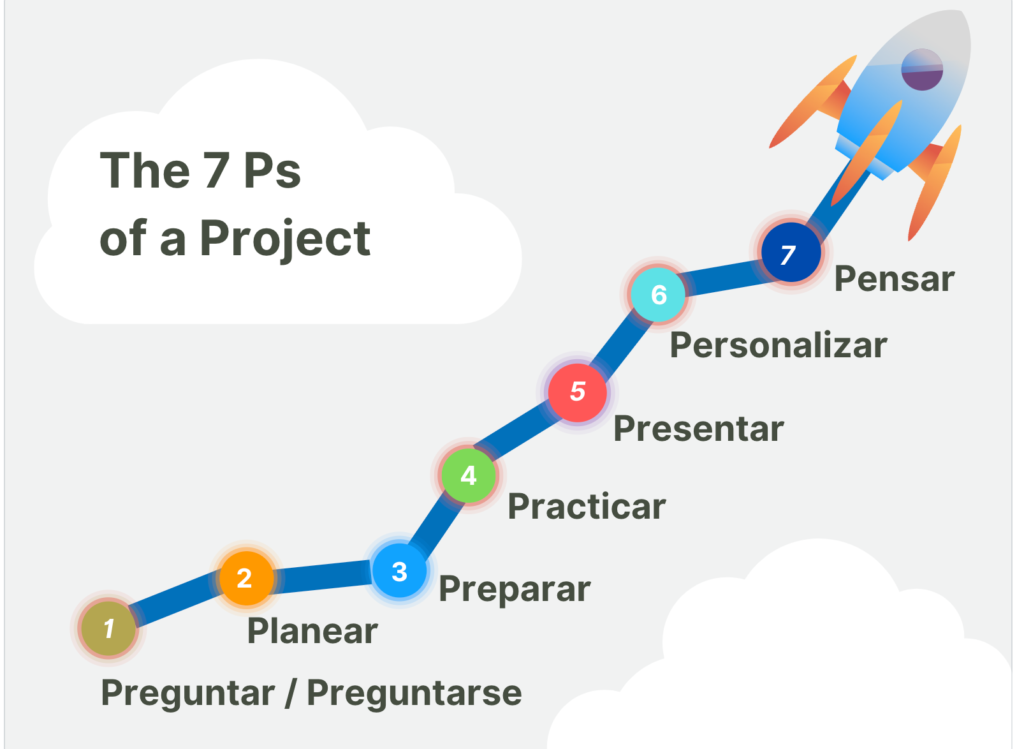
“’P’ is for Project” is one of the frameworks that I usually use to help students complete a project successfully in my Spanish language classes. This framework uses words in Spanish that begin with ‘P’, guiding students to identify and follow the different steps of the process while gaining independence. In Spanish, the 7 Ps of a project include: Preguntar / Preguntarse, Planear, Preparar, Practicar. Presentar, Personalizar, Pensar.
‘P’ is for Project
In English, most of the names for the steps use the word ‘P’ except for the very first one, which stands for ask yourself or questions. The framework includes: ask myself/questions, plan, prepare, practise, present, personalize (give feedback) and ponder (think and reflect).
Having a consistent path when doing projects helps students know where they are and what comes next, which lowers their affective filter. It also focuses them on the task at hand and helps them stay in the language!
In my classes the best learning has happened when students follow all the steps. I am going to show you the path my students – in elementary and early middle school – follow when doing a project in my Spanish classes. You can adapt these steps to use in Early Elementary or in High School.
‘P’ in Preguntar / Preguntarse
We usually start our projects with questions. Questions usually bring more questions. The word for questions in Spanish is ‘preguntas’ and ‘preguntarse’ is the action of wondering. It is the perfect way to start our ‘P is for Project’ framework.
I read the following “If we’re willing to ask the questions, we can begin changing things.” (Turning to One Another: Simple Conversations to Restore Hope to the Future, page 71). Though not all projects in my Spanish class lead to substantial change, students might change their way of seeing the world, their understanding of themselves, and their knowledge of other cultures.
‘P’ in Planear
What may ‘Planear’ include? It may include making a drawing, creating a simple outline, chunking what we need to do into daily doables, getting the materials needed, choosing what technology to use, investigating a topic, etc. Before we jump in, it is better to step back and think about what resources you need and what you need to do to achieve your goal.
‘P’ is for Project: Preparar
‘Preparar’ may include creating a graphic organizer, writing the first draft, preparing a PowerPoint or using another presentation edtech tool. My students have realized that usually this step is the one that takes the longest and after doing a couple of projects, they take their time to complete this step thoughtfully.
‘P’ in Practicar
‘Practicar’ is a key part of any project. Usually, in the first project of the year, my students skip this step. Students immediately get to understand that they should have practiced more before presenting in Spanish. When it is a presentational writing, they realize that they should have gone over, edited, and proofread their writing before turning in their final draft. Some students benefit from doing this step consciously as they realize that practicing compensates their effort.
‘P’ is for Project: Presentar
Once students complete Preguntar/Preguntarse, Planear, Preparar, and Practicar, ‘Presentar’ becomes an easy part of their projects. They are proud and ready! They feel accomplished and it often helps develop their self-esteem.
At the beginning of my career, I would have stopped after their presentation, either speaking or writing, was complete. Now I include two more steps: give feedback and reflect on their work. Why do I do this?
‘P’ in Personalizar
‘Personalizar’ has become my students’ favorite part of any project. It is the time in which they give feedback and celebrate their accomplishments and their friends’. If students created a Flip as a presentational speaking assignment, for example, they give personal compliments on each other’s successes. If students created a ‘gallery walk,’ they proudly give their feedback on other students’ work by posting stickers or post-it notes.
‘P’ is for Project: Pensar
‘Pensar’ has become my favorite part of any project. I get to hear students’ reflections on the process and as well as the product. I get to know how they feel and what they think. Interestingly enough, I also get to know how the project has opened their eyes to new products, practices, and perspectives, how it has transformed the way they see the world, and what personal connections they have made. It also gives me a chance to make changes to the project to help the following group of students. I usually use a form to capture their pondering on the project but other times, I prepare a set of questions and discuss them as a class.
So, to me, the ‘P’ is for Project because in my Spanish classes, following these steps -’Preguntar/Preguntarse (to ask questions), Planear (to plan), Preparar (to prepare), Practicar (to practice), Presentar (to present, in writing and / or speaking), Personalizar (to personalize and give feedback), and Pensar (to ponder, think, and reflect on their learning)’- help students engage in their learning by giving them a choice on what they want to learn about, investigate, communicate, and many times act upon.
It is only one page but it lets you dive into so many topics while personalizing it for each of your students.
Many ways to use ‘Mi día típico’ by Amy Lenord
This one page can be used to review many topics already studied, such as clothing, food, time, sports, meals and food, school, chores and other activities, and grammar structures, such as prepositional phrases, adverbs of quantity, sequencing words, besides the conjugation of verbs in the 1st person singular of regular, stem-changing, and reflexive verbs.
It also gives the perfect context to review the verbs ‘desayunar, almorzar, merendar & cenar’ for the specific meals of the day, as opposed to repeating ‘comer’. This is something quite confusing to language learners as these verbs are used differently in English and in Spanish.
Another application of this great resource is to make comparisons and explore new topics.
How I used ‘Mi día típico’
Reading for understanding
Initially, students read the page, it was easy for them to understand the meaning of the statements by looking at the images Amy Lenord included as a clue, plus my acting out, and drawing when necessary.
Later, I used this page for Interpersonal Speaking, Presentational Writing, and Presentational Speaking.
Interpersonal Speaking
After my fifth grade students read the page multiple times and were familiar with the meaning of each statement, I moved to having them ask and answer questions about themselves. They quickly realized that they needed to change the endings of all the verbs and the pronouns from ‘me’ (about me) to ‘te’ (about you) when asking their partner. There were some giggles when they made the questions without making this change, e.g.: ‘Do you brush ‘my’ teeth in the morning?’ instead of asking ‘Do you brush ‘your’ teeth in the morning?’
Scaffolding in Preparation to Present ‘Mi día típico’
Using the resource for presentational writing and presentational speaking needed some scaffolding. The following are some activities and tasks that my students did prior to presenting.
Draw the activities
I had students use this ‘jewel’ to also think about their typical days. I handed a booklet with three pages with the days of the week on each page. The first page read ‘Por la mañana’ (In the morning). The second read ‘Por la tarde’ (in the afternoon) and the third one had ‘Por la noche’ (at night), Students drew what they do during each part of the day on the specific days of the week. This booklet, along with the page ‘Mi día típico’, were our anchor for the rest of the tasks and activities. Students used both as guides all along.
Self-checking competition
I asked students to study the ‘Mi día típico’ verbs and the next day we played a competition. Each student would say a verb and everybody had to write it down. Students numbered the verbs and wrote them down until they thought they had named them all. Then they self-checked their writing against the ‘Mi día típico’ page for spelling and completion of all verbs. To my surprise, not only had they included all the verbs, but they had also added a few more!
Level up the phrases
Then, students chose one of the drawings from their booklet and wrote a sentence in their notebook that later read aloud to share it with their peers. I have to say that they came up with excellent phrases! To push them a little bit more, I asked them to ‘level up’ the phrases, so we discussed ideas on how to do it. Finally, students practiced ‘leveling up’ their phrases into emerging sentences by writing two more sentences and adding some details. They were very proud to share them in class.
Topic and conclusion sentences
The next class, We discussed which could be a good topic and a conclusion sentence for a presentational writing assignment and we jotted down several possible sentences. We used OneNote so everybody knew where to find the topic and conclusion sentences to study.
“We are in RLA,” they said
For reference, RLA is Reading Language Arts. I asked students if they had written paragraphs in Language Arts and they all said ‘Yes’, and we talked about what makes a good paragraph. I asked them to look at their drawings and circle those which they thought could be good illustrations to write about in Spanish. They could choose up to six pictures from any part of their booklet. While they were planning what to write, I told them they should answer: What can I write that will make an impact on Sra.? That way,I would see complete and original thoughts when I read their paragraphs. In other words, their writing had to catch my attention as a reader.
I also told them that we would be writing a presentation in class only using the booklet with the drawings and it would be an assessment. They practiced with different partners until they had a better idea of what they could write about and how they would write it.
Presentational Writing Assessment
It is imperative that I know what students are able to do. It helps me understand what I need to do to move students along the proficiency levels. Using their drawings as the only resource, most of my students included at least a Novice High sentence, evidence that they have already started creating original thoughts in Spanish. As a teacher, I felt accomplished!
Presentational Speaking & Reflection
For the Presentational Speaking they would be recording ‘Mi día típico’ in Flipgrid the following class. In preparation, they chose what to say, they practiced with friends, asked me questions, and shared strategies on how to do it. Then, they completed a reflection about the following:
What went well for you?
What was challenging?
What did you learn about yourself?
What would you do differently next time?
For the most part, students’ responses showed that the presentational writing was better than the presentational speaking because when writing, you can proofread your text, but when speaking, you have to come up with what to say on the spot. For the most part, they said that they could write and speak in Spanish much better than they could have ever imagined. I was proud of their work, effort, and growth.
I find that ‘Mi día típico’ by Amy Lenord is a resource that helps my students accomplish communication. Thank you, Amy!
What do intercultural conversations look like in your language class?
Depending on the age of the students, intercultural conversations can take many different shapes and forms. For the purpose of this blog, I’ll talk about the experience of bringing a native Spanish speaker to my middle school class. This person was from Spain. Why from Spain? We were getting ready to read “Agentes secretos y el mural de Picasso” by Mira Canion and I wanted to introduce them to Spain in a different way. My first impression was that (in general), my students knew little about Spain and had misconceptions about this country. Off to an interesting start!
How might you prepare students to have intercultural conversations?
I am sure that there are many ways to have students get ready for intercultural conversations but I decided to go with questions, facts, and maps.
Asking Questions:
I asked my students what they wanted to know about Spain and wrote each one of their questions. I could see how their minds fed from each other’s ideas, and I was impressed with the array of questions they had. We created a long list of questions.
Categorizing questions:
Next class, I asked them to work in groups of three. They had to read the questions generated in our previous class, find connections among them and group them in categories. They also had to come up with the names for the categories. When they finished, I asked one group to tell me a category and read the questions that were in it. If others disagreed, they would have to explain why and what they would do differently. When all the questions were classified and everybody was in agreement, we paused for a second and re-read all the questions in each category.
Delving Meaning:
Now, it was time to think deeper and discuss how the visitor would feel or react to the questions. We wanted to avoid questions that sounded too direct or even unintentionally offensive, i.e. ‘Why did you come to America?’ We rearranged the questions and tweaked some of them so that they would provoke a positive response in our speaker. When we finished, we re-read the questions once more and … finally, we all liked how they sounded!
This step of the process proved to be a fundamental part of the experience, it sparked empathy and kindness. Students could see that the way we ask questions is as important as what we ask.
Finding Facts:
Now that the questions were ready, students had to investigate and find three to five facts about Spain.The next day, they came excited about their findings. “Quite interesting facts, Sra!” they said. “Did you know that the Spanish anthem does not have lyrics? Did you know that Spain has many World Heritage Sites?”
Reading Maps:
We found Spain and its islands on a world map and also read a couple of simple articles that explained Spain’s location and regions. Students were surprised to find out that Spain is similar to Texas in size. Now, I felt students were ready to meet our guest speaker.
Time to meet our guest speaker
Finally, the day to meet our guest speaker had come! I had sent her the questions in advance so she could prepare for our meeting. She had made a short presentation with images based on the questions my students had asked. As I had anticipated, students were intrigued by all she had to show them about Spain but she did not stop there. She also asked students personal questions such as, favorites, sports, and traveling, to compare their experiences with hers and so that they could relate to what she was talking about. They gave her a round of applause when she finished.
Time to reflect on the learning of intercultural conversations
As my guest speaker spoke practically all in Spanish (really! the 90% suggested by ACTFL) I was curious to know how much my students had understood. I decided to have them do a short reflection using the PZ Thinking Routine: I used to think … But now I think / I know. I added “I learned” and “I liked” for those that needed to express more concrete thinking. I was amazed at how much students had understood and learned through this experience.
In sum, I was happy to see the growth in my students’ thinking and learning. Moreover, I felt very accomplished to have facilitated a successful intercultural conversation.
Presenting global views connects language students to the experiences of others. It engages their minds, hearts, and hands. There are wonderful resources that help language students broaden their perspective of the world, not necessarily limited to the people in the countries that speak the language they are learning. Why wait until they are at an intermediate level? You may start with novice learners. It all depends on what you show them and what you do with it, i.e. how you use the resource, as well as why you are using that specific resource.
Why global views?
I part with the idea that we live in one world and the more that we learn from each other, the better. As a Spanish teacher myself, I moved from showing only things related to the Spanish-speaking world to showing my students the whole world. Of course, a big part of what we do in class is related to the Spanish world, but I intersect resources that go beyond that. Learning about others helps break down stereotypes, expands our worldviews, and helps us become aware of our interconnectedness and common humanity. In sum, it is about helping my students become globally competent.
How do we use photographs as global views ?
To successfully reach the minds, hearts, and hands of language learners, it is necessary to think through how we introduce, develop, and conclude each lesson. It is also important to think about what background knowledge students need in order to understand the topic and what prior knowledge they bring to class. Using resources thoughtfully is key.
Many times I choose to use photographs to do this type of work because they are potent visuals. They tell stories and we can all relate to stories. Photographers have a unique eye as their lens captures a precious moment in time. It is up to us to show these global views and choose how to do it.
The following are some ways in which I have presented global views to my students.
When I taught elementary school, my students particularly enjoyed when I showed them photographs of classrooms around the world and they had to compare and contrast those with their own classroom. As an added benefit, I learned about students’ prior experiences and their families’ history.
My students love when they can choose. When presenting them with several photographs, I let them choose one that talks to them and ask them to do different activities, from simply describing the photograph to creating a story to only asking and answering questions. Other times, I present them with two photographs and we compare them to find similarities and differences. These types of activities propel great conversations.
The National Portrait Gallery has many classroom resources to use when describing portraiture, and some of them can be applied to analyzing photographs successfully. I especially enjoy:
There is no doubt that using the Project Zero Thinking Routines makes perfect sense when analyzing photographs. For this type of work, I would go with the Global Thinking Routines ones.
The Library of Congress has a special tool when it comes to analyze photographs that differs from the tools used to analyze other media. It is a wonderful way to start a conversation about photographs. Check it out!
There are so many ways to go when it comes to introducing global views to students. Of course, the images per se are key in making it a powerful experience.
What resources can we use to engage learners with global views ?
The following are some resources based on photographs. Some of these photographs include the topics of school, food, identity, and landscapes and I have used some of them with my novice students. What is important is to choose what to show and how to present it to students.
As an Amazon Associate LTL earns from qualified purchases.
Each time I present global views to students, their engagement is palpable as global views engage language learners’ minds, hearts, and hands. If you haven’t already, give it a try and let me know how it goes in your classes.
‘Why do we teach…?‘ is a column of Language Teaching Lab. It might help us think deeper on why we teach a certain topic. In addition, it might show a new perspective on how to teach it.
Learning about ‘cognates’ and ‘circumlocution’ helped students feel successful during an assessment. When my students finish their assessments most of the time I ask for feedback. I want to know what my students are thinking and feeling. After the last presentational writing, I asked my students what helped them while they were writing.
In a group of ten students, two said that they thought of cognates to help them write or figure out words to use in their writing. A third student told me that he thought of the game we play where “you say words about something without mentioning the word”. He said that it helped him come up with words to use in his writing.
Why I teach the word ‘cognate’ the first day of class
Many years ago, as summer reading, my students read Cuba 15 by Nancy Osa. As far as I remember, very early in the novel, we learn about the power of ‘cognates.’ That was one of the first words the Spanish teacher taught her class. I teach my students the word ‘cognate’ the very first day we meet as a class.
Learning about cognates makes a huge difference in the quantity of vocabulary a novice proficiency level language student might acquire. I invite students to act like detectives, trying to find clues in words by comparing them to their native language.
How I use ‘cognates‘
Once students feel comfortable being language ‘detectives,’ I purposefully ask them to find cognates in interpretive reading taks and listen for cognates in interpretive listening tasks first of all.
Students immediately realize that by looking for cognates, they already understand many words in the text or audio, even before starting to analyze it.
While having class discussions or group conversations they tend to ask ‘how do you say…?’ I immediately tell them that the word is a cognate and ask them if they can figure out what it can be, which they do 90% of the time. Some of my students even create their own list of cognates and refer to it during practice assessments or assignments.
Where I find resources
Co-creating a list of cognates or presenting students with lists of cognates are ways of increasing the variety of vocabulary they can use. My go to lists are Colorin Colorado and Mondly.
Why I teach ‘circumlocution‘
Teaching circumlocution increases communication in world language classes. I learned about circumlocution during an OWL (Organic World Language) professional development training many years ago. According to dictionary.com, circumlocution is “a roundabout or indirect way of speaking; the use of more words than necessary to express an idea.” In general, we are taught to use the best words to express our thoughts so it seems that circumlocution is contradictory. When it comes to languages, it is not.
Why do I think that teaching ‘circumlocution’ is one of the best gifts I can give my students? Simply put, it helps students stay in the language using words that they know and figuring out how to express their thoughts with the content they own.
How I teach ‘circumlocution‘
Circumlocution expands students’ vocabulary and at the same time, It helps learners categorize. Categories help students be able to express themselves in the language they are learning by making associations among words that share the same or similar carachteristics. Learning circumlocution is a game changer!
I usually use games to help students use circumlocution, like the one my student mentioned after the assesment. I call that ‘Adivina’ which basically means ‘guess.’ It is a low prep game where you show a picture to students. One of them describes one of the objects in the picture and the others (usually in groups) have to guess what it refers to. The one who guesses chooses the next word. A similar game is the famous ‘20 questions’ in which students have 20 questions to find out the chosen word. Both games are favorites in my classes.
What are some structures to use
A simple search in Quizlet or Kahoot will give you ready-to-use activities to practice circumlocution. If you search Teachers Pay Teachers or Pinterest you will also find lots of useful resources.
‘Cognates’ and ‘circumlocution‘
My premise is that I teach a language with the purpose of having my students think and communicate (locally or globally) what they want to say and how, in another language. When I provide tools like cognates and circumlocution, students take ownership of their learning and feel successful in class. I want students to stay in the language and also to take risks, so cognates and circumlocution give students superpowers.
Resources mentioned
–Cuba 15 by Nancy Osa – As an Amazon Associate LTL earns from qualifying purchases
“EdTech”is a column of Language Teaching Lab where we highlight the use of educational technology in the world language class
To say that teaching with COVID-19 in 2020 was challenging is an understatement!
Whether you had to teach 100% virtually or a hybrid combination of online and in person, the challenge in the world language classes was how to address all modes of communication fairly equally. The Google Meet breakout rooms were okay, but I couldn’t get the whole conversation if I wanted to listen to all my students. Sometimes they would see me join the breakout room and become nervous so I felt I was disrupting their conversation. I wasn’t sure how to get my students to do interpersonal speaking in real time, listen to them, give them feedback, and assess them without spending all my waking hours on the computer. I was becoming crazy with all the different tabs I needed open on my laptop in order to plan and teach my lesson.
One day, my prayers were answered. The Director of Innovation and Educational Technology at my school introduced us to Kami. My challenges were solved with Kami.
https://www.kamiapp.com/
What is Kami?
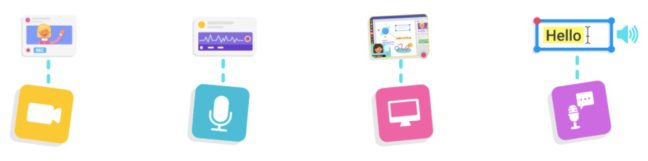
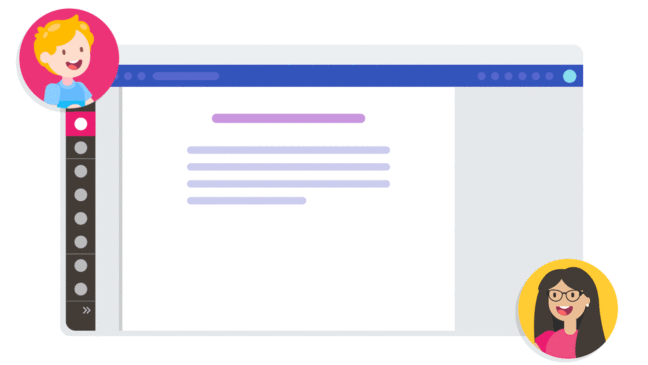
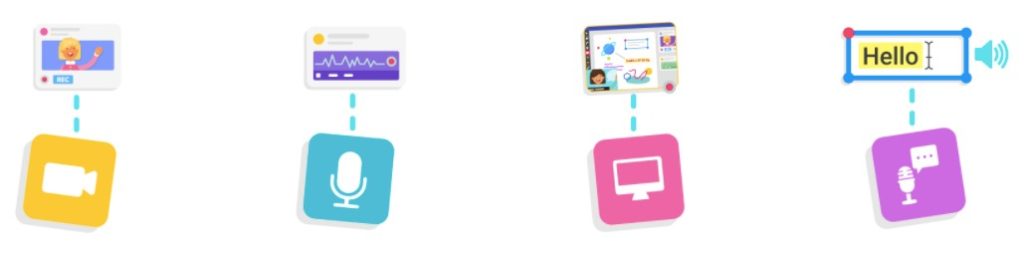
Kami is a digital classroom tool that helps teachers create flexible and collaborative learning environments. I just couldn’t believe my eyes when I tried it and discovered all I could accomplish with only one tool! It was amazing! Kami Interacts with any documents; it creates, sends, and grades assignments all from one place, it works online or offline, and enables students to interact with teachers, resources, and each other by using text, freehand, audio, voice-typing, or video.
https://www.kamiapp.com/
I’m including their video so you can learn a bit more about it.
How I Use Kami
For Interpersonal Speaking Assessments
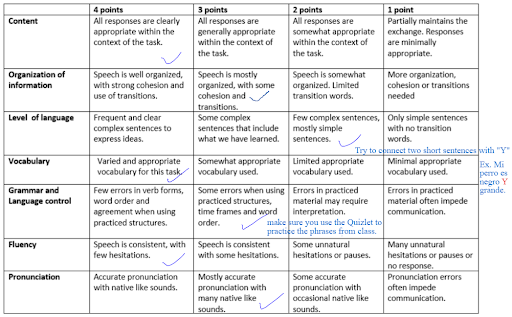
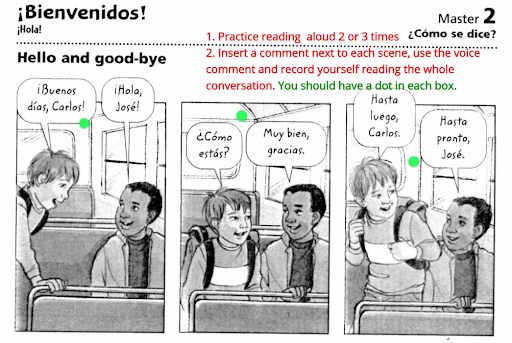
First, I would create a document with the directions and prompts to assess interpersonal speaking and give it to the student-partners. One of the partners made a copy and shared it with his classmate so they could work together while maintaining the safe 6-feet-apart distance if both were at school and also if one partner was at school and the other was at home. Taking turns, they would use the voice feature to record themselves and complete the conversation. They shared it with me and I would give them feedback inserting an image of the rubric and using either the voice or text message to focus on their strengths and areas for growth.
Interpersonal Speaking Rubric
For Reading Aloud
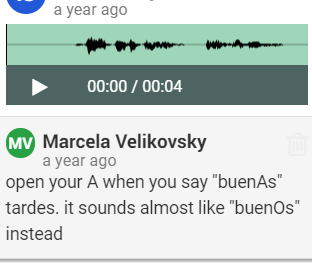
I also use Kami as a practice tool for reading aloud. I can open any PDF text with Kami and I record my own reading aloud to model and then have students read aloud while they record themselves. This way I can see how they decode the text and what sounds give them the most trouble. In my feedback, I can share some strategies on how to articulate and connect sounds so the listener can understand what they say.
For Interpretive Reading and Annotation
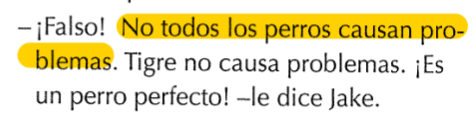
When we read novellas in class, I use a digital copy of the chapter to project on my screen. This way, students can see when I highlight, underline and write as we read along so they do it in their own text. The writing tool allows me to write new vocabulary, but also to verbalize our thinking as we read and make connections to the text. Students write annotations in sticky notes that add to the pages in their book. This is an example of Brandon Brown quiere un perro, by Carol Gaab:
For Presentational and Collaborative Writing
I can open my students’ projects and see who wrote what and when. This helps me know exactly how I can better support them depending on their needs. I can also make a copy for each partner so each student receives individual feedback.
Why I like Kami
Being a language teacher, I design lessons that include all modes of communication, so having such a versatile tool that allows me to interact and use what I already have in one platform is my dream come true! In addition, I always have lots of feedback for my students and time does not allow me to conference with them in person as I’d like. So another perk of this fantastic tool is that it allows me to give them feedback right away and directly on the assignment that they virtually hand-in. I can underline or circle things in their writing at the same time I record or write my explanation.
This is an example of how I used Kami with my novice students
And you? How have you used Kami? If you haven’t used it yet, are you ready to try?
“EdTech” is a column of Language Teaching Lab where we highlight the use of educational technology in the world language class
by Vicky Masson
Wonder.me is the next Zoom/Teams?
I had the opportunity to attend the #HPTeachingFellow Summer Convening where I experienced Wonder.me first hand. I loved how I could easily navigate this site, forever changing the way I saw online meetings. I am looking forward to using Wonder.me in my language classes.
What is Wonder.me?
Wonder.me is a platform to connect with other people. This connection can take the form of virtual networking, virtual gatherings, and virtual spaces.This platform is simple to navigate and it gives you the freedom to move from one space to another by moving your avatar to another area or circle. Does it sound complicated? Watch this short video to see how Wonder.me works and what it looks like
Wonder.me Introduction
How does it differ from Zoom/Teams?
Zoom and Teams are great and they have their own purpose. I have used both of them when teaching, and depending on what I am planning to do I would choose one or the other. My premise is to choose the best edtech tool for my students to thrive, and Wonder.me gives me another option to connect my students among themselves and to the world.
What do you need to do?
To use Wonder.me in a language class, you need to create an account with Wonder.me, which is free, and you need to become a host – you can also have co-hosts. That way you can invite guests to join your students and you to Wonder.me.
As a host, you set up different areas, decide the content for each area, and plan how students will interact. You decide how much autonomy you want to give your students and you also have the option of talking to all the groups/circles/areas by making announcements when needed. You can decide what background to choose depending on the unit of study. As a host you can include a question that everybody has to answer to join your Wonder.me space and much more!
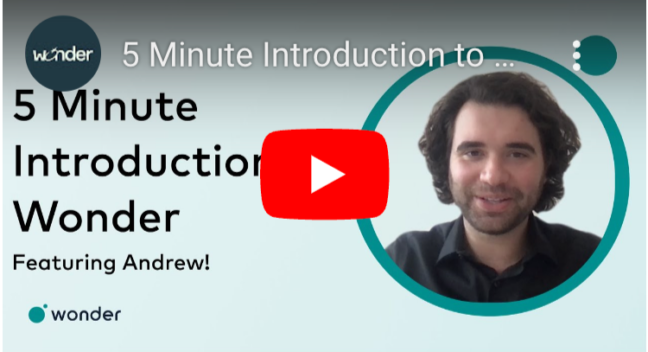
This 5 minute video gives you an idea of what a host can do and how it is done.
When can Wonder.me be used in language teaching and learning?
Wonder.me’s mission, “to give the world a space where groups can meet and talk” goes hand in hand with the nature of a language class: to have students think in another language and communicate their ideas orally and in writing with others –the chat feature works great for this.
As you can see, there are many possibilities to be explored in a language class using Wonder.me. Here are two examples of how I would use Wonder.me in a language class:
Book circles:
This applies when reading books in your own class or with a classroom partner
When reading the same novel, have students choose or assign students to join different circles for each character in a book
When reading different books, each circle hosts students that are reading the same book
Collaboration Spaces:
This applies to groups in your own class or with groups between your class and a classroom partner. Students navigate to a circle in order to…
discuss topics
solve a problem
provide definitions of their own
create a story
analyze an image using a PZ Thinking Routine
investigate and research
prepare for an interview
Interview other students
One of the features that I like the most about Wonder.me is that you can see where every student is at any given time. That, to me, is precious!.
Do you have a favorite edtech tool to use in your language classes?
Cookie Consent
We use cookies to improve your experience on our site. By using our site, you consent to cookies.
Cookie Preferences
Manage your cookie preferences below:
Essential cookies enable basic functions and are necessary for the proper function of the website.
Name
Description
Duration
Cookie Preferences
This cookie is used to store the user's cookie consent preferences.