And the Stars Align… Combining AI + CI

By Noemí Rodríguez (LTL Contributor)  

If you are a language teacher, then you are probably using comprehensible input teaching methods (repeat, recycle, repeat) or have heard about them – it is not a surprise that by adjusting language strategically and providing input (either spoken or written) that is tiered to only include words, phrases and structures that students comprehend – students will be able to make meaning of the language and in fact, acquire. Which is how and why Acquisition Driven Instruction works so well. Our goal as language educators is to fill our student’s minds with lots of useful language, so they can USE the language in the future in their presentational and interpersonal communication. This is also why I believe WE (the people who use languages) keep the languages alive- and languages do in fact change and evolve over time, thanks to all of us!

As Generative AI begins to take over how we “do” our day to day tasks – let me attend that meeting but have my AI assistant take notes, let me figure out what is for dinner tonight or let me write that important letter of recommendation – it also makes sense to look at how this incredible technology can assist language teachers with designing resources and activities with comprehensible input at the heart of the design. And, in addition to a CI lens, can we also harness the power of Generative AI to focus on true intercultural aspects of the target language (products, perspectives & practices) AND design lessons that meet ALL of our student’s needs? My friends – the answer is YES!

Let’s begin with THE PROMPT!

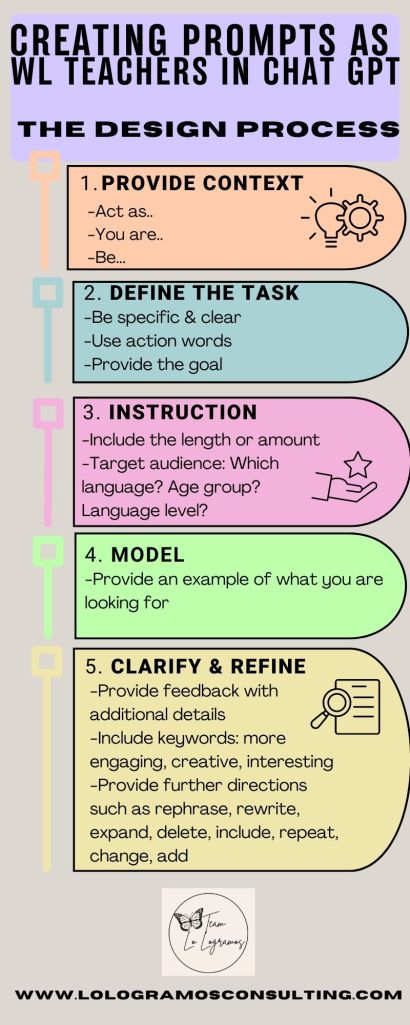
The most important part of using any Generative AI tool is how descriptive you are with writing your prompt. Chat GPT is continuing to learn YOU and understand who you ARE – and as a result, you must specify with your language, level, proficiency target(s), students (general information*), content, delivery of content and potential modifications in mind.

I’ve designed the below guide to assist language teachers create a well designed prompt, with the intentionality of having the “export” align with your expectations. I’ve also created a collaborative prompt library for language educators, which is one of the many perks in joining the AI Tools for Language Educators Institute community. When designing your prompt, consider all of the different important elements that you would like to include. A simple rule of thumb is understanding the better the prompt provided, the better the output. Chat GPT or other LLMs of preference can truly serve as your thought partner, brainstorming buddy, content creator or my favorite role- your new personal assistant. Consider the possibilities!
AI @team_lologramos

So, how do we merge the world of AI with CI?

It all goes back to your well designed prompt! By specifying the type of language instruction model you are using, reference using cognates in your language (hopefully they exist!), frequently used words from the target language and specific targeted vocabulary (not sheltering grammar & treating expressions as vocabulary words) – the content created by Generative AI will align to your ADI expectations. And don’t forget to lead with culture in your CI lessons!

Plug the following prompt into your LLM and see what it can do!

Be sure to change the language and/or information that is underlined to make the prompt specific to you and your language class.

You are an acquisition driven instruction teacher of Spanish, which means you focus on delivering comprehensible input and making language easy to understand and comprehend for beginning language learners. You teach a group of 7th grade students in a suburban middle school and they are currently discussing their school schedules and day to day activities using Novice Mid or A1 language. Can you write a paragraph (no more than 150 words each) in Spanish in comparing and contrasting a typical school day in Spain with a typical school day in the United States. Include information about schedules, subjects, and extracurricular activities. Repeat and reuse the following vocabulary expressions at least three times in this paragraph: tiene, empieza, termina, es aburrido, es interesante. In addition to cognates and the vocabulary provided, use ONLY the most frequently used vocabulary in the Spanish language. You can reference this website for the top 100 frequently used words in Spanish to assist you with your development of this reading passage: https://spanishforyourjob.com/commonwords/, use cognates frequently. For this paragraph, create at least five follow up comprehension questions based on this paragraph in Spanish and one open-ended prompt for beginning level language learners to respond. Create a simple table with a typical school schedule with start/end times using military time and specific classes at each time in both countries, in Spanish. And design a simple dialogue between a teenager from Spain and a teenager from U.S.A. discussing the key information from the paragraph about their school days.

Tools to use AI

I used Gemini (Google’s LLM) and it provided the following Google Doc ( *asked if I could export the schedule/table into a Google spreadsheet as well). The fascinating part is that designing this initial resource for me took a matter of seconds. And of course, I can look at this “School Life” reading as an initial draft and go in to make modifications to further customize it, understanding that my students should comprehend at least 90% of this reading. I can also have the LLM create “tiered” versions of this text, further simplifying it or making it a bit more challenging, to allow for students to read the text at their individual reading level. And – to take this reading passage and use an AI tool to design a slideshow export – head over to Diffit.me and copy/paste your text into the third section labeled “Any text or excerpt” and let the magic happen! Diffit.me can also export into Google Docs, Google Forms, pptx or PDF files.

Another great way to merge the world of AI with CI is with chatbot design and providing a low-stakes environment for interpersonal practice! I had previously blogged about using chatbots in the language classroom as conversational partners. Remember, your chatbot can be ANYONE! So who would you like your students to chat with? Someone famous? An artist? A musician? An athlete? And the same goes with WHAT your students are chatting about with their chatbots – you can ask your chatbot to target specific vocabulary and adhere to the provided conversational rules. Similarly to those reading passages, you have to set the specific parameters with language use and level to ensure that the chatbot adheres to your expectations and truly becomes a great language practice partner for your students!

One more tip considering how a CI-focused teacher can leverage the power of AI tools – Generative AI can also design images, change backgrounds and create videos for you! So, if you have a fun story that you were never really able to locate the right pictures to match the storyline – check out Canva, Magic Design and see what image(s) or video can be generated for you. Here are some neat images that I generated this afternoon while working with a fantastic group of language teachers!

Canva also now has Dall-E (OpenAI’s Image Generator) and as teachers, we receive premium access to this incredible platform. Canva has so many neat capabilities, I continue to enjoy exploring and experimenting- check out their “AI-powered” apps!

Looking to dive in deeper with AI?

Here is where I would love to continue to help support your journey as a language teacher! I have designed an asynchronous course as mentioned before: The AI Tools Institute for Language Classrooms (with monthly support built in*), host free-virtual meetings often for the Team Lo Logramos FB community, and will present a two-part webinar series in May with the incredible Joe Dale (@joedale) ! Please also do follow @team_lologramos to stay connected!

I hope this post has given you some great ideas on how to leverage Generative AI with a CI focus in the future


Students Move Forward: Proficiency in the World Language Class

move forward
students move forward: proficiency in the world language class

Move forward, the theme for the month, was inspired by a question I have been pondering a lot lately; 

How might a proficiency-based curriculum approach help students move forward in their language acquisition? 

There is a huge difference in an educational setting between noticing language and acquiring language once students have time to process it. Acquiring language is making it yours to use when communicating. 

This first question inspired other questions. 

How do you implement a proficiency-based approach in the language classroom? What type of questions should I/ we ask to develop students’ language proficiency to move forward?

A proficiency-based language approach has the objective to help students think and communicate ideas. 

When answering questions, students demonstrate specific understandings, knowledge, and language skills that over time, reflect progress and the transition from one proficiency level to the next.

Teaching for proficiency starts by asking the right questions to help students develop communicative functions based on a context provided: describing, explaining, comparing, etc. It is about finding meaning and having a purpose to communicate what helps students to move forward in their language acquisition.

What is the data on the topic? 

There is an array of data on proficiency-based language instruction. These are some worth- exploring resources:

What lesson plan works best for implementing a proficiency-based language learning that help students move forward?

This is one lesson plan template I use for planning for proficiency. It helps to ask the right questions and plan accordingly. Use it and let me know if it helps.

What rubrics best align with a proficiency-based approach to language instruction?

Rubrics may be used for grading, giving feedback, self-assessment, and goal-setting. They can help students understand expectations and components of an assignment, become more aware of their learning process, and improve their work through timely and detailed feedback.

One possibility is the ‘single-point rubric’ as explained in the Cult of Pedagogy. Teachers can create the criteria to meet expectations for the assignment, provide feedback on areas for improvement, and have evidence of exceeding standards. The rubrics for World Languages from the Ohio Department of Education show examples of rubrics for each mode of communication. Organic World Language (OWL) also offers great rubrics to assess student proficiency in the language. 

What do you do if your innovative teaching methods are met with resistance from students or other stakeholders? 

Don’t give up! 

Students need an authentic purpose for learning, relevant learning experiences, and a real audience. They also need to have these questions answered,

  • Why is this important?
  • How will I use it?
  • How does this connect with something I already know? 

When I read the book Innovate Inside the Box: Empowering Learners Through UDL and the Innovator’s Mindset it reminded me to center my teaching around those questions important to students. This book also inspired me to create and innovate within the constraints of the educational setting I am immersed in. 

Other things that can be helpful if you feel there is resistance from students and other stakeholders are: 

  • Communicating the goals and benefits of using this approach 
  • Repeating the goals and benefits of a proficiency-based approach as needed and providing new ideas and examples
  • Explaining the proficiency levels to students and showing them what it looks like in terms of language use
  • Evaluating and re-evaluating students’ progress
  • Inviting teachers to the classroom 
  • Understanding the perspective of other stakeholders

In the classroom, welcome questions, ask students for feedback, create a structure to support ambiguity, and help students become comfortable with the uncomfortable. 

What would you recommend for a novice language teacher or anyone who would like to implement a proficiency-based approach to their language instruction? What workshops, classes, or online/onsite courses would help achieve their goals? 

I highly recommend starting your journey by attending an Organic World Language training, either online or onsite, as a way of immersing yourself in the experience. 

Other recommendations include becoming familiar with the Teacher Effectiveness for Language Learning Framework and taking the Avant Advance online teaching training, 

Of course, attend state, regional, and national conferences for world language educators such as GWATFL, NECTFL, and ACTFL. Get involved in your local professional learning communities

Students and teachers alike will move forward in the proficiency-based teaching and learning continuum.

students move forward: proficiency in the world language class

Motivating and Inspiring Through Music in Language Lessons

by Maria Martinez (LTL Contributor)

Looking back at what motivated me as a learner when I was a child and I started learning English, brings back memories from my primary school years in a small village in the south of Spain. Back then foreign languages were introduced in Year 6 (at age 12).

Before that, I’ve had my first contact with English through music like most of us did back then, listening to Madonna, Michael Jackson and all the great singers from the 80s, (I’m showing my age now…🙃😊) musicals like Grease, etc. And of course, I loved singing their songs without having a clue about their content and mispronouncing every single word: “Wi ar de worl, wi ar de children!” or “Laik a berjen, tach for the beri ferst taim” 🤣

One day, I remember that one of my sister’s friends heard me singing and started laughing at me (not only because of my singing, but more because of the words that I was saying… Well, not that she knew any better, as she was older than me and the older generations were learning French…). I must have been around 8 or 9 years old, but I remember it really annoyed me and that day I decided that one day I would speak English really well and that I would understand every single word from my favorite singers.

Some years later, when I was about 12-13 and I was already learning English at the school, I remember that I had fallen in love with the boy band of that time “New Kids On The Block.” I used to spend hours and hours listening to their songs, rewinding my tapes (very 80s!) and writing down the lyrics that I could understand by decoding them on my own and using my Spanish/English dictionary to find out what they were singing about.

Ahhh the 80s! No Google Translate back then to help me, all manual… But you know what? There was something about that process that really helped those words and sentences stick better in my head and allow them to stay in the long-term memory and embed themselves as part of my vocabulary. 

Don’t get me wrong, I am really in love with technology and all the advantages that it brings; however, I am seeing how relying too much on technology is making us all slowly less sharp… Faster for some things, but in terms of independent learning and reasoning, I think that the abuse of technology could make us lose some of our intellectual capacities gradually, so I believe that keeping a balance is very important. The key thing is to find the balance, like with everything else in life.

Music in Language Lessons

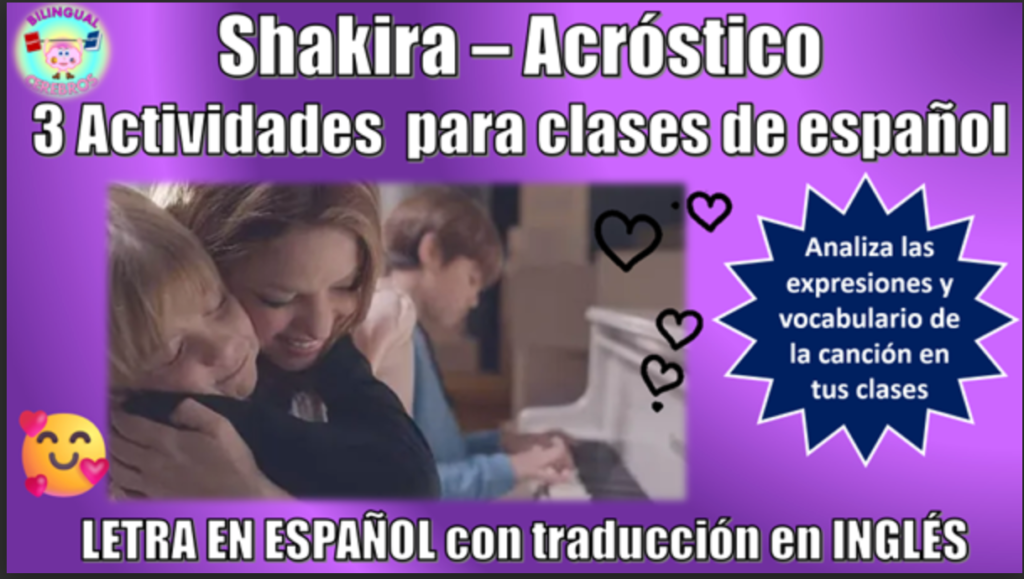
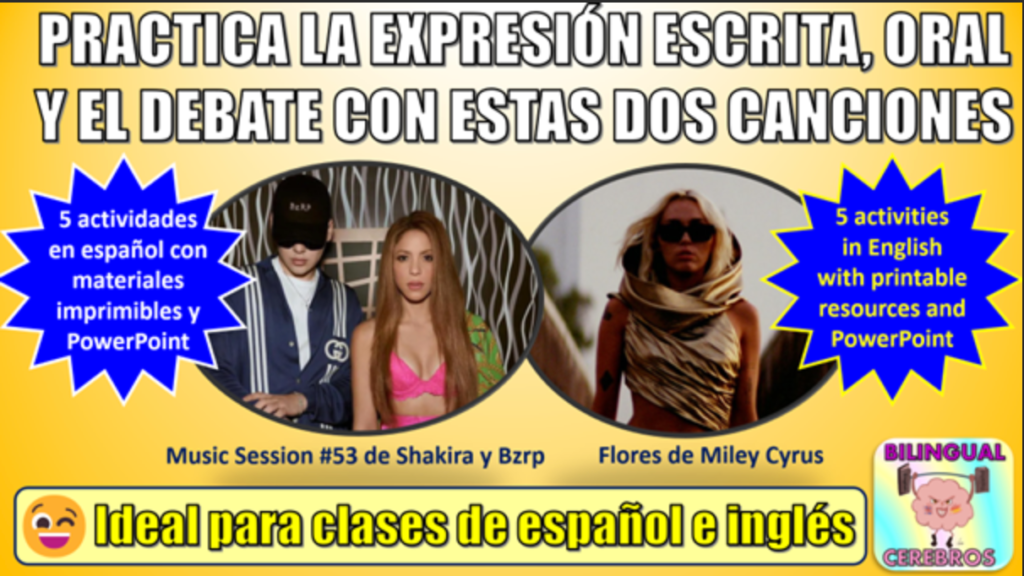
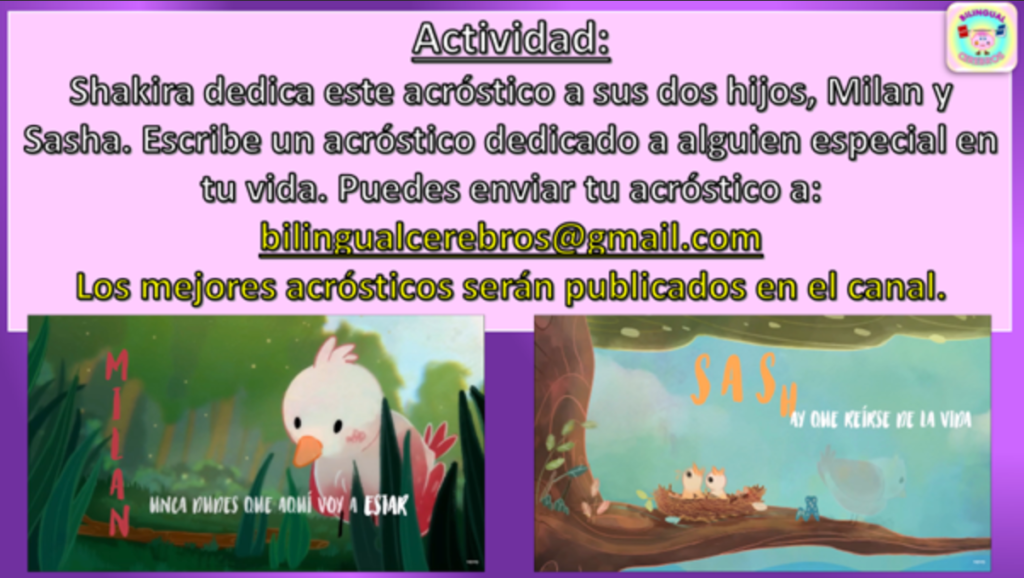
Going back to the motivation and inspiration when learning languages, I believe that Music is without a doubt a tool to be used in lessons as frequently as possible. I invite you to the section in my channel called  MUSIC & ACTIVITIES IN SPANISH & ENGLISH LESSONS, where I post and recommend songs and activities related to them.

I try to choose songs that have great messages, key structures, verb tenses that need to be revised (subjuntivo, pretéritos, etc.) Also, I try to give ideas of activities that you can do in Spanish and English lessons. I hope you find them helpful and include music in your lessons to motivate and inspire students. Be on the look as I will be uploading many more soon.

Check that section of the channel and let me know!

♡ Website: www.bilingualcerebros.com

♡ YouTube: https://www.youtube.com/@bilingualcerebros

♡ instagram: https://www.instagram.com/languages_sra_martinez/

♡ tiktok: https://www.tiktok.com/@bilingualcerebros

♡ facebook: https://www.facebook.com/LanguagesResourcesSraMartinez

♡ twitter: https://twitter.com/LanguagesSra

♡ linkedin: https://www.linkedin.com/in/maria-martinez-5bb94a1a5/

Con las cosas serias no se juega… ¿o sí? (in Spanish)

Vamos a jugar

by Ramón Clavijo (LTL Contributor)

El diccionario de la RAE define serio/-a como real, verdadero y sincero, sin engaño o burla, doblez o disimulo. Teniendo en cuenta esta definición, no nos equivocamos si decimos que la enseñanza del español es una cosa muy seria. Nosotros nos la tomamos muy en serio y estamos seguros de que tú también lo haces.

Pero eso no significa que siempre debas ser un profe serio ni que siempre tengas que estar seria en tus clases 🤨❌️. Y es que también podemos hacer que el español sea real, verdadero y sincero con juegos 🎲🃏.

En esta entrada te presentamos algunos juegos con los que conseguirás que tus alumnos se lo tomen muy en serio pasando un momento realmente divertido. Vamos con ellos:

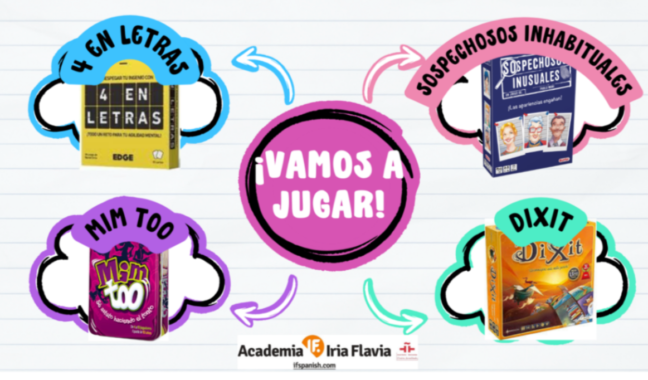
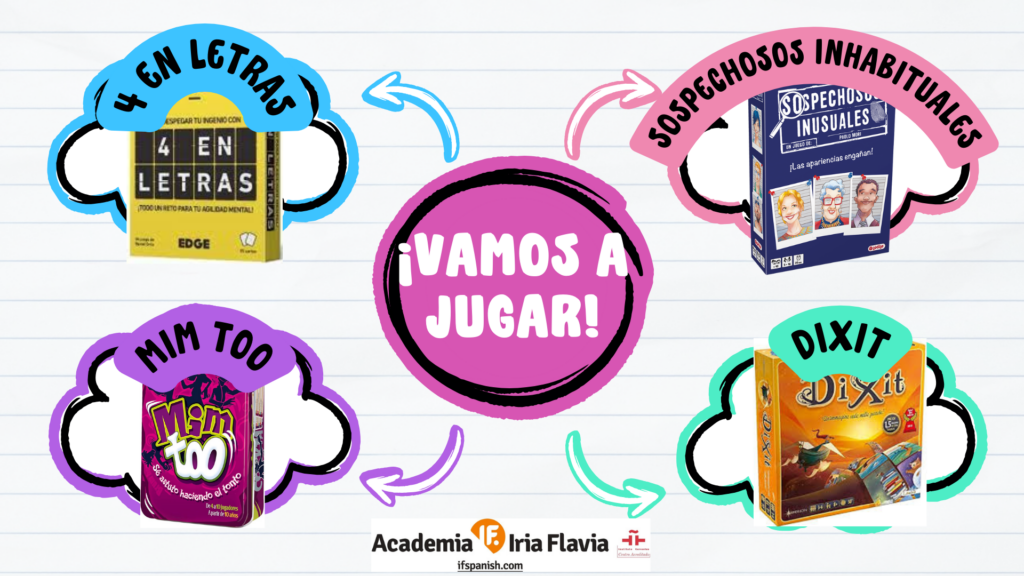
👉 4 en letras: se trata de un juego ideal para que tus estudiantes puedan rescatar de su memoria palabras cortas y sencillas que seguramente ya hayan visto y conozcan. No importa si son plurales, formas verbales o topónimos; cualquier combinación que resulte en una palabra correcta en español dará un punto a quien la consiga. 4️⃣

👉 Mim Too: juego idóneo para que tus alumnos pierdan la vergüenza y eliminen el estrés. Deberán hacer mímica 🫶 para representar a un personaje 🥸, objeto 🫖 o animal 🐶 que haga una determinada acción. ¿Te imaginas a un guardaespaldas regando plantas carnívoras? ¿O a una tetera haciendo patinaje sobre hielo? ¡Pues estamos seguros de que tus estudiantes sabrán representarlo!

👉 Sospechosos inhabituales: juego colaborativo que reproduce una rueda de reconocimiento policial y que sirve para que tus alumnos, a partir de un nivel A2, puedan practicar el vocabulario relativo a hábitos, gustos y personalidad de una manera original. ¡Deberán ponerse de acuerdo para encontrar al culpable! 👮‍♀️👮🏽‍♂️

👉 Dixit: las imágenes de sus cartas lo convierten en un juego atractivo en clases de español. Tus estudiantes deberán asociar una carta determinada a un concepto concreto (puedes proponer ideas como “subjuntivo”, “las clases de español”, etc.), en función de lo que les evoque el dibujo, y luego tendrán que adivinar la imagen elegida por sus compañeros. ¡La inclusión de este juego en niveles intermedios y avanzados es una apuesta segura! 🖼✅️❌️

Esta pequeña selección no es más que una muestra del uso que se les puede dar a los juegos en nuestras clases. Juguemos con nuestros estudiantes, sin importar su edad, y conseguiremos que se tomen el español muy en serio.

Juegos en la clase de ELE