Mindfulness in Language Learning: A Small Shift with Big Impact

mindfulness https://www.youtube.com/watch?v=gx1_3L1DCQM&list=PL5TlFjB4h2gUYhYGVv9l_HYTkhbw9ecrB&index=2

by Maria Martinez (LTL Contributor)W

When we think about language lessons, we often focus on vocabulary lists and grammar drills _ but what if we also made room for stillness and presence? Mindfulness is a simple yet powerful way to transform the language learning experience for students, teachers, and families.

Students become more focused, less anxious, and more confident when they practice mindfulness. As teachers, we gain patience and emotional clarity, helping them create more supportive learning environments. And families? They benefit too _ mindful children often bring home tools that support calmer, more meaningful communication.

It doesn’t take much: a breathing exercise, a moment of reflection, or a few quiet minutes to reset. But the benefits can ripple far beyond the classroom, enriching not only how we learn, but how we connect.

To support students, teachers, and families, I have created a bank of Mindfulness resources in my channel. In the playlists you can find currently 32 videos that you can use in your lessons or at any time of the day. I will continue uploading new content to that section soon The most recent additions include bilingual mindfulness quotes and bilingual quotes from Rumi. If you would like to receive the PowerPoint versions to use in your lessons, you can email me at bilingualcerebros@gmail.com and I will be happy to share them with you.
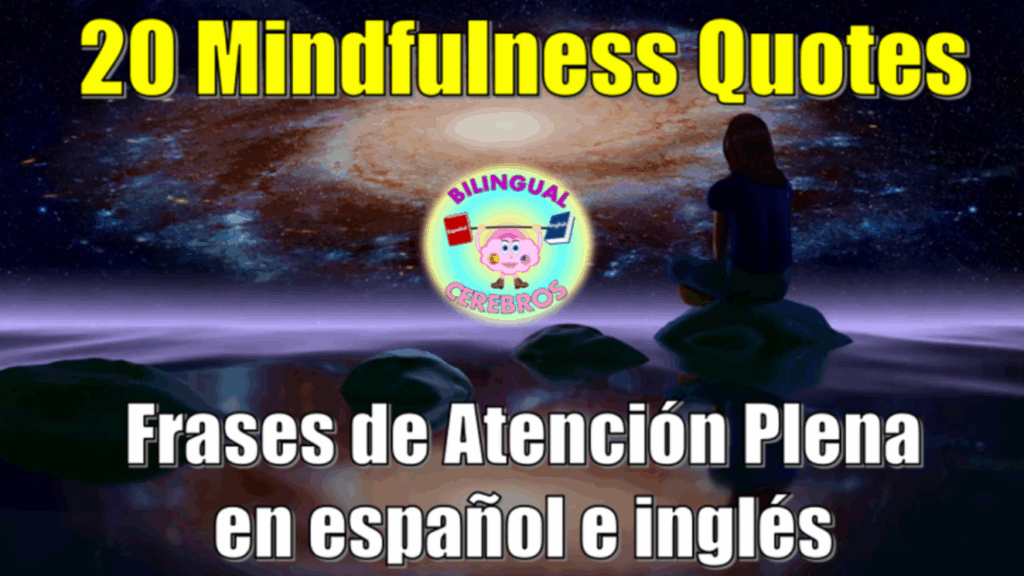
In this video, you’ll hear 20 mindfulness quotes _ each in Spanish and English_ designed to calm your mind and nourish your spirit. Listening to these bilingual reflections not only brings peace and presence to your day, but also helps you reinforce your language skills naturally. As you absorb the meaning of both languages, you’re training your brain to connect deeply with the words _ emotionally and linguistically. Take a breath, be present, and let each phrase guide you toward clarity, calm and connection.

Here is the YouTube playlist where you can find all resources on Mindfulness.
MindfulLearning #LanguageEducation #MindfulnessInTheClassroom

Atención plena en el aprendizaje de idiomas: un pequeño cambio con gran impacto

A menudo pensamos en las clases de idiomas como listas de vocabulario y ejercicios gramaticales. Pero ¿qué pasaría si también dejáramos espacio para la calma y la presencia? Incluir la atención plena en la enseñanza de lenguas puede cambiar por completo la experiencia de aprender.

Los estudiantes que practican mindfulness se sienten más tranquilos, enfocados y seguros. Como docentes, ganamos paciencia y claridad emocional, lo que nos ayuda a crear entornos de aprendizaje mas propicios para aprender. ¿Y las familias? Ellas también se benefician: los niños conscientes suelen traer a casa herramientas que fomentan una comunicación más tranquila y significativa.

No se necesita mucho: unos minutos de respiración consciente, una pausa para reflexionar o un pequeño momento de silencio. Pero sus efectos pueden extenderse mucho más allá del aula, enriqueciendo cómo aprendemos y cómo nos relacionamos.

Para apoyar a estudiantes, docentes y familias, he creado un banco de recursos de Atención Plena en mi cana. Encontrarás 32 videos que puedes usar en tus clases o en cualquier momento del día. Y poco a poco voy a subir más contenido a esa sección. Las últimas incorporaciones incluyen citas bilingües de mindfulness y citas bilingües de Rumi. Si deseas recibir las versiones en PowerPoint para usar en tus clases, puedes escribirme a bilingualcerebros@gmail.com y con gusto las compartiré contigo.
En este vídeo escucharás 20 frases de Atención Plena _ cada una en español e inglés_ diseñadas para calmar tu mente y nutrir tu espíritu. Escuchar estas reflexiones bilingües no solo aporta paz y presencia a tu día, sino que también te ayuda a reforzar tus habilidades lingüísticas de forma natural. A medida que absorbes el significado de ambos idiomas, estás entrenando tu mente para conectar profundamente con las palabras _ emocional y lingüísticamente. Respira, está presente y permite que cada frase te guíe hacia la claridad, la calma y la conexión.

Este es el enlace a las listas de reproducción de esta sección del canal donde puedes encontrar más recursos de Atención Plena.

AprendizajeConsciente #EducaciónLingüística #MindfulnessEnElAula


Te invito también a que me sigas en mis redes sociales / I invite you to follow me in
my social media:
♡ Website: www.bilingualcerebros.com
♡ YouTube: https://www.youtube.com/@bilingualcerebros
♡ instagram: https://www.instagram.com/languages_sra_martinez/
♡ tiktok: https://www.tiktok.com/@bilingualcerebros
♡ facebook: https://www.facebook.com/LanguagesResourcesSraMartinez
♡ twitter: https://twitter.com/LanguagesSra
♡ linkedin: https://www.linkedin.com/in/maria-martinez-5bb94a1a5/

¡Qué Barbaridad de Noticia! – in Spanish -Intermediate

noticia

by Ramón Clavijo (LTL Contributor)

Estamos rodeados de noticias: buenas, malas o regulares. La aldea global, la era digital, las nuevas vías de acceso al conocimiento y la diversificación de las fuentes de información tienen como resultado que nos encontremos, diariamente, ante noticias o rumores que actúan como estímulos ante los que reaccionar.

Dichas noticias pueden provocar en nosotros sorpresa, alivio, indignación, incredulidad, rechazo, indiferencia, abierta repulsión, escándalo, risa… Sea como fuere, nunca faltará una opinión respecto a algún titular llamativo, ni la valoración de alguna noticia de impacto.

Por eso, te proponemos estimular a tus estudiantes para que reaccionen ante una serie de titulares 📰, expresando qué les parece injusto, qué encuentran lógico, qué entienden como vergonzoso, qué les parece una barbaridad… En fin, ante qué se rasgan las vestiduras 😱 o con qué están completamente de acuerdo 😀. Ello les permitirá poner en práctica el contraste entre el indicativo y el subjuntivo para la expresión de opinión y valoración.

Además, puedes plantear la actividad como una dinámica de roles, a modo de debate, asignándoles a tus alumnos diversos perfiles, que deberán usar para reaccionar en consecuencia ante tales noticias. Puedes pensar, por ejemplo, en un ecologista, una empresaria, una pareja con hijos o una profesora 🗣🗯🗨👥️.

Pero si hay una figura que puede superar en el debate a todas las demás, esa es, sin duda, el cuñado. Efectivamente, en los últimos años se ha popularizado en España el uso del término cuñado como sabelotodo 😌: alguien capaz de sentar cátedra sobre cualquier tema, ya sea política, economía, vulcanología y, por supuesto, fútbol.

Con la infografía que te dejamos 👇, estamos seguros de que tus estudiantes podrán sacar al cuñado que todos llevamos dentro.

Titulares de periódico (infografía)

Infografía basada parcialmente en Aula 4, nueva edición

Grandes maestros / Great Educators

teacher

by Justa Rebollo Paz (LTL Contributor)

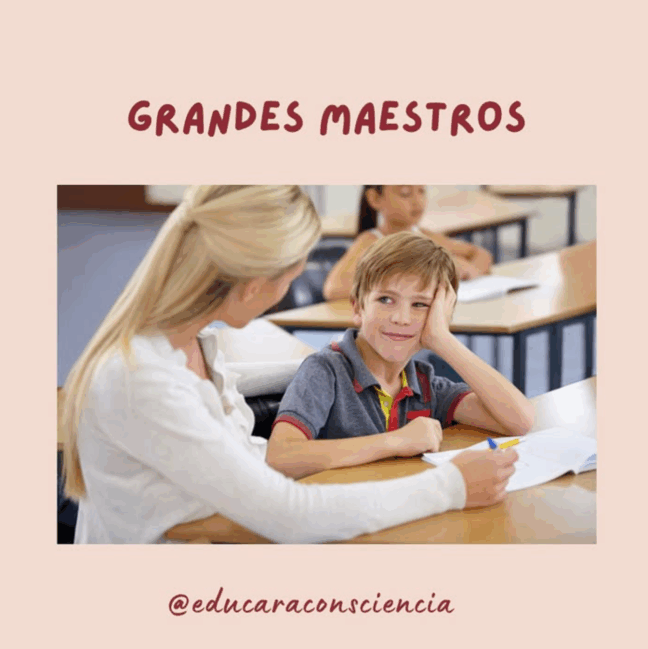
Grandes maestros

🍎Un maestro es alguien que estudió magisterio y que da clases de algún tipo en algún rango de edad determinado.
🍎Sin duda hay que estudiar para ser maestro/a. Hay que estudiar y prepararse antes de ejercer la docencia, y sobre todo, hay que estudiar y ‘agiornarse’ durante cada año de trayectoria… porque la educación va cambiando, la tecnología va cambiando, la vida misma va cambiando; y no nos podemos dormir.

🤍Y todo esto es cierto. Pero también pienso en mis GRANDES MAESTROS, con mayúsculas.

🤍Los grandes maestros, para mí, son:
🤍los que motivan con sus clases
🤍los que entusiasman y dan ganas de aprender
🤍los que contagian alegría y enseñan con humor
🤍los que dan el ejemplo (y no solo de matemática)
🤍los que inspiran, lideran y son parte de la clase
🤍los que te hacen sacar lo mejor de vos misma
🤍los que te inculcan valores en sus clases cotidianas
🤍los que demuestran paciencia, respeto y amor
🤍los que al pasar cerca te sonríen o te palmean el hombro
🤍los que te preguntan cómo estás y los que se dan cuenta cuándo no es un buen día
🤍los que saben esperarte, escucharte y abrazarte
🤍los que hoy, con 55 años, puedo decir que dejaron huella en mí y que hoy, soy lo que soy, también gracias a ellos.

🤗Cuáles fueron tus grandes maestros?
🤗A quién y en qué lo querrías imitar?

IG @educaraconsciencia


Great Educators

🍎A teacher is someone who has studied to be a teacher and teaches some type of class to a specific age group.

🍎Undoubtedly, you have to study to be a teacher. You have to study and prepare before teaching, and above all, you have to study and keep learning yourself throughout each year of your career… because education keeps changing, technology keeps changing, life itself keeps changing; and we can’t stay still.

🤍 And all of this is true. But I also think of my GREAT TEACHERS, with capital letter.

For me, great teachers are:

  • 🤍 those who motivate with their classes
  • 🤍 those who inspire and also inspire you to learn
  • 🤍 those who spread joy and teach with humor
  • 🤍 those who lead by example (and not just in math)
  • 🤍 those who lead and are one more in the class
  • 🤍 those who get out the best in yourself
  • 🤍 those who instill values in their daily classes
  • 🤍 those who demonstrate patience, respect, and love
  • 🤍 those who smile at you or pat you on the shoulder 
  • 🤍 those who ask you ‘how are you?’ and those who realize when you are not having a good day
  • 🤍 those who know how you learn, who know how to listen to you, and how to support you
  • 🤍 those who today, at 55, I can say they left their mark on me, and that today I am who I am also thanks to them.
  • 🤗 Who were your greatest mentors?
  • 🤗 Who would you like to imitate and what would you like to imitate?

IG @educaraconsciencia

Mizou: Making Chatbot Experiences Better for our Classrooms

mizou

by Victoria Berasaluce Guerra (LTL Contributor)

Incorporating AI into the classroom has never been easier with Mizou, a powerful tool that allows educators to create personalized chatbots for student practice in a target language or subject of choice. By tailoring AI interactions, teachers can ensure that students engage in meaningful, guided conversations based on custom prompts they design.

Getting Started with Mizou

When signing in to Mizou, you can select your role as a teacher to receive personalized feedback and content that aligns with your curriculum. Mizou supports various educational frameworks, including:
✅ AP
✅ IB
✅ Common Core
✅ IGCSE, and more.

This customization ensures that chatbots align with your specific learning objectives and classroom needs.

Creating a Chatbot: Custom vs. AI-Generated

Mizou offers two chatbot creation options:

🔹 Custom Chatbots – You write the prompt from scratch, allowing for full control over the chatbot’s responses.
🔹 AI-Generated Chatbots – Mizou generates the chatbot’s prompt based on your learning objectives, which you can refine and tweak for better accuracy.

Regardless of the option you choose, teacher input is crucial to fine-tune the chatbot’s instructions, ensuring the conversation stays on track.

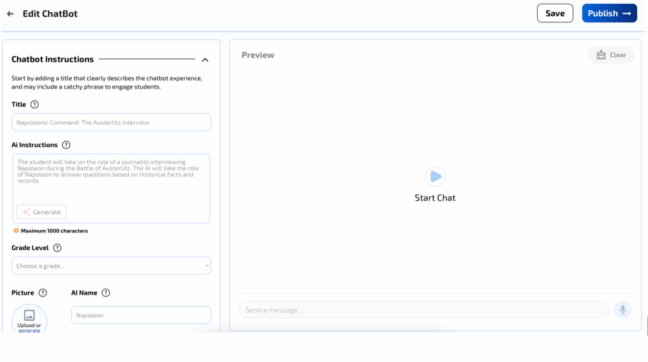
A screenshot of a chatAI-generated content may be incorrect.

When selecting “Custom”, you will work within a split-screen interface:
➡️ One side lets you adjust the chatbot’s instructions.
➡️ The other side allows you to test and refine the chatbot in real time.

Why Choose Mizou Over ChatGPT for Your Classroom?

Unlike ChatGPT, Mizou offers enhanced teacher control over chatbot interactions. With Mizou, you can:


✅ Set a title for the activity.
✅ Define AI instructions to shape the conversation.
✅ Choose a grade level for age-appropriate responses.
✅ Customize the chatbot’s name and avatar for a more engaging experience.
✅ Establish rules to guide student interactions.
✅ Add a welcome message and audio to introduce the chatbot.
✅ Upload a knowledge file to ensure the chatbot focuses on specific content.

Mizou also offers access to a community of educator-created chatbots, allowing you to explore and adapt existing resources.

Creative Ways to Use Mizou in the Classroom

Here are some exciting ways to integrate Mizou into your lessons:

🎭 Role-Playing Interviews – Have students interact with historical figures or fictional characters.
🗣 Debates & Discussions – Students can debate global challenges (e.g., AP curriculum topics) with an AI character designed by you.
📖 Language Practice – Mizou can help students practice conversations in a target language, following teacher-set guidelines.
📊 Assessment & Feedback – Teachers can review student chatbot sessions, track conversation length, and even use AI-assisted grading based on rubrics.

💡 Pro Tip: Always review and tweak chatbot prompts to ensure they align with your learning goals!

Enhance Your AI Skills with Mizou AIcademy

To maximize the potential of Mizou, teachers can enroll in Mizou AIcademy, an online certification program that covers:


✅ Prompt engineering for effective chatbot creation.
✅ Best practices for ethical AI use in education.By becoming Mizou-certified, you can confidently integrate AI into your teaching while ensuring meaningful and responsible student engagement.

The Power of “No”: Reclaiming Joy through Boundaries

by Noemí Rodríguez (LTL Contributor)

As a Spanish language educator and supervisor, small business owner, and mother to an active toddler, I often feel like I’m living three very full lives at once. I move from school meetings to connection calls to wiping cream cheese off very tiny fingers—all before lunch. And while I do enjoy each hat I wear, I’ve learned that I can’t show up fully in any of them unless I set one powerful boundary: I choose to say “no”.

No” has become a valuable word for me but it hasn’t always been easy. As educators and caretakers—it sometimes feels easier to say “yes” to avoid the guilt of saying no. Yes to helping a fellow language educator. Yes to taking on an extra workshop at that conference. Yes to a last-minute invitation knowing you just don’t have the time or energy.  When yes becomes a default word, as it sometimes was for me, we can sometimes lose ourselves and a cycle of exhaustion and over commitment begins. 

Saying no has become an act of mindfulness. It’s a pause, a breath, a moment of clarity where I check in with myself and ask: Does this bring me joy? Will this bring me peace? Will this decision leave space for the people and priorities I love the most?

Learning to say no is not selfish—it’s self-preservation. It’s self-awareness. It’s how I’ve created space to enjoy slow mornings with my toddler, to be present in my school, and to invest my limited time and energy into the parts of my business that feel aligned and sustainable.

Boundaries Are Bridges

Too often, we think of boundaries as walls—rigid and isolating. But I’ve come to believe that boundaries are actually bridges. They connect us to what matters most by filtering out what drains us. They protect our peace. They allow us to choose joy over obligation, presence over performance.

When I say no to a weekend obligation that does not bring me joy, I’m saying yes to a Sunday afternoon yoga class. I’m saying yes to watching my toddler giggle on the swings. I am saying yes to spending precious time with family and friends. 

Saying no to perfectionism means I get to let go of the pressure to do everything all of the time—whether it’s teaching, parenting, or entrepreneurship. And that’s where the power of no continues to teach me how to set better boundaries. 

Mindfulness, Movement, and that Strong Inner Voice

I’ve noticed that my “no” becomes stronger when I listen more carefully—to my breath, to my body, to that wise voice within. Yoga has been one of the greatest gifts in that process. On the mat, I return to myself. I notice where I’m holding tension, where I’m gripping too tightly—physically and metaphorically.

In mindfulness practice, I observe my thoughts without judgment. I catch myself when I begin to spiral into guilt for saying no or fear of disappointing others. I remind myself: These thoughts do not serve you. 

Choosing Joy

The “Power of No” is really the power to choose. It’s the power to reclaim time, energy, and attention for the things that light us up.

I still get it wrong. I still overbook myself or forget to pause. I am human and I make mistakes. But each time I choose no with intention, I get a little closer to balance—and a lot closer to joy.

I’ve learned that you can’t do it all well and every now and then, you have to check in with yourself and reclaim that time for joy. I invite you to try this simple practice: the next time someone asks something of you, pause. Breathe. Ask yourself, Does this yes come from love or from fear?

And know this: every “no” you give sets you up to say “yes” to many other things that better fill your cup with joy. Reframing the word no so it doesn’t indicate rejection but instead it’s a powerful redirection back to yourself.

joy https://lologramosconsulting.com/?gad_source=1&gbraid=0AAAAA9tXw88QAqnoOIjtQMOTnrOU1WfB5&gclid=CjwKCAjwq7fABhB2EiwAwk-YbJK8fDTsylkPoZF7vBBtyQW7wIQeg6yVacn47pqECbjavahWzdHAQRoCLowQAvD_BwE

Using AI to Create Differentiated Assessments in Language Teaching

assessments

by Maureen Gassert Lamb (LTL Contributor)

As educators strive to meet the various needs of students in language learning and acquisition, differentiation in assessment has become essential. Generative Artificial Intelligence (AI) offers a powerful tool to create personalized, adaptive assessments that align with learners’ proficiency levels. This article explores how AI can be leveraged to design differentiated assessments, ensuring meaningful, impactful, and effective language assessment.

AI technology enables educators to create assessments that cater to various proficiency levels by generating customized questions, passages, and real-time feedback. Through adaptive learning techniques, AI can modify assessments based on students’ responses, ensuring that they are challenged appropriately while receiving necessary support to thrive.

1. AI-Generated Reading Passages Aligned with Proficiency Levels

One of the most effective ways AI supports differentiation is through the creation of tiered reading passages. By adjusting vocabulary, syntax, and complexity, AI can generate texts that match students’ proficiency levels.

  • Novice Level (Basic Sentences, Simple Structures)
    • Example (Topic: Daily Life in Rome): “Romani in urbe magna habitant. Multi viri et feminae in foro ambulant. Ibi cibum emunt et amicos salutant. Pueri in ludo discunt.”
    • AI Tool: ChatGPT can generate beginner-friendly texts with controlled vocabulary and structure.
  • Intermediate Level (More Complex Sentences, Some Subordination)
    • Example (Topic: Aesop’s Fable – The Tortoise and the Hare): “Olim testudo et lepus certare volunt. Lepus celeriter currit et testudinem ridet: ‘Tu es tardissima!’ Sed testudo lente et constanter ambulat.”
    • AI Tool: QuillBot can help rephrase sentences for increased complexity.
  • Advanced Level (Subjunctives, Participles, Indirect Discourse)
    • Example (Topic: Julius Caesar and the Rubicon): “Cum Iulius Caesar Rubiconem transiret, milites eum sequebantur. Dicebat: ‘Alea iacta est!’ Senatus Romam servare conabatur, sed Caesar urbem sine magno proelio cepit.”
    • AI Tool: ChatGPT and DeepL can refine passages to include complex grammatical structures.

2. AI-Generated Question Types for Various Levels

AI can create multiple-choice, open-ended, and inference-based questions that align with language proficiency benchmarks.

  • Novice: Focus on basic comprehension and word recognition.
    • Example: What do the Romans do in the forum?
      • A) Sleep
      • B) Walk ✅
      • C) Eat
      • D) Fight
    • AI Tool: Google Forms + AI-based question generators like Quizlet.
  • Intermediate: Introduce sentence structure analysis and cause-effect relationships.
    • Example: Why does the tortoise win the race?
    • AI Tool: AI-driven platforms like Quizlet and Kahoot! can generate dynamic quizzes.
  • Advanced: Require inferencing, paraphrasing, and interpretation of nuanced meanings.
    • Example: How does Caesar’s decision to cross the Rubicon reflect his leadership style?
    • AI Tool: Brisk Teaching AI tools help generate higher-order thinking prompts.

3. Adaptive Assessments for Personalized Learning

AI-powered assessments can adjust in real-time based on student responses. If a student struggles with a concept, AI can generate additional scaffolded questions or provide explanatory feedback. Conversely, if a student excels, the AI can present more challenging questions to encourage deeper engagement.

  • Example: If a student consistently answers correctly at an intermediate level, AI can introduce an advanced-level passage and related questions.
  • AI Tools: Conker offers AI-driven question banks. Quizlet can give feedback to track progress in real time.

4. Using AI for Formative and Summative Assessment

  • Formative Assessments: AI can provide immediate feedback, helping students understand mistakes and adjust their learning strategies accordingly.
    • Example: AI detects frequent errors in verb conjugation and suggests practice activities.
    • AI Tool: Grammarly for grammar feedback and Socrative for real-time formative assessments.
  • Summative Assessments: AI-generated tests can evaluate students’ overall progress while ensuring alignment with proficiency standards.
    • Example: AI generates an end-of-unit comprehension test with a mix of multiple-choice, short-answer, and essay questions.
    • AI Tool: EdPuzzle for AI-enhanced comprehension checks.

5. Best Practices for Implementing AI in Language Assessments

To maximize the benefits of AI in assessment, educators should ensure that AI-generated questions align with proficiency guidelines such as ACTFL standards. They should use AI to generate varied but plausible answer choices that challenge students while focusing on comprehension rather than simple translation-based questions. Additionally, leveraging AI tools that adapt to students’ learning trajectories allows for personalized feedback and continuous improvement. By thoughtfully integrating AI into assessment strategies, educators can create meaningful, proficiency-aligned evaluations that support diverse learners in their language acquisition journey.

Generative AI presents an innovative approach to differentiated assessments in language education, allowing teachers to create adaptive, proficiency-aligned evaluations. By leveraging AI’s capabilities, educators can support students at all levels, enhancing their language acquisition journey through personalized learning experiences.