Maestra alegría / Joyful Educator

joyful

by Justa Rebollo Paz (LTL Contributor)

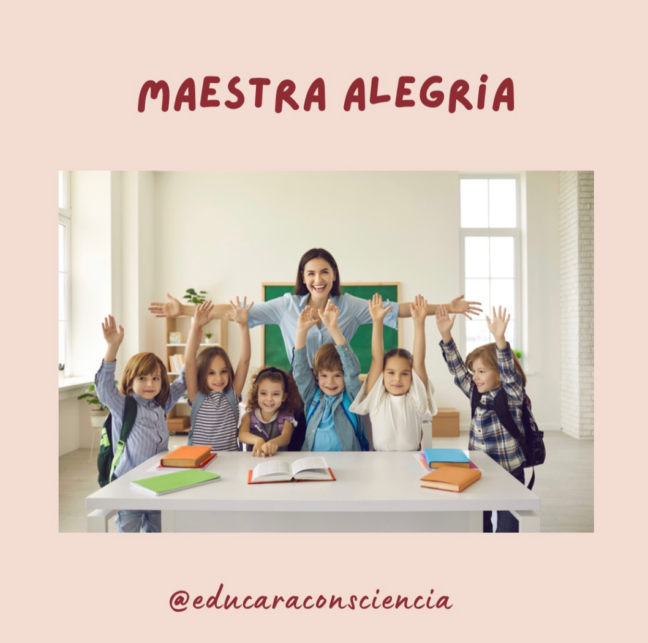
Maestra alegría

➡️ Si una maestra o un maestro llega a su escuela irradiando alegría, va a transformar a sus alumnos, a sus propuestas, a sus materiales y a su aula completa, en un escenario de infinitas posibilidades.

➡️ Porque las emociones se contagian.

🤍La alegría, la tristeza, el entusiasmo, la mala onda, el miedo, etc, etc, etc… generan un efecto dominó en los que tenemos cerca.

🤍Un docente apasionado, entusiasta y alegre, va a lograr alumnos apasionados, entusiastas y alegres con mucha más y mejor respuesta que uno desmotivado o que simplemente cumple con su programa.

➡️Y algo más concreto? Te propongo esto:
🤍Saludá a cada uno de tus alumnos cuando llegan
🤍Llamalos por su nombre cada vez que puedas en el día
🤍Preguntales cómo están, cómo les fue… y dejalos que te cuenten escuchando con atención
🤍Felicitalos y alegrate con sus logros… que no pasen desapercibidos
🤍Acompañalos en sus desafíos, bien de cerca, conteniéndolos
🤍Demostrá todo el entusiasmo que puedas en cada tema y en cada propuesta educativa. Mostrate apasionada/o

➡️ Y si sos docente pero estás a cargo de la dirección?
🤍Hacé esto mismo con tu equipo docente
🤍Dales un lugar bien humano
🤍Hacelos sentir equipo, mimalos, cuidalos, valoralos, respetalos, incentivalos

🤩Convertite en una maestra o en una directora ALEGRÍA. Y contagiá sin parar…

IG @educaraconsciencia
Spotify Educar a consciencia

#maestraalegria#motivacion#pasion#contagiaremociones#alumnos#docentesinnovadores#educaraconsciencia🤍

Joyful Educator

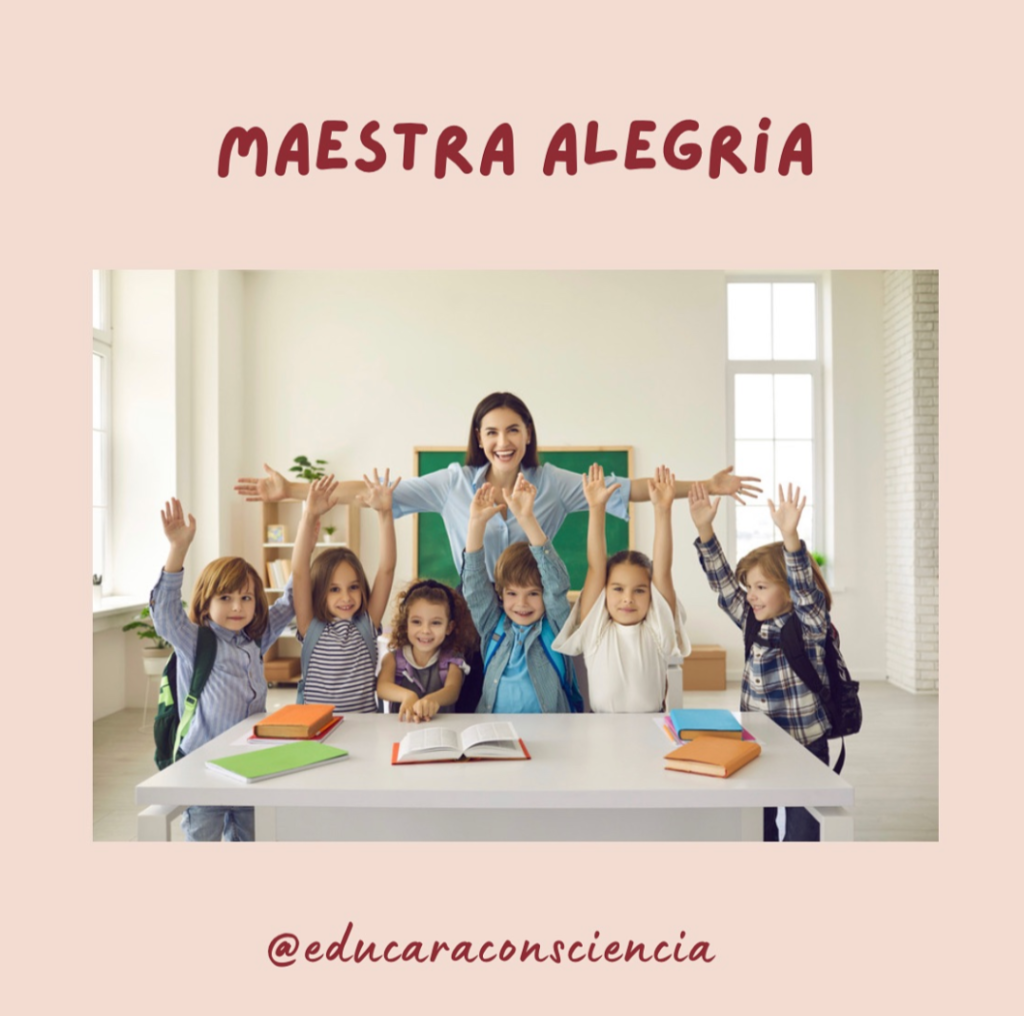
➡️ If a teacher arrives at their school radiating joy, they will transform their students, their proposals, their materials and their whole classroom into a scenario of infinite possibilities.

➡️ Why? Because emotions are contagious

🤍As a result, happiness, sadness, enthusiasm, fear, etc., spread to the people nearby.

🤍A passionate, enthusiastic and cheerful teacher will achieve passionate, enthusiastic and joyful students with much more and better response than a demotivated teacher would.

➡️ Do you need something more concrete? I propose this to you:
🤍 Greet each of your students when they arrive at school
🤍 Call them by their name each time you during the day
🤍Ask them how they’re doing, how it went.. and let them tell you what it’s in their minds. Listen carefully
🤍Congratulate them and rejoice on their achievements… they should not go unnoticed
🤍 Accompany them in their challenges, very closely, containing them
🤍Show as much enthusiasm as you can in every topic and in every educational proposal in your classes. Show passion in what you do!

➡️ What if you’re not a teacher but you’re in the management of the school?
🤍I propose that you do the same with your teaching staff
🤍 Show them that you care and that there is place for the human side too
🤍 Make them feel a team, pamper them, take care of them, value them, respect them, encourage them

🤩Become a teacher or a head that reflects JOY. And joy will easily spreads on and on.

IG @educaraconsciencia
Spotify Educar a consciencia

#maestraalegria #motivacion #pasion #contagiaremociones #alumnos #docentesinnovadores #educaraconsciencia🤍
The Power of “No” as Language Educators: Reclaiming Joy through Boundaries

no

by Noemí Rodríguez (LTL Contributor)

As a Spanish language educator and supervisor, small business owner, and mother to an active toddler, I often feel like I’m living three very full lives at once. I move from school meetings to connection calls to wiping cream cheese off very tiny fingers—all before lunch. And while I do enjoy each hat I wear, I’ve learned that I can’t show up fully in any of them unless I set one powerful boundary: I choose to say “no”.

No” has become a valuable word for me but it hasn’t always been easy. As educators and caretakers—it sometimes feels easier to say “yes” to avoid the guilt of saying no. Yes to helping a fellow language educator. Yes to taking on an extra workshop at that conference. Yes to a last-minute invitation knowing you just don’t have the time or energy.  When yes becomes a default word, as it sometimes was for me, we can sometimes lose ourselves and a cycle of exhaustion and over commitment begins.

Saying no has become an act of mindfulness. It’s a pause, a breath, a moment of clarity where I check in with myself and ask: Does this bring me joy? Will this bring me peace? Will this decision leave space for the people and priorities I love the most?

Learning to say no is not selfish—it’s self-preservation. It’s self-awareness. It’s how I’ve created space to enjoy slow mornings with my toddler, to be present in my school, and to invest my limited time and energy into the parts of my business that feel aligned and sustainable.

Boundaries Are Bridges

Too often, we think of boundaries as walls—rigid and isolating. But I’ve come to believe that boundaries are actually bridges. They connect us to what matters most by filtering out what drains us. They protect our peace. They allow us to choose joy over obligation, presence over performance.

When I say no to a weekend obligation that does not bring me joy, I’m saying yes to a Sunday afternoon yoga class. I’m saying yes to watching my toddler giggle on the swings. I am saying yes to spending precious time with family and friends.

Saying no to perfectionism means I get to let go of the pressure to do everything all of the time—whether it’s teaching, parenting, or entrepreneurship. And that’s where the power of no continues to teach me how to set better boundaries.

Mindfulness, Movement, and that Strong Inner Voice

I’ve noticed that my “no” becomes stronger when I listen more carefully—to my breath, to my body, to that wise voice within. Yoga has been one of the greatest gifts in that process. On the mat, I return to myself. I notice where I’m holding tension, where I’m gripping too tightly—physically and metaphorically.

In mindfulness practice, I observe my thoughts without judgment. I catch myself when I begin to spiral into guilt for saying no or fear of disappointing others. I remind myself: These thoughts do not serve you.

Choosing Joy

The “Power of No” is really the power to choose. It’s the power to reclaim time, energy, and attention for the things that light us up. I still get it wrong. I still overbook myself or forget to pause. I am human and I make mistakes. But each time I choose no with intention, I get a little closer to balance—and a lot closer to joy.

I’ve learned that you can’t do it all well and every now and then, you have to check in with yourself and reclaim that time for joy. I invite you to try this simple practice: the next time someone asks something of you, pause. Breathe. Ask yourself, Does this yes come from love or from fear? And know this: every “no” you give sets you up to say “yes” to many other things that better fill your cup with joy. Reframing the word no so it doesn’t indicate rejection but instead it’s a powerful redirection back to yourself.


Language Teaching Lab Community: Take advantage of these two options with LoLogramos!

  • Get a $5 off each month for the AI Innovator Monthly Subscription by using code: ltl5month
  • Get a $5 off of ANY of the online courses, including the latest: Canva, Your One Stop Shop! by using code: team5

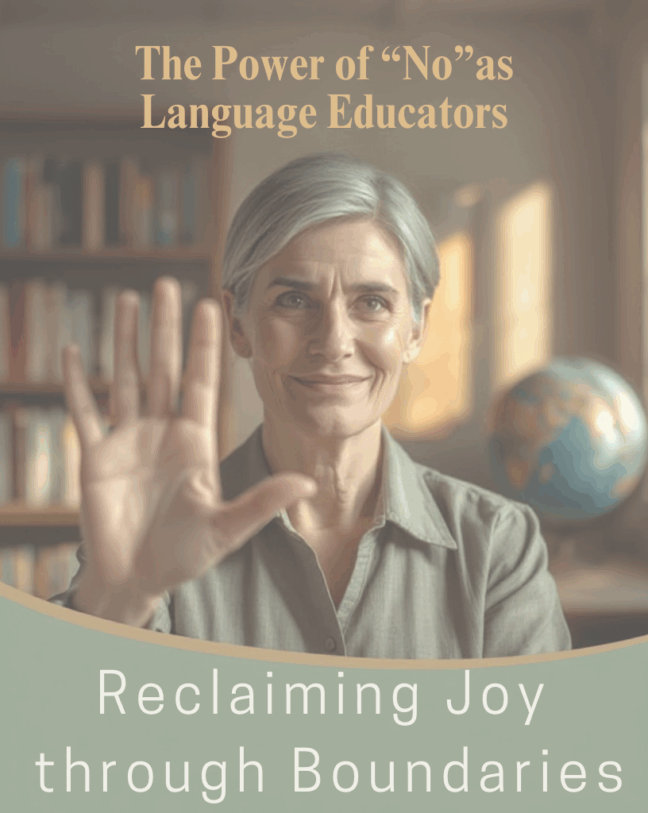
The Power of “No”: Reclaiming Joy through Boundaries

by Noemí Rodríguez (LTL Contributor)

As a Spanish language educator and supervisor, small business owner, and mother to an active toddler, I often feel like I’m living three very full lives at once. I move from school meetings to connection calls to wiping cream cheese off very tiny fingers—all before lunch. And while I do enjoy each hat I wear, I’ve learned that I can’t show up fully in any of them unless I set one powerful boundary: I choose to say “no”.

No” has become a valuable word for me but it hasn’t always been easy. As educators and caretakers—it sometimes feels easier to say “yes” to avoid the guilt of saying no. Yes to helping a fellow language educator. Yes to taking on an extra workshop at that conference. Yes to a last-minute invitation knowing you just don’t have the time or energy.  When yes becomes a default word, as it sometimes was for me, we can sometimes lose ourselves and a cycle of exhaustion and over commitment begins. 

Saying no has become an act of mindfulness. It’s a pause, a breath, a moment of clarity where I check in with myself and ask: Does this bring me joy? Will this bring me peace? Will this decision leave space for the people and priorities I love the most?

Learning to say no is not selfish—it’s self-preservation. It’s self-awareness. It’s how I’ve created space to enjoy slow mornings with my toddler, to be present in my school, and to invest my limited time and energy into the parts of my business that feel aligned and sustainable.

Boundaries Are Bridges

Too often, we think of boundaries as walls—rigid and isolating. But I’ve come to believe that boundaries are actually bridges. They connect us to what matters most by filtering out what drains us. They protect our peace. They allow us to choose joy over obligation, presence over performance.

When I say no to a weekend obligation that does not bring me joy, I’m saying yes to a Sunday afternoon yoga class. I’m saying yes to watching my toddler giggle on the swings. I am saying yes to spending precious time with family and friends. 

Saying no to perfectionism means I get to let go of the pressure to do everything all of the time—whether it’s teaching, parenting, or entrepreneurship. And that’s where the power of no continues to teach me how to set better boundaries. 

Mindfulness, Movement, and that Strong Inner Voice

I’ve noticed that my “no” becomes stronger when I listen more carefully—to my breath, to my body, to that wise voice within. Yoga has been one of the greatest gifts in that process. On the mat, I return to myself. I notice where I’m holding tension, where I’m gripping too tightly—physically and metaphorically.

In mindfulness practice, I observe my thoughts without judgment. I catch myself when I begin to spiral into guilt for saying no or fear of disappointing others. I remind myself: These thoughts do not serve you. 

Choosing Joy

The “Power of No” is really the power to choose. It’s the power to reclaim time, energy, and attention for the things that light us up.

I still get it wrong. I still overbook myself or forget to pause. I am human and I make mistakes. But each time I choose no with intention, I get a little closer to balance—and a lot closer to joy.

I’ve learned that you can’t do it all well and every now and then, you have to check in with yourself and reclaim that time for joy. I invite you to try this simple practice: the next time someone asks something of you, pause. Breathe. Ask yourself, Does this yes come from love or from fear?

And know this: every “no” you give sets you up to say “yes” to many other things that better fill your cup with joy. Reframing the word no so it doesn’t indicate rejection but instead it’s a powerful redirection back to yourself.

joy https://lologramosconsulting.com/?gad_source=1&gbraid=0AAAAA9tXw88QAqnoOIjtQMOTnrOU1WfB5&gclid=CjwKCAjwq7fABhB2EiwAwk-YbJK8fDTsylkPoZF7vBBtyQW7wIQeg6yVacn47pqECbjavahWzdHAQRoCLowQAvD_BwE