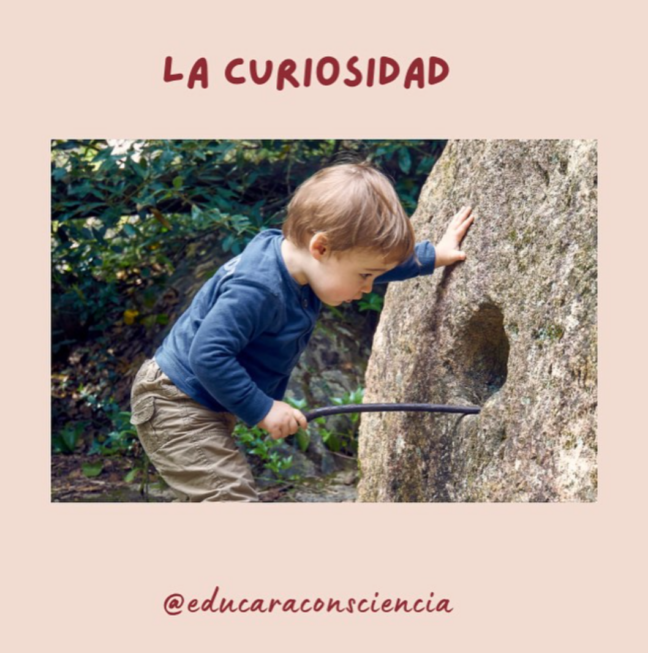
🤍Y de grandes vamos perdiendo esa curiosidad, por la “contaminación” que vamos teniendo a lo largo de nuestra vida.
🤍Vamos sabiendo más y vamos perdiendo el interés en descubrir.
➡️ ¿Pero sabías que la curiosidad nos conecta inmediatamente con el presente?
➡️ Nuestro cerebro busca, organiza la información, asimila, ordena y categoriza en un instante todo lo que vamos aprendiendo, y lo hace de manera casi automática en un afán de ahorrar energía.
➡️ Esto nos ayuda a resolver situaciones de manera espontánea y rápida en nuestro instinto de supervivencia.
➡️ Pero este “modo automático” maravilloso, nos puede jugar en contra a la hora de poder sorprendernos, o de estar abiertos a LO NUEVO, en vez de suponer que ya lo sabemos y lo tenemos categorizado de antemano en nuestro disco rígido, nuestro cerebro.
🤍Así que, dicho esto, hoy te quiero desafiar a estar abiertos, presentes, atentos y dispuestos a experimentar.
🤍Vas a ver que de a poco estamos más creativos y flexibles a nuevas perspectivas acerca de lo que está pasando.
🤍¿¿Y sabés una cosa maravillosa??
🤍Que la curiosidad se entrena y practica.
🤍Así que no nos distraigamos… entrenemos nuestra curiosidad y aprendamos una vez más de los niños, nuestros mejores maestros.
🤍They like to investigate, try, uncover, open, search…
🤍 And when we grow up we loose that curiosity because of the “pollution” we encounter in our lives.
🤍 We learn more and we loose interest in ‘searching’.
➡️ But did you know that curiosity connects us immediately to the present?
➡️ Our brain searches, organizes information, assimilates, orders and categorizes in an instant everything we learn, and does it almost automatically in an effort to save energy.
➡️ This can help us solve problems instantly and rapidly in order to survive
➡️ But this marvelous ‘automatization’ can fool us when we could be surprised, or be open to the UNKNOWN instead of supposing that we already have it categorized in our brain, our hard disk
🤍So, that being said, today I want to challenge you to be open, present, attentive, and ready to new experiences.
🤍 You’ll see that we’re slowly become more creative and flexible to new perspectives on what’s going on.
🤍Do you know something?
🤍 Curiosity can be trained and practiced.
🤍So let us not get distracted… let’s train our curiosity and let’s learn once more from children, our best teachers
Language learning becomes more meaningful when social-emotional learning is integrated into it.
In bilingual environments, we often begin with simple feelings such as happy, sad, or angry. However, children benefit most when emotional language is functional, helping them express how they feel and what they need.
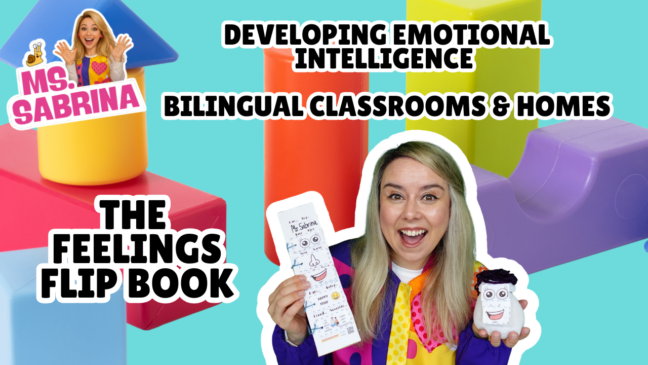
One simple and effective tool is a bilingual Feelings Flip Book.
At the top of the flip book, children write:
I am + name. Soy + nombre.
Then they build emotional language using:
I am + feeling. Estoy + sentimiento.
This structure is especially important for young bilingual learners who are practicing the difference between ser and estar. Instead of translating word by word, they internalize:
I am + John. / Soy + John.
I am + sad. / Estoy + triste.
From there, they continue with their need:
I need + to take a quiet break. Necesito + tomarme un descanso tranquilo.
By physically flipping and combining expressions, students move from vocabulary to meaningful communication. Why it works:
It supports expressive language in both English and Spanish.
It reinforces sentence structure in a concrete, visual way.
It encourages self-regulation by linking feelings to needs.
It reduces frustration by providing functional communication tools.
Teachers can use the Flip Book during circle time, morning meetings, calm-down corners, writing centers, or conflict resolution moments.
A child can say:
I am + frustrated. I need + help. I am + scared. I need + a hug.
Families can also use this tool at home. Children can create a paper flip book or a simple rice-filled sock “feelings doll,” adjusting facial expressions to match how they feel and pairing it with a small “needs” flip book. These hands-on tools invite conversation and make emotional language part of everyday life.
In many settings, behavioral challenges are often communication challenges in disguise. When children can name their emotions and express what they need in two languages, they are not just learning words. They are growing into confident, emotionally intelligent, and capable human beings. That is bilingual education with heart.
For more, you can watch Ms. Sabrina’s Feelings Flip Book episode on YouTube (see below), and download the free printable flipbook template at MsSabrina.com.
Una herramienta práctica de Aprendizaje Socioemocional para aulas y hogares bilingües: El Libro de Caritas de las Emociones
El aprendizaje de idiomas se vuelve más significativo cuando el aprendizaje socioemocional se integra en él.
En entornos bilingües, a menudo comenzamos con emociones simples como feliz, triste o enfadado. Sin embargo, los niños se benefician más cuando el lenguaje emocional es funcional y les ayuda a expresar cómo se sienten y qué necesitan.
Una herramienta sencilla y eficaz es el libro de caritas de las emociones bilingüe. En la parte superior, los niños escriben:
I am + name. Soy + nombre.
Después construyen el lenguaje emocional utilizando:
I am + feeling. Estoy + emoción.
Esta estructura es especialmente importante para los pequeños aprendices bilingües que están practicando la diferencia entre ser y estar. En lugar de traducir palabra por palabra, comienzan a interiorizar:
I am + Maria. / Soy + Maria.
I am + sad. / Estoy + triste.
A partir de ahí, continúan expresando su necesidad:
I need + to take a quiet break. Necesito + tomarme un descanso tranquilo.
Al girar y combinar las expresiones físicamente, los estudiantes pasan del vocabulario aislado a la comunicación significativa. Por qué funciona:
Favorece el lenguaje expresivo en inglés y español.
Refuerza la estructura de las oraciones de manera concreta y visual.
Promueve la autorregulación al vincular emociones con necesidades.
Reduce la frustración al proporcionar herramientas de comunicación funcional.
Los docentes pueden utilizar el libro durante la asamblea de la mañana, en el rincón de la calma, en centros de escritura o en momentos de resolución de conflictos.
Las familias también pueden utilizar esta herramienta en casa. Los niños pueden crear un libro de caritas o un sencillo muñeco de emociones con un calcetín relleno de arroz, ajustando las expresiones faciales según cómo se sienten y combinándola con un pequeño libro de “necesidades”. Estas herramientas prácticas fomentan la conversación e integran el lenguaje emocional en las rutinas diarias.
En muchos entornos, los problemas de conducta suelen ser problemas de comunicación disfrazados. Cuando los niños pueden identificar sus emociones y expresar lo que necesitan en dos idiomas, no solo están aprendiendo palabras. Se están convirtiendo en seres humanos seguros, emocionalmente inteligentes y capaces. Eso es educación bilingüe con el corazón por delante.
Para más información, puedes ver el episodio del Libro de Caritas de las Emociones de Ms. Sabrina en YouTube y descargar la plantilla gratuita en MsSabrina.com.
– Las claves del DELE. Edición actualizada (Difusión): los libros de esta colección se componen de varias unidades que trabajan, a modo de repaso, los contenidos básicos de cada nivel a partir de algún tema concreto. Además, se complementan con un apartado de consejos para las diferentes tareas y se incluyen también cinco modelos de examen. La colección abarca desde A1 hasta C1, incluyendo un manual de preparación al DELE A2/B1 para escolares.
– Especial DELE. Curso completo (Edelsa): esta excelente colección complementa y completa la ya existente en esta misma editorial para la preparación del DELE (Preparación al Diploma de Español). Así pues, a los modelos de examen (incluidos en la versión anterior), agrupados en unidades temáticas, se añaden los apartados de léxico, gramática y funciones, que permiten reforzar los contenidos exigidos para la superación de cada nivel. El curso completo solo está disponible para A2, B1 y B2 (la versión anterior sí abarca todos los niveles).
– El Cronómetro (Edinumen): de esta colección (disponible para todos los niveles, incluida la preparación para el DELE A2/B1 para escolares) destacamos sus apéndices, ya que en ellos se incluyen actividades útiles para desarrollar las habilidades necesarias para la superación de la prueba.
Por supuesto, también cuentas con muestras de exámenes en la página del Instituto Cervantes, así como diferentes páginas personales de profesores e incluso vídeos con pruebas reales de expresión e interacción orales en YouTube.
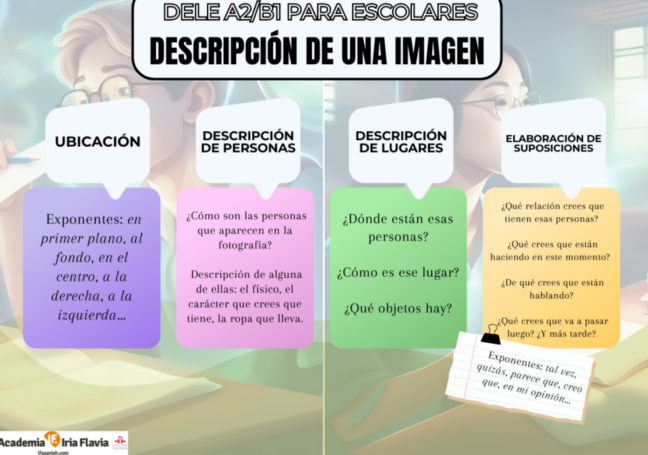
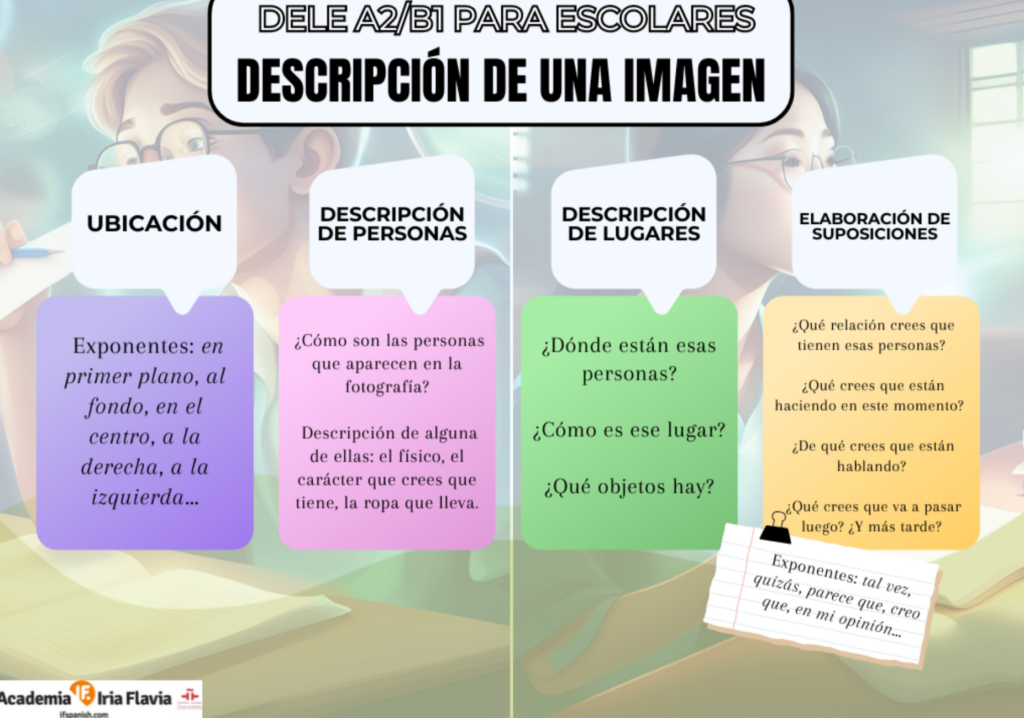
Por nuestra parte, incluimos con esta entrada una infografía con pautas para que tus estudiantes puedan describir una fotografía, tal como se pide en la tarea 1 de la prueba de expresión e interacción orales del DELE A2/B1 para escolares.
Estamos seguros de que, con trabajo y constancia, tus alumnos podrán superar el DELE y presumir de nivel de español..
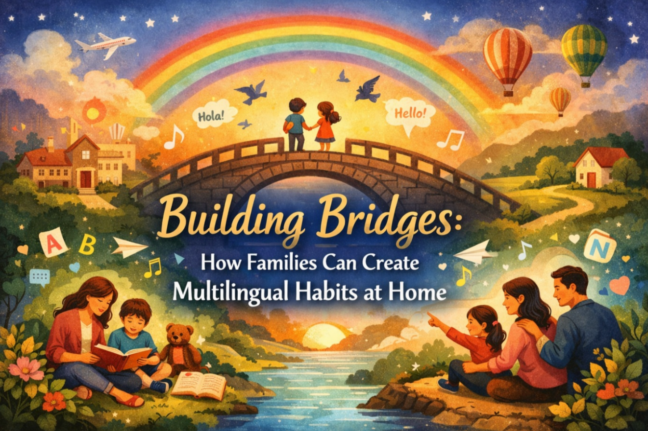
Building Bridges: How Families Can Create Multilingual Habits at Home
In an increasingly multilingual world, more families than ever are navigating bilingual and multilingual education—often without feeling fully equipped to support it at home. One of the most common misconceptions I encounter as a language teacher is the belief that parents must be fluent in a language in order to help their children develop it.
In reality, what matters most is not fluency, but consistency, intention, and environment. Families play a crucial role in shaping attitudes toward language, even when the target language is not spoken confidently—or at all—by adults at home.
Bilingualism Begins with Habits, Not Perfection
Language learning does not happen only in classrooms. It grows through repeated exposure, emotional safety, and meaningful routines. When families create small but regular language habits, they help children associate languages with connection rather than pressure.
Parents do not need to correct grammar, explain complex structures, or “teach” in a traditional sense. Their role is to normalise the presence of multiple languages in daily life and to create an environment where language feels safe and meaningful.
Some helpful mindset shifts include:
Viewing language learning as shared exploration, not performance
Allowing children to mix languages without fear of correction
Valuing communication and understanding over accuracy
These principles are particularly important for heritage learners, who may feel caught between languages, expectations, and cultural identities.
Simple Routines That Make a Big Difference
Multilingual habits are most effective when they are small, predictable, and emotionally positive. Families—regardless of their own language level—can support learning through simple, repeatable routines:
One Moment a Day
Choose a fixed daily moment (bedtime, breakfast, the car ride to school) when the target language is always present. This might involve listening to a short audio story, a song, or a narrated text.
Passive Exposure Counts
Children benefit from hearing a language regularly, even if they are not actively speaking. Audiobooks, short videos, and narrated stories provide valuable exposure, especially when supported by visuals or subtitles.
Language Through Stories
Stories offer emotional context. They show language in use, connected to characters, feelings, and experiences. This is particularly powerful for children who feel anxious about speaking or making mistakes.
Two examples that families frequently engage with are bilingual stories available on the Bilingual Cerebros YouTube channel.
Puentes entre idiomas (The Bridge Between Languages), a Spanish story exploring false friends and linguistic confusion through empathy and humour
Conectando mundos paso a paso (Connecting Worlds Step by Step), a reflective narrative about navigating languages gradually and with confidence
Both stories are available with narrated audio and subtitles, making them accessible even to parents who are not fluent in the target language themselves.
Media as a Bridge, Not a Babysitter
Digital resources are most effective when they are used intentionally. Rather than serving as background noise, media can become a shared experience that strengthens both language development and family connection.
Simple strategies include:
Listening or watching together, even briefly
Pausing to ask open questions such as, ‘What do you think is happening?’
Encouraging children to retell the story in their stronger language
Returning to the same story multiple times
Repetition builds familiarity, and familiarity builds confidence. When children know what to expect, they can focus on meaning rather than fear of error.
From Home Practice to Deeper Engagement
Across years of working with bilingual families, heritage learners, and students learning languages as bridges between cultures, one pattern consistently emerges: learners progress more confidently when they see themselves reflected in stories — not idealised learners, but real children and families navigating uncertainty, identity, and belonging through language.
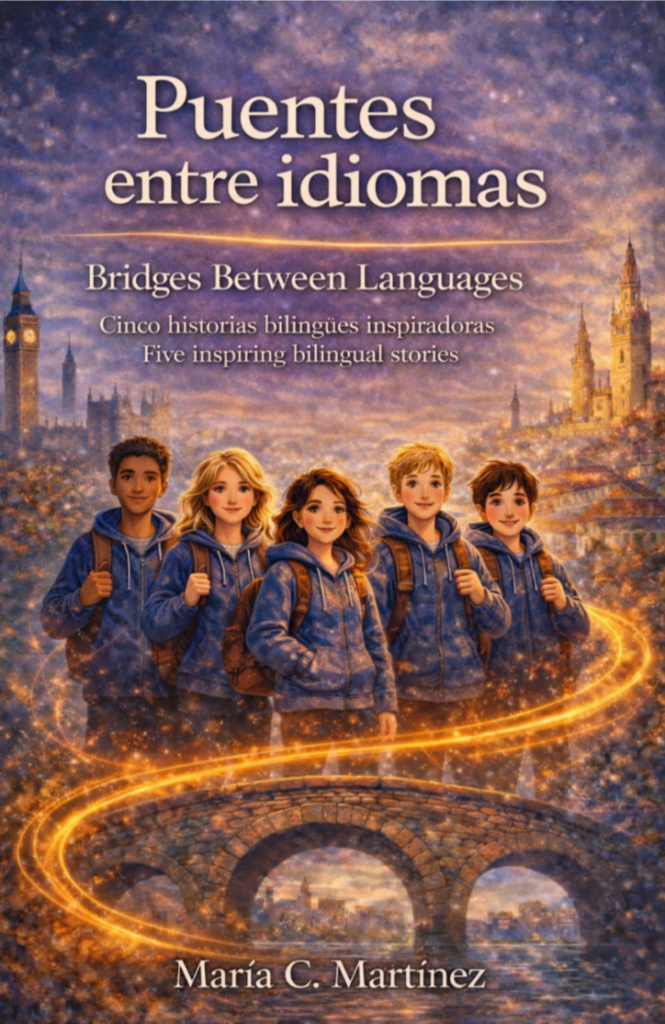
This experience led to the creation of my book Puentes entre idiomas / Bridges Between Languages, a collection of five bilingual stories inspired by classroom practice, family conversations, and student voices. Each story follows young characters living between languages and cultures as they navigate doubts, mistakes, and discoveries that help them grow in confidence and self-understanding.
The stories are presented first in Spanish and then in English, allowing readers to engage with both languages in a natural and supportive way. At the end of each story, comprehension and reflection questions encourage independent learning, classroom discussion, or shared reading at home. The aim is not to teach rules, but to accompany learners — heritage speakers, language students, teachers, and families — who see language learning as a process of connection and belonging.
As mentioned earlier, Puentes entre idiomas and Conectando mundos paso a paso are available with narrated audio on the Bilingual Cerebros YouTube channel, offering families an accessible way to explore the stories and incorporate them into everyday language routines.
Why This Matters Now
As bilingual education continues to expand, families are increasingly asked to support language learning beyond the classroom—often without clear guidance. By focusing on habits, emotional safety, and accessible resources, we empower parents to become confident partners in the learning process rather than silent observers.
Multilingualism does not thrive through pressure or perfection, but through presence, and every small routine becomes a bridge. The narrated stories below are two of the five included in Puentes entre idiomas / Bridges Between Languages mentioned earlier. They provide a practical example of how shared listening can support everyday multilingual routines.
In the book, the five stories are accompanied by comprehension questions at three levels and additional guidance for use at home or in the classroom.
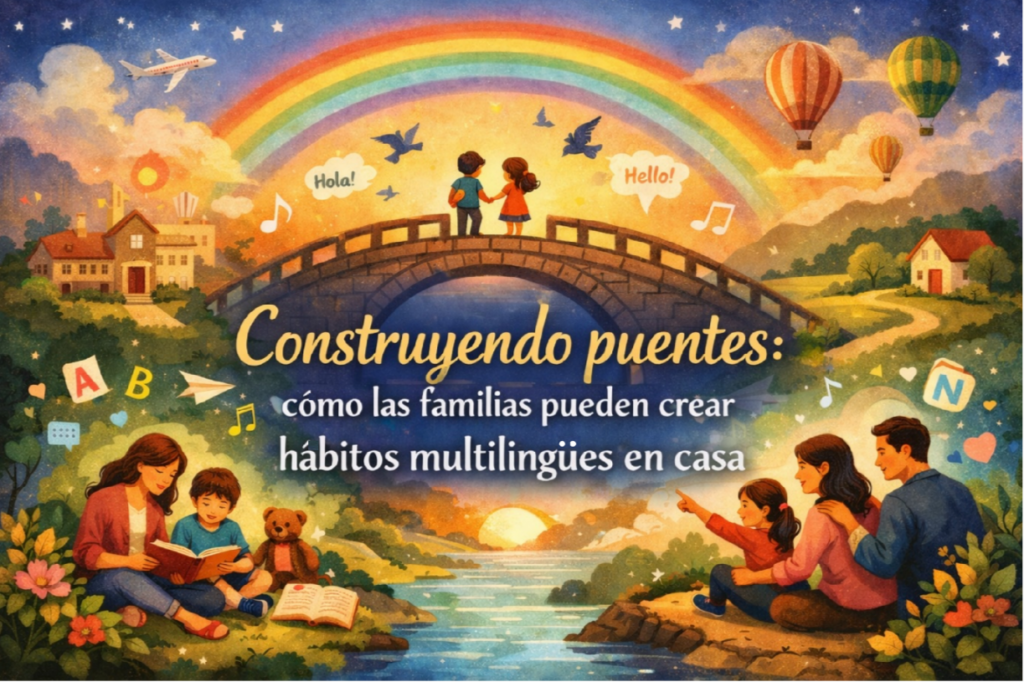
Construyendo puentes: cómo las familias pueden crear hábitos multilingües en casa
En un mundo cada vez más multilingüe, son muchas las familias que acompañan a sus hijos en procesos de educación bilingüe o multilingüe, a menudo sin sentirse plenamente preparadas para apoyarlos desde casa. Uno de los malentendidos más frecuentes que encuentro como profesora de lenguas es la idea de que los padres deben dominar un idioma para poder ayudar a sus hijos a desarrollarlo.
En realidad, lo más importante no es la fluidez, sino la constancia, la intención y el entorno. Las familias desempeñan un papel clave en la forma en que los niños se relacionan con los idiomas, incluso cuando la lengua meta no se habla con seguridad —o no se habla en absoluto— en casa.
El bilingüismo empieza con hábitos, no con la perfección
El aprendizaje de una lengua no ocurre únicamente en el aula. Se construye a través de la exposición repetida, la seguridad emocional y las rutinas con sentido. Cuando las familias crean pequeños hábitos lingüísticos, pero constantes, ayudan a que los niños asocien los idiomas con la conexión y no con la presión.
Los padres no necesitan corregir la gramática, explicar estructuras complejas ni “enseñar” de forma tradicional. Su papel es normalizar la presencia de varias lenguas en la vida diaria y crear un entorno en el que el idioma se perciba como algo seguro y significativo.
Algunos cambios de enfoque útiles incluyen:
Ver el aprendizaje de lenguas como una exploración compartida, no como una actuación
Permitir que los niños mezclen idiomas sin miedo a la corrección constante
Valorar la comunicación y la comprensión por encima de la precisión
Estos principios son especialmente importantes para los estudiantes de herencia, que a menudo se sienten entre dos lenguas, expectativas y realidades culturales.
Pequeñas rutinas que marcan una gran diferencia
Los hábitos multilingües funcionan mejor cuando son sencillos, previsibles y emocionalmente positivos. Las familias —independientemente de su nivel lingüístico— pueden apoyar el aprendizaje mediante rutinas simples y repetibles.
Un momento al día
Elegir un momento fijo del día (antes de dormir, durante el desayuno, en el coche camino al colegio) en el que la lengua meta esté siempre presente. Puede ser escuchar un breve cuento narrado, una canción o un texto con audio.
La exposición pasiva también cuenta
Los niños se benefician de escuchar un idioma con regularidad, incluso cuando no lo hablan activamente. Los audiolibros, los vídeos cortos y las historias narradas ofrecen una exposición valiosa, especialmente cuando incluyen imágenes o subtítulos.
El lenguaje a través de las historias
Las historias aportan un contexto emocional. Muestran la lengua en uso, vinculada a personajes, sentimientos y experiencias. Esto resulta especialmente poderoso para niños que sienten ansiedad al hablar o miedo a equivocarse.
Dos ejemplos que muchas familias utilizan con frecuencia son las historias bilingües disponibles en el canal de Bilingual Cerebros en YouTube:
Puentes entre idiomas (The Bridge Between Languages), un relato en español que explora los falsos amigos y la confusión lingüística desde la empatía y el humor
Conectando mundos paso a paso (Connecting Worlds Step by Step), una narración reflexiva sobre cómo avanzar entre lenguas de forma gradual y con confianza
Ambas historias están disponibles con audio narrado y subtítulos, lo que las hace accesibles incluso para padres que no dominan la lengua meta.
Los recursos digitales como puentes, no como niñeras
Los recursos digitales son más efectivos cuando se utilizan de manera intencional. En lugar de servir solo como ruido de fondo, los contenidos audiovisuales pueden convertirse en experiencias compartidas que refuercen tanto el aprendizaje lingüístico como el vínculo familiar.
Algunas estrategias sencillas incluyen:
Escuchar o ver el contenido juntos, aunque sea por poco tiempo
Pausar para hacer preguntas abiertas como: ¿Qué crees que está pasando?
Animar a los niños a volver a contar la historia en su lengua más fuerte
Repetir la misma historia en diferentes momentos.
La repetición genera familiaridad, y la familiaridad construye confianza. Cuando los niños saben qué esperar, pueden centrarse en el significado y no en el miedo al error.
De la práctica en casa a un compromiso más profundo
A lo largo de años de trabajo con familias bilingües, estudiantes de herencia y alumnos que aprenden lenguas como puentes entre culturas, he observado un patrón constante: los aprendices progresan con mayor seguridad cuando se ven reflejados en las historias. No en modelos idealizados, sino en niños y familias reales que atraviesan dudas, construyen identidad y encuentran su lugar entre lenguas.
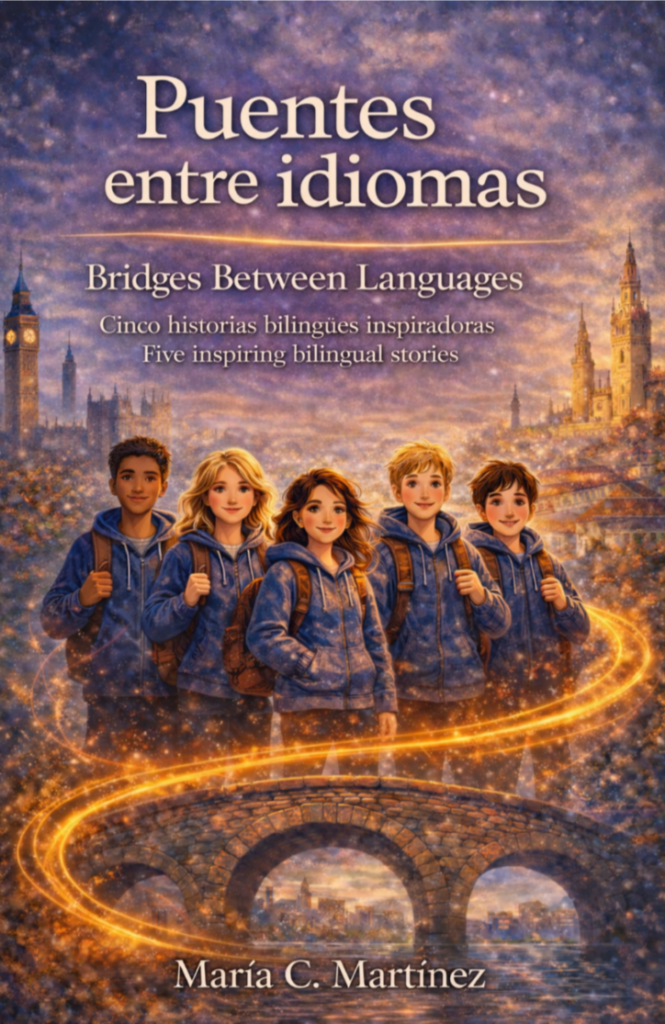
De esta experiencia nace mi libro Puentes entre idiomas / Bridges Between Languages, una colección de cinco relatos bilingües inspirados en la práctica docente, en conversaciones con familias y en las voces de mis propios estudiantes. Cada historia sigue a jóvenes que viven entre lenguas y culturas mientras enfrentan errores, inseguridades y descubrimientos que fortalecen su confianza y comprensión de sí mismos.
Los relatos se presentan primero en español y luego en inglés, lo que permite a lectores y familias interactuar con ambos idiomas de forma natural y acompañada. Al final de cada historia se incluyen preguntas de comprensión y reflexión que favorecen el aprendizaje autónomo, el debate en el aula o la lectura compartida en casa. El propósito no es centrarse en reglas o rendimiento, sino acompañar a estudiantes de herencia, aprendices de lenguas, docentes y familias que entienden el aprendizaje lingüístico como un proceso de conexión e identidad.
Como se mencionó anteriormente, Puentes entre idiomas y Conectando mundos paso a paso están disponibles con audio narrado en el canal de YouTube Bilingual Cerebros, ofreciendo a las familias una forma accesible de integrar estas historias en sus rutinas lingüísticas cotidianas.
Por qué esto importa ahora
A medida que la educación bilingüe continúa expandiéndose, a las familias se les pide cada vez más que apoyen el aprendizaje de lenguas más allá del aula, a menudo sin una orientación clara. Al poner el foco en los hábitos, la seguridad emocional y el acceso a recursos comprensibles, empoderamos a los padres para que se conviertan en colaboradores seguros y activos del proceso de aprendizaje, en lugar de observadores silenciosos.
El multilingüismo no se construye desde la presión ni desde la perfección, sino desde la presencia, y cada pequeña rutina se convierte en un puente.
Los siguientes relatos narrados son dos de los cinco incluidos en Puentes entre idiomas / Bridges Between Languages, mencionados anteriormente en este artículo. Ofrecen un punto de partida sencillo para crear rutinas de escucha compartida en casa. La versión del libro amplía esta experiencia con actividades de comprensión estructuradas en tres niveles y más ideas para su uso en el aula y en familia.
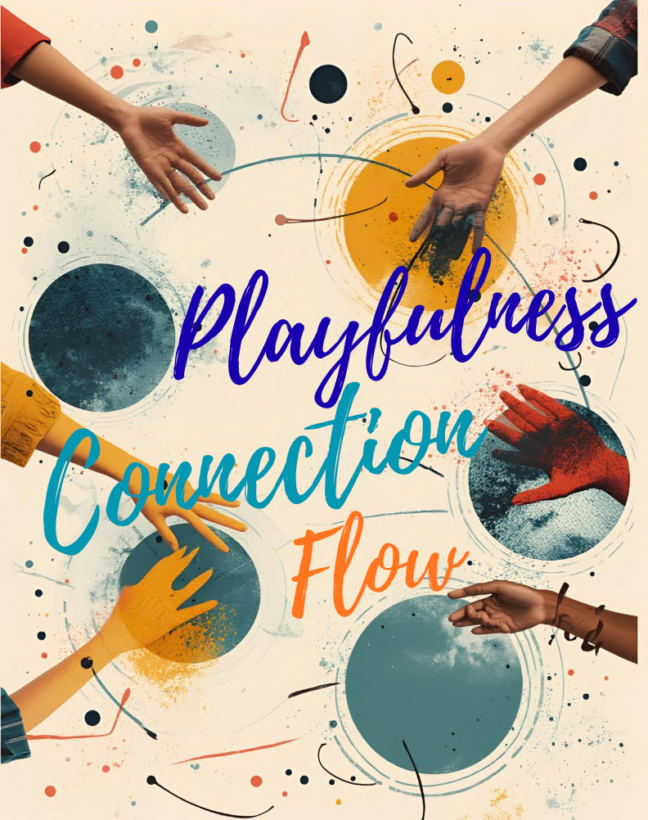
A friend recommended the book The Power of Fun: How to Feel Alive Againby Catherine Price and I read it. In the book, Price defines ‘True Fun’ when playfulness, connection, and flow happen, preferably at the same time. Price says that ‘play’ “depends less on the activity itself than it does on the attitude we bring to it” (p.90) while ‘flow’ “is, a state of total engagement, in which you are so engrossed in the activity at hand that you lose track of time” (p.100). These points resonated with me as a world language educator.
Attention
Price also points out that what you prioritize is what you give your full attention to (p. 44). Then, in the world language room, how can we have students make the decision about focusing in class and giving all their attention? Maybe playfulness, connection, and flow is the way to go?
As world language educators, we aim at having students want to keep on speaking, writing, reading, and listening in our classes even if they make mistakes. As Price says, “‘When we are in flow, we don’t fear failure” (p.100).
True Fun
Considering all of the above, I wonder, how can we create a world language curriculum that, in a way, mimics playfulness, connection, and flow, i.e. that mimics True Fun?
When we are having fun, we’re entirely in the moment, responding spontaneously. i.e, in flow. Usually, we are also playful and connected with others. I couldn’t help but want True Fun in our world language classes.
Qualities, Styles, Contexts
Price continues by listing qualities, styles, and contexts needed for playfulness, connection, and flow to occur. They include so many that we already see in our classes. Some of these qualities, styles, and contexts include imagination, intellectual stimulation, uncertainty, spontaneity, teamwork, community, performance, risk, competition, and novelty, so name some. Maybe it is time to start using them intentionally.
As an added suggestion, Price tells us, “When you are playful with the same people over time, it can create bonds between groups of people that persist even when you’re not actively playing” (p. 93). We already have the same students over time (a semester, a whole year) so it seems that it is a call to act! Isn’t playfulness, connection, and flow what we aim for in our classes?
An Example
One way in which I see this in action in a world language class is by having debates. I believe that having debates on topics which are meaningful for students will help them to lean towards playfulness in your class, make connections with other students and their ideas, and help maintain flow in class. During debates, students pay full attention to what their peers are saying and will want their group to ‘win’ the debate.
When we have debates in class, students ‘have more courage to try new things’ (p. 117). Mainly, they want to express their opinions, which are usually strong and put a lot of effort in doing so, forgetting, in a way, that they are doing it in another language. Good prompts become essential for success!
Questions as Prompts
Questions that spark discussions may become the perfect prompt for students. Don’t forget to find contexts or topics that students are interested in talking about. For example, the question in the Scholastic magazine El Sol ‘Do professional athletes earn too much money?’ (¿Ganan demasiado los deportistas profesionales?) provides a wonderful topic for discussion and debate. Students will have strong opinions on one side or the other. Students are sure to have True Fun.
Next time you are planning a unit, think of having a debate as a formative or summative assessment. You’ll be delighted to see True Fun in action.
🤍Con los años de docencia y en especial durante mis años de directora, me topé con diferentes tipos de maestras, profesores, auxiliares más o menos capacitados o motivados.
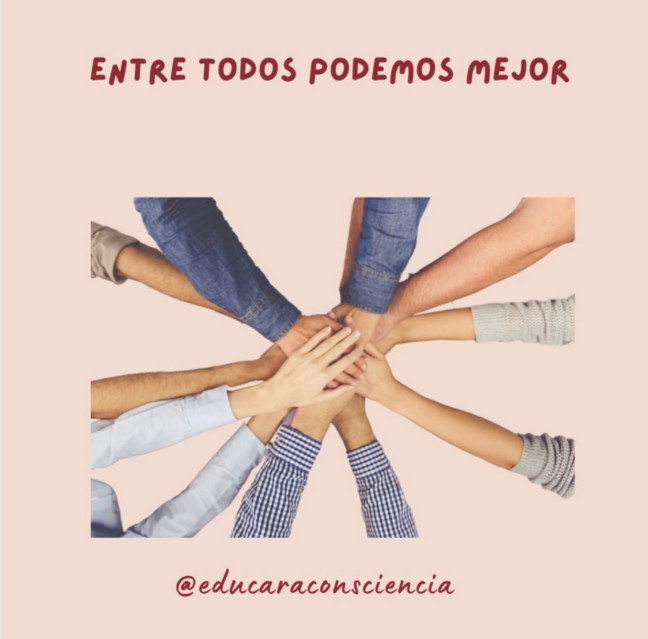
🤍Sin duda puedo asegurar que cuando varias cabezas y manos se juntan formando un equipo, surgen ideas maravillosas.
🤍Sin duda puedo asegurar que si algún integrante del equipo flaquea, le cuesta más o pasa por un momento de crisis, entre todos los demás podemos alentarlo, empujarlo, motivarlo para que pueda.
🤍Porque todos somos importantes en un equipo. 🤍Porque es mejor sumar que competir. 🤍Porque entre todos nos complementamos. 🤍Porque estar atentos al otro, interesarme, abrazar y convocar, hace bien al otro, a mí, y al equipo entero.
🤍Porque comunicar, habilita. 🤍Pedir ayuda, ayuda. 🤍Observar es fundamental. 🤍Escuchar nos conecta. 🤍Y que todos podamos es mejor que si uno queda atrás…
🤍Así que no te olvides: EL QUE PUEDE, PUEDE. Y EL QUE NO, LO AYUDAMOS ENTRE TODOS PARA QUE TAMBIÉN PUEDA!
🤍 With the years of teaching and especially during my years as a director, I came across different types of teachers, professors, assistants more or less trained or motivated.
🤍 I can certainly assure that when several heads and hands come together to form a team, wonderful ideas emerge.
🤍 Without any doubt, I can assure you that if any member of the team at some point falters, experiences more difficulty, or is going through a crisis, all the other members of the team can encourage or motivate him/her so that he/she can go through
🤍 Because we are all important on a team. 🤍 Because it’s better to add than to compete. 🤍 Because we all complement each other. 🤍 Because being attentive to the other, being interested, and being supportive, does to me, to the other, and to the whole team, really good.
🤍 Because communicating, enables. 🤍 Asking for help, helps. 🤍 Observing is key. 🤍 Listening connects us. 🤍And we are all better if no one is left behind…
🤍 So don’t forget: He who is able, will do well. And the one who is not, all of us help him so that he can do well too.
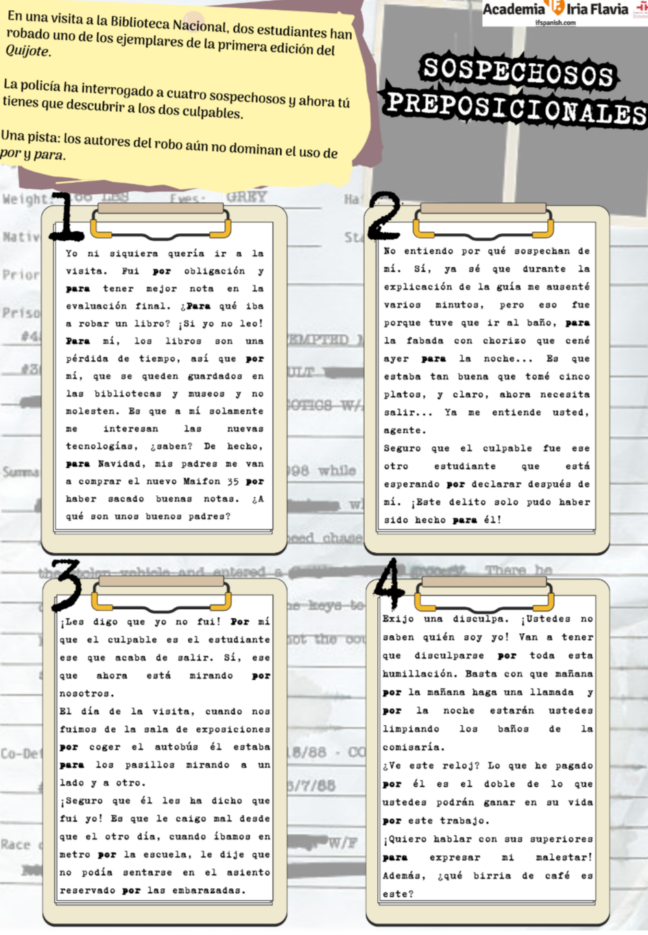
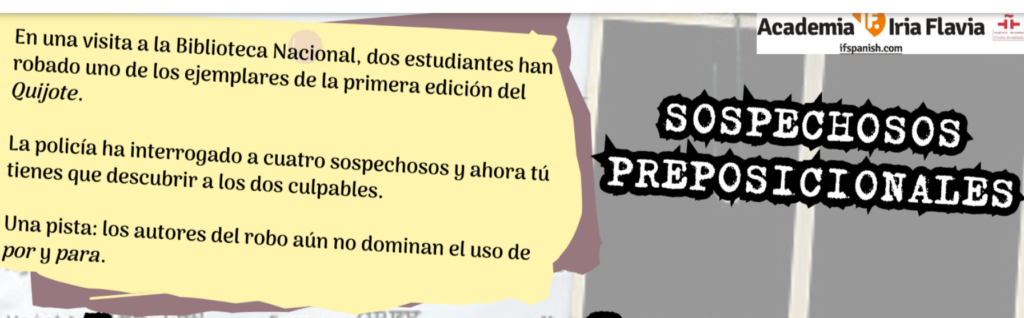
Hoy te traemos una actividad con la que reforzar, a partir de la detección del error, un aspecto gramatical concreto: el contraste entre por y para. Nos hemos inspirado, para ello, en la Gramática básica del estudiante de español y en El Ventilador. En estas obras, podemos encontrar un ejercicio en el que los estudiantes tienen que identificar usos erróneos de una y otra preposición leyendo varios textos breves en los que distintos sospechosos se defienden de la acusación que se les imputa: un asesinato (en el caso de la Gramática Básica) y haber criticado al profesor (en el caso de El Ventilador). Puesto que los culpables, además de mala gente, no dominan los usos de por y para, los alumnos, a modo de sabuesos detectives, deben identificar a los malhechores reconociendo los errores en la forma de usar ambas preposiciones.
Pues bien, hemos recogido el testigo y hemos creado una actividad similar. Pero en esta ocasión el crimen imputado no es el asesinato ni la crítica al docente, sino que en nuestro caso hemos optado por el robo. Y no uno cualquiera, sino uno de película : el robo de uno de los ejemplares de la primera edición del Quijote, custodiado en la Biblioteca Nacional .
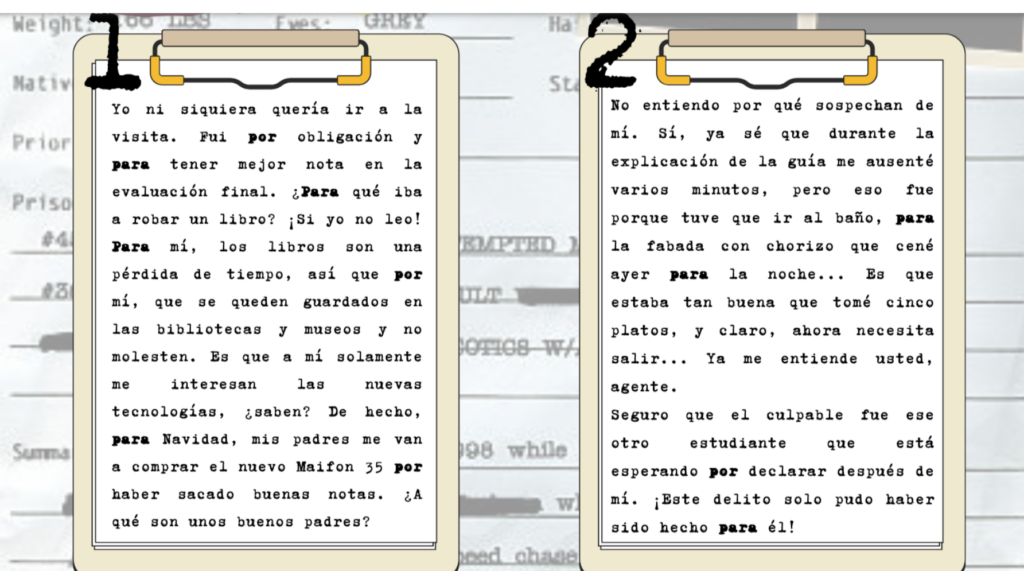
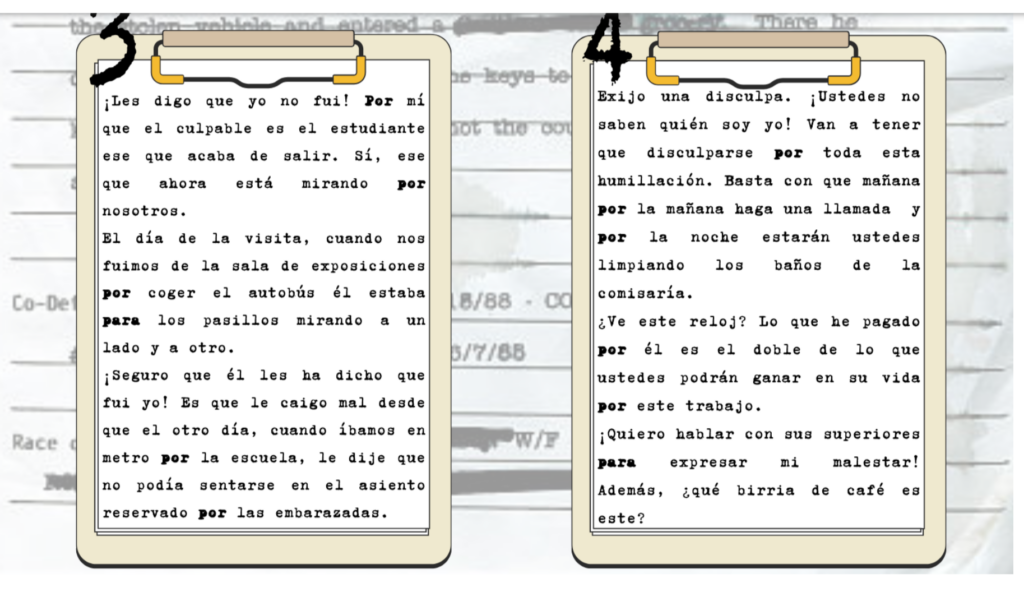
Se ha interrogado a cuatro sospechosos, por lo que ahora toca identificar a los dos culpables: para ello, tus alumnos tendrán que encontrar los usos erróneos de por y para en las declaraciones de los interrogados . Suerte y ¡a detener a los autores del nefando delito!
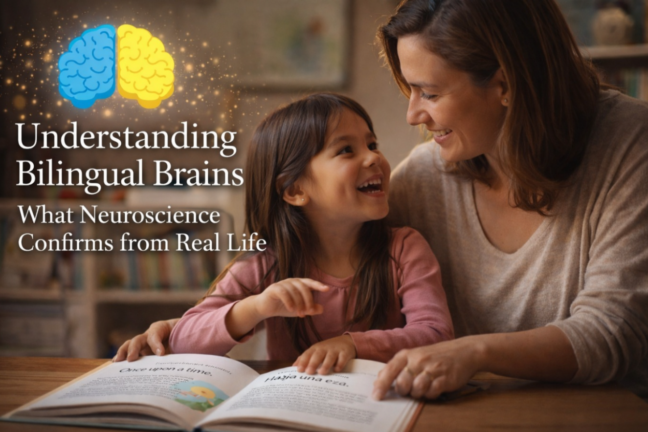
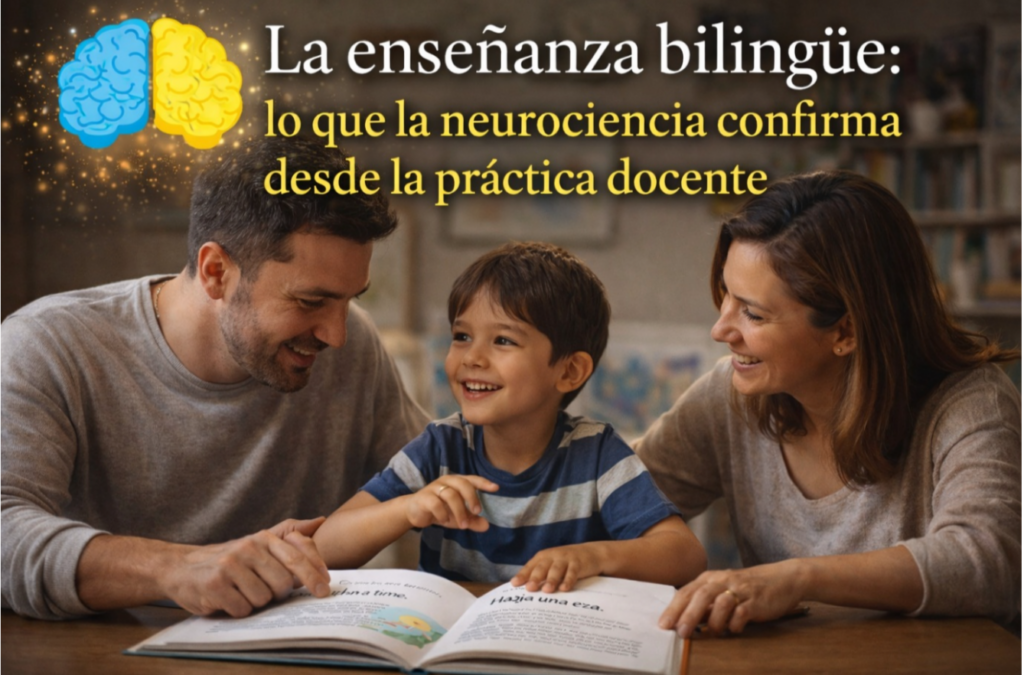
Teaching Bilingual Learners: What Neuroscience Confirms from the Classroom
For more than twenty years, I have worked with bilingual learners across different countries, education systems, and age groups — from children growing up with two languages at home to GCSE and A-Level students preparing for high-stakes exams. One concern comes up repeatedly, especially from families and sometimes even from teachers: “Is my child confusing their languages?”
What neuroscience now confirms is something I have observed consistently throughout my teaching career: bilingual learners are not confused. Their brains are doing something far more complex.
Research shows that in bilingual individuals, both languages remain active in the brain, even when only one is being used. Switching between languages, translating, or occasionally mixing them is therefore not a sign of weakness, but of cognitive flexibility. In my classrooms and online teaching, I have seen again and again that students who are allowed to process meaning bilingually develop deeper understanding and stronger long-term retention.
Bilingual Cerebros grew directly out of this reality. The resources, videos, and materials I create are designed to work with the bilingual brain, not against it. Side-by-side texts, bilingual explanations, and clear structural models reflect how bilingual learners actually process language. Neuroscience supports this approach: understanding comes before accuracy, and emotional safety plays a crucial role in learning and memory.
Practical implications for teachers, parents, and students
Understanding how the bilingual brain works should change the way we support learners in very practical ways.
For teachers, this means allowing space for bilingual processing. Translation, comparison between languages, and discussion of meaning should be part of learning — not something to be avoided. Clear structures, repeated language patterns, and familiar frameworks reduce cognitive load and allow students to focus on analysis and expression.
For parents, it is important to know that correcting every mistake or discouraging language mixing can increase anxiety rather than progress. Encouraging communication, meaning, and confidence — even when both languages appear — supports long-term development. Progress in bilingualism is rarely linear, and moments of mixing are often signs of growth, not regression.
For students, struggling does not mean you are failing. It often means your brain is managing two linguistic systems at once. Using both languages strategically — to plan ideas, clarify meaning, or revise key vocabulary — is not a weakness, but a learning tool. Confidence comes first; precision follows.
Neuroscience and Teaching
Neuroscience does not replace good teaching — it explains why good teaching works. Long before research caught up, bilingual learners were already showing resilience, adaptability, and creativity through language. My role as a teacher has always been to support that process with clarity, structure, and reassurance — and that continues to be at the heart of Bilingual Cerebros.
Bilingual Cerebros Resources
If you would like to explore these ideas in a practical way, you’re very welcome to visit the new sections on Bilingual Cerebros, where I’ve recently added dedicated areas for GCSE and A-Level Spanish, including novels, films, essay guidance, and model answers — all designed to support learners step by step. You’ll also find bilingual stories and resources created to build confidence, understanding, and a positive relationship with language learning.
And remember, if you ever need the PDF resources mentioned in my videos or posts, you’re always welcome to email me at bilingualcerebros@gmail.com. I’m always happy to help.
La enseñanza bilingüe: lo que la neurociencia confirma desde la práctica docente
Durante más de veinte años he trabajado con alumnado bilingüe en distintos países, sistemas educativos y etapas — desde niños que crecen con dos lenguas en casa hasta estudiantes de GCSE y A-Level que se preparan para exámenes de alta exigencia. Hay una preocupación que aparece una y otra vez, especialmente entre las familias y, en ocasiones, también entre docentes: «¿Mi hijo se está confundiendo con los idiomas?»
Lo que hoy confirma la neurociencia es algo que he observado de forma constante a lo largo de toda mi trayectoria docente: los alumnos bilingües no están confundidos. Sus cerebros están haciendo algo mucho más complejo.
Las investigaciones muestran que, en las personas bilingües, ambas lenguas permanecen activas en el cerebro, incluso cuando solo se está utilizando una. Por eso, cambiar de idioma, traducir o mezclar lenguas ocasionalmente no es un signo de debilidad, sino de flexibilidad cognitiva. En mis clases presenciales y online he comprobado una y otra vez que los estudiantes a los que se les permite procesar el significado de forma bilingüe desarrollan una comprensión más profunda y una retención a largo plazo mucho más sólida.
Bilingual Cerebros nace directamente de esta realidad. Los recursos, vídeos y materiales que creo están diseñados para trabajar con el cerebro bilingüe, no en contra de él. Textos en paralelo, explicaciones bilingües y modelos estructurales claros reflejan cómo procesan realmente el lenguaje los aprendices bilingües. La neurociencia respalda este enfoque: la comprensión va antes que la corrección, y la seguridad emocional desempeña un papel clave en el aprendizaje y la memoria.
Implicaciones prácticas para docentes, familias y estudiantes
Comprender cómo funciona el cerebro bilingüe debería cambiar la manera en que apoyamos a los alumnos, también en aspectos muy concretos.
Para los docentes, esto implica dejar espacio al procesamiento bilingüe. La traducción, la comparación entre lenguas y la reflexión sobre el significado deberían formar parte del aprendizaje, no ser algo que se evite. Las estructuras claras, los patrones lingüísticos repetidos y los marcos familiares reducen la carga cognitiva y permiten que el alumnado se concentre en el análisis y la expresión.
Para las familias, es importante saber que corregir cada error o desanimar la mezcla de lenguas puede generar ansiedad en lugar de progreso. Fomentar la comunicación, el significado y la confianza — incluso cuando aparecen ambos idiomas — favorece el desarrollo a largo plazo. El progreso en el bilingüismo rara vez es lineal, y los momentos de mezcla suelen ser señales de avance, no de retroceso.
Para los estudiantes, tener dificultades no significa que estén fallando. A menudo significa que su cerebro está gestionando dos sistemas lingüísticos al mismo tiempo. Utilizar ambas lenguas de forma estratégica — para organizar ideas, aclarar significados o repasar vocabulario clave — no es una debilidad, sino una herramienta de aprendizaje. La confianza llega primero; la precisión viene después.
La neurociencia y la enseñanza
La neurociencia no sustituye a una buena enseñanza: explica por qué la buena enseñanza funciona. Mucho antes de que la investigación lo demostrara, los alumnos bilingües ya mostraban resiliencia, adaptabilidad y creatividad a través del lenguaje. Mi papel como docente siempre ha sido acompañar ese proceso con claridad, estructura y tranquilidad — y eso sigue siendo el núcleo de Bilingual Cerebros.
Recursos de Bilingual Cerebros
Si te apetece explorar estas ideas de forma práctica, te invito a visitar las nuevas secciones de Bilingual Cerebros, donde recientemente he añadido áreas específicas para GCSE y A-Level de Español, con novelas, películas, orientación para ensayos y modelos de respuesta, todo diseñado para apoyar al alumnado paso a paso. También encontrarás historias y recursos bilingües creados para reforzar la confianza, la comprensión y una relación positiva con el aprendizaje de idiomas.
Y recuerda: si en algún momento necesitas los PDF mencionados en mis vídeos o publicaciones, siempre puedes escribirme a bilingualcerebros@gmail.com. Estaré encantada de ayudarte.
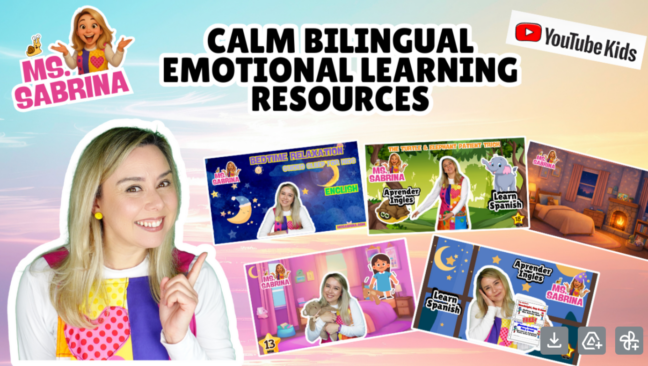
Education is most effective when children feel emotionally supported. By combining social emotional learning, mindfulness, calm routines, and practical communication in English and Spanish, families and educators can help children grow into confident, capable learners.
As a bilingual educator and children’s author, my motto is Bilingual Education with Heart. This means honoring children’s emotional well-being while supporting real, practical communication in English and Spanish through calm videos, fun activities, and bilingual books.
Our content focuses on:
Practical communication in English and Spanish
Social emotional learning, including feelings, empathy, and self- regulation
Life skills, routines, healthy habits, and confidence
Environmental awareness and care for the world This month, Ms. Sabrina’s Bilingual Playtime surpassed 500,000 views on YouTube and is now available on YouTube Kids, showing that families around the world are choosing calm, low stimulation, heart centered, inclusion based bilingual learning for their children.
To support children’s emotional well-being, I created a special YouTube playlist called Mindfulness Moments with Ms. Sabrina: SEL & Calm Routines:
This bilingual playlist includes:
The Turtle & Elephant Patience Trick for frustration and self-regulation
Positive affirmations for building confidence
Videos on bedtime routines and helping children feel safe at night
Tools for when children feel scared
Three guided meditations (one in English and two in Spanish, including versions for girls and boys)
A bedtime routine book and routine chart
A children’s bedtime fireplace video with one hour of calm relaxing music
I hope families enjoy these resources as much as I enjoyed creating them. All free printable PDFs connected to the videos are available at MsSabrina.com.
Recursos Bilingües de Aprendizaje Socioemocional y Mindfulness para Niños: Apoyando el Aprendizaje de Idiomas con Calma, Confianza y Conexión
La educación es más efectiva cuando los niños se sienten emocionalmente acompañados y seguros. Al combinar el aprendizaje socioemocional, el mindfulness, las rutinas tranquilas y la comunicación práctica en inglés y español, las familias y educadores pueden ayudar a los niños a crecer seguros y capaces.
Como educadora bilingüe y autora infantil, mi lema es Educación Bilingüe con el Corazón por Delante. Esto significa cuidar el bienestar emocional de los niños mientras se fomenta una comunicación real y práctica en inglés y español a través de videos tranquilos, actividades divertidas y libros bilingües.
Nuestro contenido se centra en:
Comunicación práctica en inglés y español
Aprendizaje socioemocional, incluyendo emociones, empatía y autorregulación
Habilidades para la vida, rutinas, hábitos saludables y confianza
Conciencia ambiental y cuidado del mundo Este mes, Ms. Sabrina’s Bilingual Playtime superó las 500.000 visualizaciones en YouTube y ahora está disponible en YouTube Kids, lo que demuestra que familias de todo el mundo están eligiendo un aprendizaje bilingüe tranquilo, de baja estimulación, centrado en el corazón e inclusivo para sus hijos.
Para apoyar el bienestar emocional de los niños, creé una playlist especial en YouTube llamada Mindfulness Moments with Ms. Sabrina: SEL & Calm Routines:
Esta playlist bilingüe incluye:
El Truco de la Tortuga y el Elefante para la frustración y la autorregulación
Afirmaciones positivas para fortalecer la confianza
Videos sobre rutinas de sueño y cómo ayudar a los niños a sentirse seguros por la noche
Herramientas para cuando los niños sienten miedo
Tres meditaciones guiadas (una en inglés y dos en español, incluyendo versiones para niñas y niños)
Un libro de rutina para dormir y una tabla de rutinas
Un video de chimenea para niños con una hora de música relajante y calmante
Espero que las familias disfruten estos recursos tanto como yo disfruté crearlos.
Todos los PDFs imprimibles gratuitos relacionados con los videos están disponibles en MsSabrina.com.
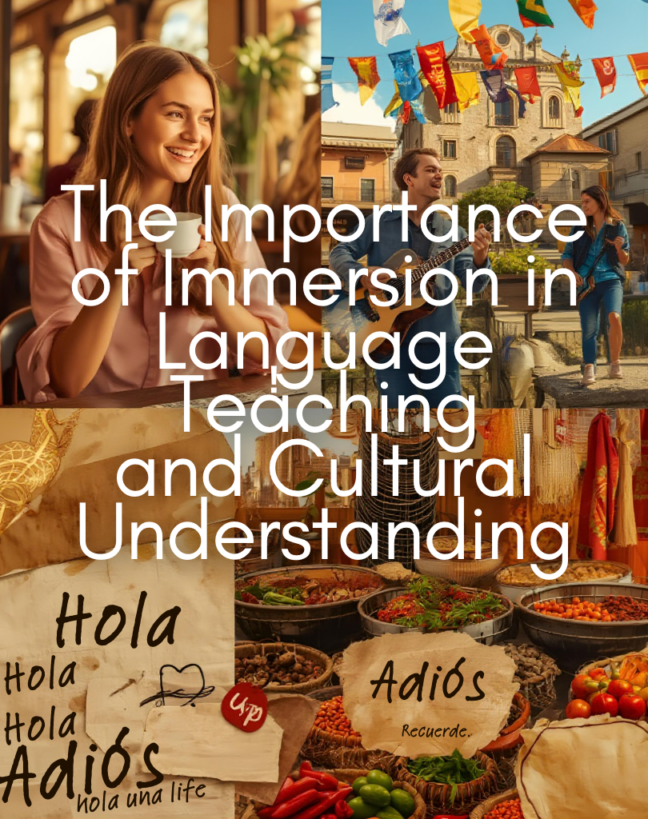
Learning a language is not just about memorizing words or learning grammar rules. You actually learn a language when you use it to talk to people and experience it in life. This is why going to a place where people speak the language and living with them is a wonderful way to learn a language. You get to use the language to communicate with people and make friends. You get to see how people use the language in their daily life! Language immersion is a fantastic way to learn a language.
Language Immersion
Language immersion is a way for people to learn a new language. It lets you hear the language every day. You hear it when you are walking down the street, when you are in stores, and when you talk to people. You can even hear it when you watch the news or listen to music.
Immersion helps you learn the language in a natural way. It really improves you ability to understand what people are saying. It helps you say words correctly. You also get better at speaking it more easily. When you are surrounded by a language, you pick up the grammar used and common phrases without thinking about it, which can be hard to do in a classroom setting.
Culture and Lifestyles
Language is not the only thing that helps you feel like you are really there. The culture and the way of life of a place are just as important. When you learn a language in the country where it is spoken, you get to see how people live their lives too. You see how people talk to each other and how the culture and traditions of a place affect the way people use language. When you understand these things you can see why people say things in a certain way. You get to know what people are saying! Most importantly, you get to understand why they are saying it that way. Learning a language is about understanding the people and the place where it is spoken.
When you live with the people you get to be a part of their cultural activities too. You can try the food and see the old buildings and natural places. This helps you learn more about the place.
Living with the people lets you take part in their cultural activities, enjoy the traditional cuisine and explore the historical and natural heritage, making your learning experience better.
Immersion in people’s way of life helps you understand better people from other cultures. it teaches you to be kind and open to things, which is really important in the world we live in today, where people from different countries interact with each other all the time.
Language, Immersion, and Skills
I think that when I am able to use language in everday life, it heps me to feel more confident and motivated. For example, speaking with people really helps students to get over their fear of making mistakes. Every time I try to speak the language I learn something and I can see that I am getting better at communicationg with others. The language becomes part of my life and I can see my progress, which makes me want to keep on learning.
Immersion experiences give you a lot of benefits from a professional point of view as well. They not only help you get better at language but you also learn how to be independent and adapt to new things. You get better at talking to people from different cultures. These skills are very important in education and things like Erasmus programs. The global job market also values these skills highly. Immersion experiences are a way to learn these skills.
Conclusion
In conclusion, immersion is one of the most complete and meaninful ways to learn a language. It brings together language, culture, and lifestyle, transforming learning into a life-changing experience that goes far beyound the classroom. Learning a language through immersion is ultimately learning to see the world from a new perspective.
In Euroidiomas Spanish School in Úbeda you can immerse yourself in the history, culture and language of Spain while enjoying this Unesco World Heritage town. If you mention Language Teaching Lab, you will get a 20 Euro discount in any Spanish Courses with Flamenco or with Arts classes.
Cookie Consent
We use cookies to improve your experience on our site. By using our site, you consent to cookies.
Cookie Preferences
Manage your cookie preferences below:
Essential cookies enable basic functions and are necessary for the proper function of the website.
Name
Description
Duration
Cookie Preferences
This cookie is used to store the user's cookie consent preferences.