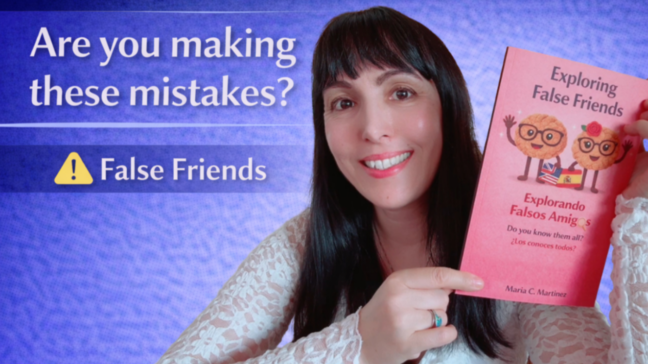
by María Martínez (LTL Contributor)
False Friends: From Frustration to Discovery in Bilingual Learning
If you have ever learned or taught another language, you have probably experienced that moment of hesitation…
A word looks familiar. It feels right. You use it confidently, and then something doesn’t quite work.
These moments often come from what we call false friends: words that look similar across languages but carry different meanings. They are small traps, but powerful ones.
At the beginning of the learning journey, false friends can be discouraging. They create confusion, misunderstandings, and sometimes even embarrassment. A student might say “Estoy embarazada” when they mean “I’m embarrassed”, only to realise the meaning is very different.
These are the kinds of moments that can make learners doubt themselves. And yet, over the years, I have come to see false friends very differently.
A turning point in learning
With experience, false friends stop being obstacles and become something else entirely: they become milestones.
They are signs that a learner is making connections between languages. That they are thinking, comparing, analysing. In other words, they are not mistakes of ignorance, but signs of progress.
False friends push learners to go beyond surface similarity and engage with meaning. They invite questions such as:
- Why does this word look the same but mean something different?
- What does this tell me about how each language works?
- How can I express this idea more precisely?
This is where real language development happens.
The role of humour and memory
Another powerful aspect of false friends is something we often underestimate in education: humour.
Many of the misunderstandings they create are genuinely funny. A learner talking about “soap for dinner” instead of “sopa” is not just making a mistake; they are creating a memorable learning moment.
These moments stay with students. They become stories. And stories are far more powerful than isolated vocabulary lists.
In my classroom, these situations often lead to laughter, discussion, and, importantly, deeper understanding. Learners remember the correction because they remember the moment.
Supporting bilingual identity
False friends are not only relevant in foreign language classrooms. They are equally important for bilingual learners growing between two languages.
For these learners, navigating similarities and differences is part of their daily experience. Recognising false friends helps them:
- strengthen accuracy in both languages
- build confidence when switching between them
- develop a deeper awareness of meaning and nuance
Rather than seeing interference between languages as a problem, we can reframe it as a resource.
From classroom reality to a learning resource
After more than 25 years of teaching, I noticed something striking: the same false friends kept appearing again and again.
Different students. Different contexts. Same patterns.
This repetition is what inspired me to create a structured way to explore them — not just as isolated vocabulary, but as part of a meaningful learning journey.
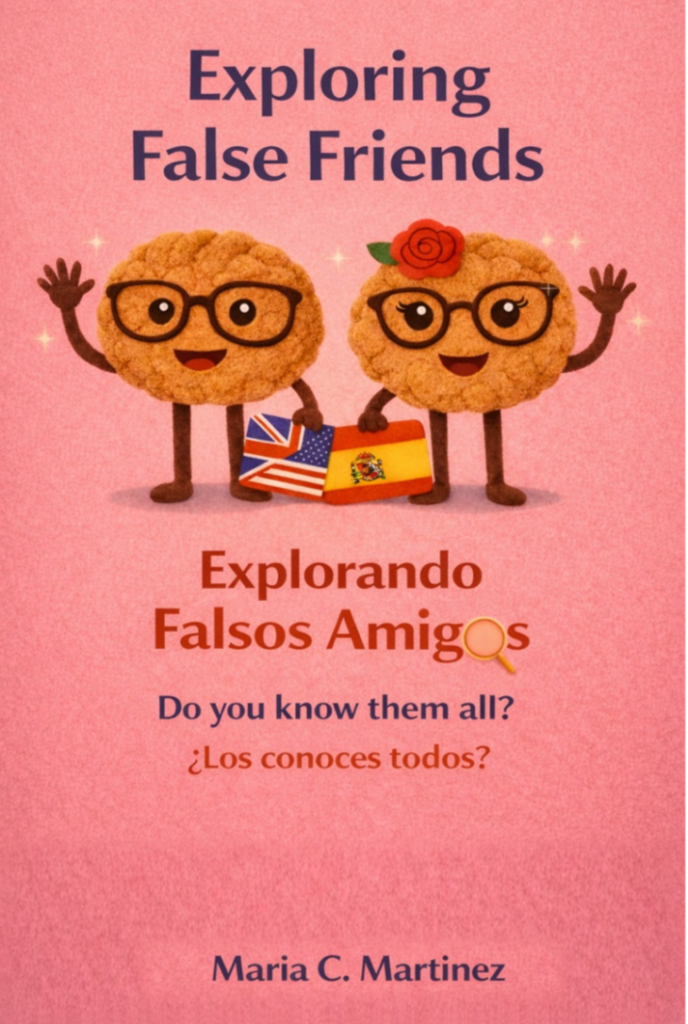
In Exploring False Friends, I have brought together many of the most common and impactful examples I have encountered over the years, presented through short dialogues, real-life situations, and practice activities.
The aim is simple: to help learners recognise these patterns, understand them, and use them with confidence — while enjoying the process.
An invitation to explore
False friends remind us that language learning is not just about memorising words; it is about noticing, questioning, and making connections.
They show us that mistakes are not failures, but opportunities for learning; sometimes even joyful ones.
If you work with bilingual learners, teach languages, or are learning yourself, I invite you to embrace these moments rather than avoid them.
And if you would like to explore them further, Exploring False Friends offers a practical and engaging way to do just that, with resources that can be used in the classroom, at home, or independently.
This book is also part of a growing collection; Brainito and Cerebraina, the main characters, will continue exploring language together through new situations, expressions, and real-life contexts, with more episodes and books to come.
You can find the book on Amazon in Kindle and paperback format. Because sometimes, the words that confuse us the most are the ones that teach us the most.
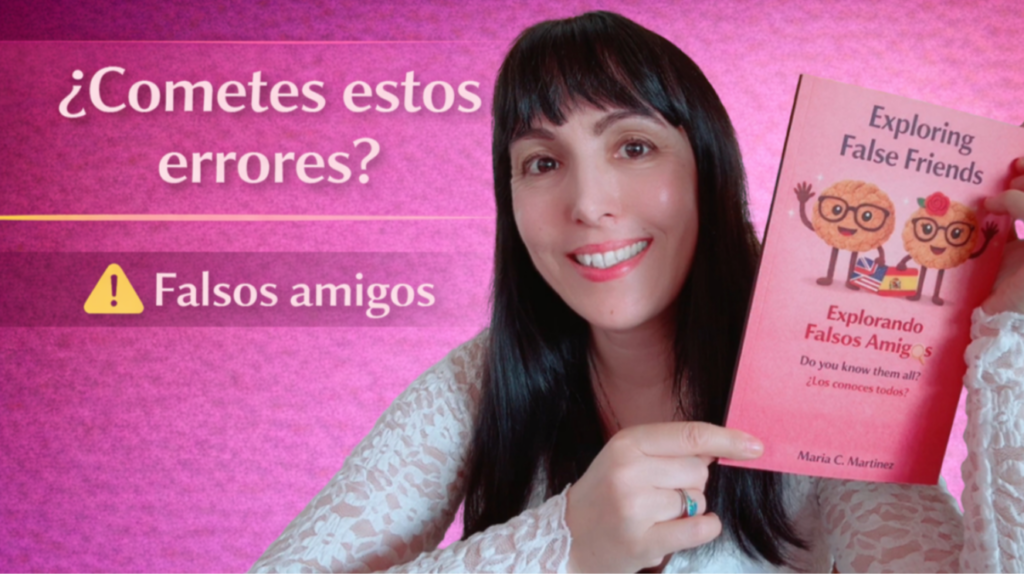
Falsos amigos: de la frustración al descubrimiento en el aprendizaje bilingüe
Si alguna vez has aprendido o enseñado otro idioma, probablemente hayas experimentado ese momento de duda…
Una palabra parece familiar. Suena correcta. La utilizas con confianza, y, sin embargo, algo no encaja.
Estos momentos suelen surgir de lo que llamamos falsos amigos: palabras que se parecen entre idiomas, pero que tienen significados diferentes. Son pequeñas trampas, pero muy poderosas.
Al comienzo del proceso de aprendizaje, los falsos amigos pueden resultar desalentadores. Generan confusión, malentendidos y, en ocasiones, incluso vergüenza. Un estudiante puede decir “Estoy embarazada” cuando en realidad quiere decir “I’m embarrassed”, solo para darse cuenta de que el significado es muy distinto.
Este tipo de situaciones puede hacer que los estudiantes duden de sí mismos.
Y, sin embargo, con los años, he llegado a ver los falsos amigos de una manera muy diferente.
Un punto de inflexión en el aprendizaje
Con la experiencia, los falsos amigos dejan de ser obstáculos y se convierten en algo completamente distinto: se convierten en hitos.
Son señales de que el estudiante está estableciendo conexiones entre idiomas; de que está pensando, comparando, analizando. En otras palabras, no son errores fruto de la ignorancia, sino señales de progreso.
Los falsos amigos empujan a los estudiantes a ir más allá de la similitud superficial y a profundizar en el significado. Invitan a plantearse preguntas como:
- ¿Por qué esta palabra se parece pero significa algo distinto?
- ¿Qué me dice esto sobre cómo funciona cada idioma?
- ¿Cómo puedo expresar esta idea con mayor precisión?
Es aquí donde ocurre el verdadero desarrollo lingüístico.
El papel del humor y la memoria
Otro aspecto muy valioso de los falsos amigos es algo que a menudo subestimamos en educación: el humor.
Muchos de los malentendidos que provocan son realmente divertidos. Un estudiante que habla de “jabón para cenar” en lugar de “sopa” no solo está cometiendo un error; está creando un momento de aprendizaje memorable.
Estos momentos permanecen en la memoria. Se convierten en historias. Y las historias son mucho más poderosas que las listas de vocabulario aisladas.
En mi aula, estas situaciones suelen dar lugar a risas, reflexión y, lo más importante, a una comprensión más profunda. Los estudiantes recuerdan la corrección porque recuerdan el momento.
Apoyando la identidad bilingüe
Los falsos amigos no solo son relevantes en el aula de lengua extranjera. También son fundamentales para los estudiantes bilingües que crecen entre dos idiomas.
Para ellos, navegar entre similitudes y diferencias forma parte de su día a día.
Reconocer los falsos amigos les ayuda a:
- mejorar la precisión en ambos idiomas
- ganar confianza al cambiar de uno a otro
- desarrollar una mayor conciencia del significado y los matices
En lugar de ver la interferencia entre idiomas como un problema, podemos
reinterpretarla como un recurso.
De la realidad del aula a un recurso de aprendizaje
Después de más de 25 años de enseñanza, observé algo llamativo: los mismos falsos amigos aparecían una y otra vez.
Diferentes estudiantes. Diferentes contextos. Los mismos patrones.
Esta repetición fue lo que me llevó a crear una forma estructurada de explorarlos; no solo como vocabulario aislado, sino como parte de un proceso de aprendizaje significativo.
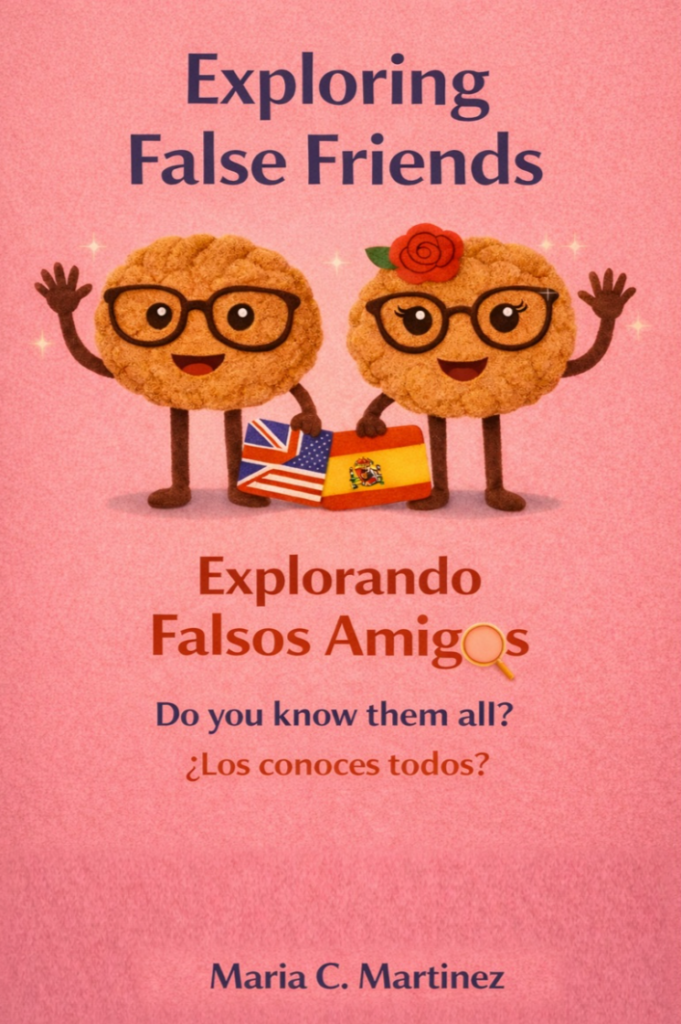
En Explorando los falsos amigos, he reunido muchos de los ejemplos más comunes e importantes que he encontrado a lo largo de los años, presentados a través de diálogos breves, situaciones de la vida real y actividades prácticas.
El objetivo es sencillo: ayudar a los estudiantes a reconocer estos patrones, comprenderlos y utilizarlos con confianza; disfrutando del proceso.
Una invitación a explorar
Los falsos amigos nos recuerdan que aprender un idioma no consiste solo en memorizar palabras; consiste en observar, cuestionar y establecer conexiones.
Nos muestran que los errores no son fracasos, sino oportunidades de aprender; a veces incluso oportunidades llenas de alegría y diversión.
Si trabajas con estudiantes bilingües, enseñas idiomas o estás aprendiendo tú mismo, te invito a abrazar estos momentos en lugar de evitarlos.
Y si te gustaría explorarlos más a fondo, Explorando los falsos amigos ofrece una forma práctica y atractiva de hacerlo, con recursos que pueden utilizarse en el aula, en casa o de manera autónoma.
Este libro forma parte de una colección en crecimiento; Brainito y Cerebraina, los personajes principales, seguirán explorando el lenguaje juntos a través de nuevas situaciones, expresiones y contextos reales, con más episodios y libros por venir.
Puedes encontrar el libro en Amazon en formato Kindle y tapa blanda
Porque, a veces, las palabras que más nos confunden son las que más nos enseñan.