Crear, tocar y aprender: el arte como puente hacia la lengua de herencia

puente

by Margarita García de Vinuesa (LTL Contributor)

En las clases de lengua de herencia, el arte inspirado en Pablo Picasso y Joan Miró se convierte en una herramienta clave para explorar colores, formas y cultura. A través de actividades manipulativas y creativas, los niños no solo aprenden vocabulario, sino que viven el idioma de forma significativa y conectan con su herencia cultural.

Crear, tocar y aprender: el arte como puente hacia la lengua de herencia

En las clases de lengua de herencia con niños, la creatividad no es un complemento… es el motor que impulsa todo el aprendizaje.

El arte se convierte en un puente perfecto para aprender, pero también lo es la manipulación, especialmente en edades tempranas. Tocar, recortar, pegar y crear permite que el aprendizaje sea más significativo, ya que los niños experimentan el idioma con todo su cuerpo y no solo a través de la escucha.

A través del arte, trabajamos las formas y los colores inspirándonos en dos grandes artistas: Pablo Picasso y Joan Miró.

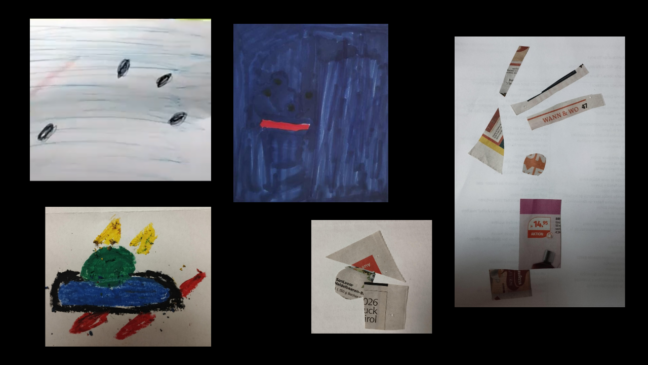
Con Pablo Picasso, los niños recortaron diferentes formas geométricas y las pegaron para crear composiciones propias, llenas de imaginación y muy curiosas.

Con Joan Miró, se inspiraron en sus colores más característicos: rojo, azul, amarillo, negro y blanco. A partir de esta paleta tan reconocible, crearon dibujos libres, explorando el color de manera espontánea y expresiva.

Con los más pequeños, además, trabajamos los nombres de los artistas y los ubicamos en el mapa, conectando el idioma con el mundo.

Con los mayores, profundizamos un poco más en sus vidas y en sus estilos pictóricos.

La experiencia fue muy enriquecedora: disfrutaron creando, experimentando y, sin darse cuenta, aprendieron más sobre su lengua y su cultura de herencia.

Porque aprender una lengua no es solo aprender palabras… es vivirla, tocarla y sentirla.


Create, Touch, Learn: Art as a Bridge to Heritage Language

In heritage language classes with children, creativity is not just an add-on… it is the driving force behind meaningful learning.

Art becomes a powerful bridge for learning, but so does hands-on interaction, especially at an early age. Cutting, touching, gluing, and creating allow children to experience the language with their whole body, not just through listening.

Through art, we explore shapes and colors inspired by two great artists: Pablo Picasso and Joan Miró.

With Pablo Picasso, children cut out different geometric shapes and used them to create their own imaginative compositions.

With Joan Miró, they worked with his most characteristic colors: red, blue, yellow, black, and white, creating free drawings inspired by his unique visual language.

With younger learners, we also introduced the artists’ names and located them on the map, connecting language to the world.

With older students, we explored their lives and artistic styles in more depth.

It was a joyful and enriching experience: children created, explored, and, without even
realizing it, deepened their connection to their heritage language and culture.

Because learning a language is not just about words… it’s about living it, touching it, and feeling it.
https://www.jardindemargarita.com

https://www.jardindemargarita.com

Professional and Personal Experiences Inform My Language Curriculum

Have you ever wondered why we teach what we teach? I realized that my professional and personal experiences inform my language curriculum in more ways than I have imagined. 

It all started when a few years ago, in the educational and pedagogical arenas, there was a big emphasis on culturally responsive teaching. That is when I decided to revisit my curriculum. Among all the units, I started by digging deeper into the typical ‘get to know students’ one at the beginning of the school year. Yes, it is important to know what students’ preferred name is and learn about their favorites, and I do not underestimate this, but to me that was not enough. I wanted my students to learn about themselves, who they are and who they want to become as language learners. 

Https://languageteachinglab.com

A children’s book, a trip to a museum, and a fellowship are three examples that informed my unit on identity. I developed, tweaked, and grew this unit throughout the years.

A Professional and Personal Experience: A Children’s Book

I had the privilege of meeting Rafael Lopez in person when he received the Americas Award for illustrating Pat Mora’s Yum! MMMM! Que Rico!. Lopez made an imprint on me that day. I bought most of his titles from then onwards (all worth it!).

When I read Rafael Lopez’s, El dia en que descubres quien eres, I knew I had to introduce it to my students. This book reminds us not to forget how you feel when you are new to a place. It reminds us of the importance of making connections and sharing stories among each other. It touches upon the identifiers of race, ethnicity, gender, class, ability, origin, and age and at the same time it develops empathy. I use the Project Zero Thinking Routine CSI – Color, Symbol, and Image – to have students show understanding of the story.


A Personal Experience: A Trip to a Museum 

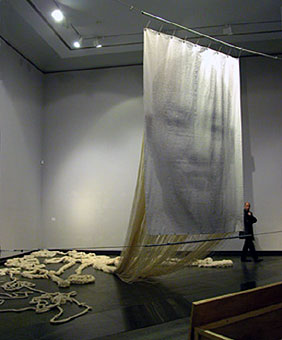
I make a big emphasis throughout the identity unit on the importance of learning about the ‘invisible’ side of people, of others and of our own. Students discover and explore this by walking the same steps I walked many years ago when I saw ‘Braiding’ by Lin Tianmiao while visiting a Chicago museum.

Lin Tianmiao massive installation made a huge impact on me back then. I decided to add this work of art into the identity unit. It seemed the appropriate way of helping students understand how much of what we see and perceive influences what we think about others. 

Students use the simple (but powerful) Project Zero Thinking Routine “I see, I think, I wonder” to describe the installation. As a first entry to the art, I only show students the face in the artwork. Once students share what they have written about what they see, think, and wonder, I show them the complete piece of art. In their own words they express what I intended them to understand.

http://sites.asiasociety.org/arts/past_future/images/lin_tianmiao.jpg

A Professional Experience: A Fellowship 

I want to show students that we cannot stop at the visible part of human beings to learn about others. Introducing them to Caja de Memoria Viva II: Constancia Colón Clemente by Adrián Viajero Román seemed the way to go. The following materials are based on the collections developed when Marcela and I participated in the Smithsonian Fellowship

Students use personal memories to recall what songs or sounds, what smells, what artifacts, and what tastes we associate with home or a special place for us. Only then we analyze the art.

Students observe and analyze the three dimensional work of art first. Then they describe both its exterior and interior. I usually start by showing students some photographs of the visible cube representing the head of a person. The installation is of a black Puerto Rican woman who migrated to the United States in the 1940s. 

After they observe the photos from the outside, I have them observe photos of the inside of the piece of art. Students see lots of different objects hanging in the inside walls of the cube.

We continue by using the Project Zero Thinking Routine ‘Layers.’ This routine provides learners with a structure for looking analytically at creative works through its narrative, aesthetic, mechanical, dynamic, and connections.

Example questions for using ‘Layers’ 

-Who do you think is this person? 

-How old do you think she is? 

-Where do you think she lives? 

-How does this installation make you feel? 

-What do you see? 

-What is unique in this piece? 

-How does it connect with your personal experiences?  

The installation helps students concretely see the connection between the ‘visible’ and ‘invisible’ sides of a person. One important aspect about this art piece is the fact that you can hear the voice of Constancia Colon Clemente when you are under the installation. It feels you really are in her head!

Future Professional and Personal Experiences

The examples mentioned above – a children’s book, a trip to a museum, and a fellowship – informed my unit on identity. I will surely keep on developing and tweaking this unit in the years to come.

Though usually unexpectedly, my professional and personal experiences will keep on influencing my language curriculum. Therefore, I wonder where my next inspiration will come from.