En otra entrada anterior hacíamos referencia a esos elementos de la lengua aparentemente caprichosos llamados preposiciones 🤪. Y finalizábamos aludiendo a un superpoder 🦸♀️🦸♂️: el de cambiar el significado de los verbos a los que acompañan.
👉 No es lo mismo romper algo 🔨 que romper CON alguien 💔 (aunque en algunas rupturas amorosas puede haber alguna rotura de jarrones y vajilla 🏺🍽).
👉 Seguro que os gusta que vuestros amigos se rían CON vosotros 🤣, pero no os hace tanta gracia cuando se ríen DE vosotros 🤣👉🙍🙍♀️.
👉 Podemos tratar de entender A alguien 😄🫂 (expresar nuestra empatía hacia esa persona, ponernos en su piel y comprender por qué se siente así o por qué ha actuado de esa manera) aunque no entendamos DE psicología ni sepamos deletrear “Nietzsche” 🤔.
👉 Si le damos algo A alguien, se lo ofrecemos, pasa de nuestras manos a las suyas; pero si damos CON la solución a un problema 🤔💡, simplemente la encontramos (al margen de que luego queramos compartir o no nuestro hallazgo).
👉 No es lo mismo querer cambiar nuestro país ♻️, y transformarlo en un lugar mejor para vivir 😊, que cambiar DE país 🧳✈️👋🥺 (en todo caso, haríamos esto último si los intentos de transformación no obtuvieran resultado y, resignados, optáramos por buscar otro lugar para vivir).
👉 Seguro que nuestro grupo de B1 ya puede contar anécdotas en el pasado 🗣⌛️✅️. Para eso, cuentan CON el indefinido y el imperfecto, y nosotros hemos contado CON muchos recursos para explicárselo. Y, por supuesto, cuando hemos tenido dificultades para llevar el contraste de pasados al aula, también hemos contado CON los consejos de los demás docentes 👩🏫👨🏫.
👉 Hoy en día, en la era de las noticias falsas 🗣🗞❓️, la gente cree casi cualquier cosa 👀👂, pero nosotros siempre creeremos EN nuestros estudiantes 👨🏾🎓👩🎓👍 (porque confiamos en ellos y sabemos que van a usar el subjuntivo sin problemas). Eso sí, ya no creemos EN los Reyes Magos 🌠👑🐪👋 (porque esos buenos tiempos de inocencia ya han pasado).
👍 Hemos tratado DE explicar 🤔💪🗣 estos cambios de significado con varios ejemplos que pudieran ser ilustrativos. Esperamos que a vuestros estudiantes les puedan resultar útiles 😊, aunque ya sabemos que no es fácil tratar CON 🤝 las preposiciones, ya que se trata DE un tema complejo. Pero no por ello deja de ser apasionante… 🥰
Las preposiciones son “personajes” particulares a la hora de aprender un idioma. De pequeños nos aprendíamos la retahíla en orden alfabético y la recitábamos con orgullo en clase. Pero ya de mayores llega el problema de aprenderlas en otras lenguas y comienzan las dificultades 🫣: reflexionamos sobre ellas 🤔 y nos damos cuenta de que ni siquiera podríamos explicarlas en nuestro idioma 🤷♂️. Y, por si fuera poco, dependiendo de la lengua, cambian de posición y hasta de nombre 🤦🏽 (y resulta que se llaman “posposiciones” ↩️).
En suma, que al final nos resignamos a tratar de usarlas… y ya está, aplicamos alguna regla mnemotécnica o simplemente actuamos por “ensayo y error” (al fin y al cabo, como diríamos en Galicia, “malo será” …).
Y es que si queremos establecer un símil con la física, podríamos pensar que las preposiciones son la parte “cuántica” de la lengua: nos da la impresión (es solo una percepción) de que se comportan de forma caprichosa, de que son difíciles de controlar… 🤪 Nos desesperamos porque los patrones que creíamos haber establecido no se cumplen 😨 y maldecimos porque la comparación con otras lenguas no solo es insuficiente, sino que genera confusión.
Puesto que las explicaciones tradicionales no son satisfactorias, debemos recurrir a otros modelos explicativos, como por ejemplo, la arqueología 🏛.
“¿La arqueología? ¿Habéis perdido la cabeza?”🤪. Bueno, lo de “arqueología” es una nueva metáfora (como puedes ver, nos gustan mucho los símiles). Esta disciplina rastrea los orígenes 🧐, y si hablamos de buscar el origen en el uso de una preposición, tenemos que hablar de gramática cognitiva 🧠, un apasionante enfoque que trata de llegar al significado primitivo de las preposiciones, para entender y explicar su uso presente (enfoque especialmente útil en el aula de ELE).
En la entrada de hoy no vamos a ofrecerte ninguna fórmula mágica para enseñar las preposiciones a tus estudiantes. Lo que vamos a hacer en las siguientes líneas es hablar de amor 👨🏻❤️👨🏽👩❤️👨👩🏻❤️👩🏽.
Ahora sí que puedes pensar que hemos perdido la cabeza de verdad 🙄. Pero todo tiene una explicación 🙏. En efecto, si nos hemos atrevido a relacionar las preposiciones con la física cuántica y con la arqueología, ¿por qué no íbamos a intentar hacer lo mismo con el amor? Y si de paso nuestros alumnos aprenden algunas colocaciones con preposición, pues mucho mejor…
En español nos enamoramos DE alguien 💞 (igual que hacen los italianos), mientras que en portugués, inglés y coreano (esta última usa posposiciones) la gente se enamora “con” otra persona. Podemos enamorarnos de muchas formas, pero una posible manera es hacerlo A primera vista 👀💘, después de una cita A ciegas 🙈❤️.
Tras un tiempo de enamoramiento, en español nos casamos CON esa persona de la que estamos enamorados, al igual que en portugués y coreano, mientras que en inglés y en italiano no se usa preposición para expresar tan bonita unión.
Pero como el amor es eterno… mientras dura, llega un momento en que se acaba, y necesitamos expresar dicho fin ❤️👋. Y para eso también tenemos las preposiciones: así, en español rompemos CON alguien o nos divorciamos DE alguien 🙍♀️🙍💔, al igual que en las lenguas anteriores (excepto en coreano, en donde nos divorciamos “con” alguien).
En fin, que las preposiciones nos acompañan en las diferentes etapas de nuestra vida. Están ahí, son necesarias y tenemos que convivir con ellas. Y lo mejor es hacerlo con humor.
Entre los personajes del mundo hispano que contribuyen a exportar la lengua española encontramos mujeres y hombres procedentes del mundo del arte 🎨 (por ejemplo, Frida Kahlo o Salvador Dalí), de la literatura 📚 (tales como Cervantes o García Márquez), de la música 🎼 (pensemos en Shakira) o del cine 🎬 (Penélope Cruz, por ejemplo).
Por ello, es frecuente ver referencias a ellos en los manuales de español, ya sea para introducir contenidos lingüísticos, ya sea para presentar contenidos culturales.
Sin embargo, los países hispanohablantes no solo están bien representados por personajes procedentes de dichas disciplinas, sino que la nómina se amplía a sectores como la cocina 👩🍳👨🏾🍳, la investigación científica 🧑🔬👩🏽🔬 y, por supuesto, el deporte 🥇.
Pues bien, en relación con este último ámbito, no podemos dejar de hablar del tenista español Rafa Nadal 🎾, quien hace unos días anunció un parón ⏸️ en la competición oficial con el fin de recuperarse completamente de su lesión y volver a ser competitivo en 2024 ⏯️.
Nadal es un abanderado del deporte español (y de hecho, lo es literalmente, ya que fue el encargado de portar la bandera de España en la ceremonia inaugural de los Juegos Olímpicos de Río 2016) y uno de nuestros mejores embajadores. Y ese aprecio que se le tiene se manifiesta con frecuencia en un grito de guerra popularizado no solo entre la afición que asiste a los torneos, sino también en el periodismo deportivo: ¡Vamos, Rafa! 🗣💪
Sin embargo, en ocasiones (bueno, en realidad, en muchas ocasiones) nos encontramos con que a ese mensaje de ánimo, cuando es reproducido en prensa escrita, le falta algo: la coma. Y es que ese grito de guerra debe escribirse con coma. ¡Con coma vocativa, por favor! 🙏
Así es como debemos escribir cuando nos dirigimos de manera expresa a alguien 🫵, ya sea para darle ánimos 💪 o para hacerle algún reproche 🤨. Es decir, desde el ¡Vamos, Rafa! al que nos hemos referido hasta el viral ¿Qué mirás, bobo? con el que Leo Messi se dirigía a un futbolista neerlandés tras un caldeado partido entre Argentina 🇦🇷 y Países Bajos 🇳🇱 durante el pasado Mundial de fútbol ⚽️.
En ambos casos, por muy opuestos que sean los mensajes, debemos usar la coma vocativa.
Podemos decir que los signos de puntuación son los grandes olvidados de la ortografía española 🥺. Nos esforzamos en poner las tildes 🧐, tratamos de usar correctamente la g y la j, advertimos sobre los peligros de confundir a ver y haber ☝️, nos enzarzamos en peleas 🗯 (lingüísticas, eso sí) acerca de la tilde en solo…, pero nos olvidamos del punto y coma, los dos puntos, el guion y, por supuesto, de la pobre coma 👋.
Por eso, te dejamos una infografía en la que se indican varios casos (aunque no todos) en los que debemos usar la coma, con el fin de mejorar nuestra expresión escrita, evitar enunciados ambiguos, estructurar mejor nuestro discurso y, por supuesto, animar a nuestros estudiantes con un alentador ¡Vamos! 💪🥰.
Hello! My name is María Martínez and I am the creator of the channel BILINGUAL CEREBROS. I am also a former MFL Coordinator, Spanish and primary teacher with over 24 years of teaching experience, almost 20 of them in the UK and for the last 4 years in Germany.
But today I am not speaking as a teacher, but as a mother of a young girl raised bilingual (English and Spanish) and now a polyglot. At age 13 she can speak fluent Spanish, English, and German, all three languages fluently as a native. She is also currently learning Italian and French at B1/B2 level and is interested in learning Japanese soon.
In this article I am going to share with you some of the tips that worked for us as a family living in a multilingual household.
TIP 1 – Have a 100% pressure-free attitude:
The first and most important tip I can give you is without a doubt: HAVE FUN! Your approach must be 100% pressure-free. If children feel an obligation to learn the language, it suddenly becomes a chore, for them and for you. Your attitude is key. You need to be really relaxed about it. Yes, there will be days in which you will barely speak ‘the target language,’ but there will be others in which the opposite might happen. It is not about quantity but quality and meaningful learning that will have a long-lasting effect.
In our case the target language was Spanish as we lived in England until my daughter was 9, so she was constantly being exposed to English first in the nursery, then the school, playing with her friends, watching television, etc. You need to accept that the target language will progressively be acquired, not from one day to the next. The main thing is not to stress. So, start slow and build it in gradually from day 1. Well, I should say from day 0, as you can start from pregnancy 😉 I remember talking and singing to my little girl in Spanish before she was born.
TIP 2 – Play anytime!
The second tip is related to the first one. What better way to have fun than playing in the target language. Any kind of games, from dolls to racing cars to board games, riddles, etc. At first, it is not that easy and they won’t understand everything, but that doesn’t matter, the purpose is to foster that enthusiasm for the second language. When they are playing games, they are learning in a relaxed way without even realizing it and it gives them that thirst for knowledge as they will want to discover new ways to express themselves. As we all have very busy lives, sometimes making time for these games can be difficult, but the key is to use any opportunity during the day. For example, I remember playing games such as ‘Veo-Veo’ (I spy with my little eye, something beginning with…) as my daughter and I were in the car, bus, while shopping, etc.
Another example is ‘Palabras encadenadas’ (Chain-words), where we have to say a word and start a new one beginning with the syllable from the previous word. For example: amigo – gorra – rápido, etc. There are many more games like these or different variations of these games that can be simply done orally as you are busy doing other things, while cooking, cleaning, going for a walk around the park, etc.
Another game my daughter and I loved to play (and still do) is ‘Para el lápiz´ (Stop the pencil), where you can create your own categories (food, country, professions, colors, drinks, etc.) and need to find words for each category with a different letter from the alphabet at the time. This one needs a bit more time and preparation, although all you really need is a piece of paper and a pen or pencil. Below is an example, but different variations of the game can be created with more or less categories depending on the age and level. Normally we score 20 points if we are the only ones with an answer in a particular category, 10 points if we have a valid answer but the other player has an answer too and finally 5 points if we have the same answer as the other player/s (It can be played in pairs or small groups).
Game: Categories
TIP 3 – Leave behind false and old-fashioned misconceptions:
This tip is also related to attitude, but in this case, I am referring to the NEGATIVE belief that some families have in some multicultural and multilingual homes. Some believe that learning a second or third language will delay the acquisition of the mother tongue. WRONG! Unfortunately, in my years as a teacher in England, I came across many families who did not want their children to be classified as “EAL children” (English as an Additional Language). They thought this was a bad thing and for many years there was a kind of stigma about it. Even today, there are still many parents who delay the introduction of a second language due to this fear. It is scientifically proven that learning different languages from childhood unlocks parts of the brain that will allow you to learn languages in an easier and faster way. The sooner the better. It is the best gift you can give your children. Do not rob them of this experience by having an outdated misconception.
TIP 4 – Bilingual storytelling:
This is something that could be done every night and alternate languages; one night in the mother tongue and the next day in the second language. If you can do the same story in both languages, your child will gradually acquire vocabulary and language structures in a very natural way. Today, there are tons of stories online that can be found in any language. Repetition is also very important. Read the same story several times so they learn it well and can eventually try to retell the stories using their own words. You can use puppets when they are younger, as they are a great tool to keep their attention while you read the story to them and then to retell or role-play the story. In my channel, BILINGUAL CEREBROS, you can find a section in which there are already 30 tales and fables and soon I will upload more.
TIP 5 – Real-life experiences will enhance and speed the language acquisition:
Traveling, when possible, to the country or countries where the target language is spoken, is the best way to learn and reinforce language learning. One of the reasons my daughter learned Spanish faster was spending summers and sometimes Easter in Spain with our family. She had the opportunity to make friends there too. However, as we all know, it is not always possible to travel and there are many other real-life experiences that you can do even without leaving your country. For example, go to an authentic restaurant from your heritage in your city; ideally one in which they have staff who can speak the target language, and model for your child ordering a meal, asking for the bill, etc. When they are older and more confident in their language skills, they can be the ones ordering the meal. This is a great experience and a good skill to learn. If you are lucky to know people from your country who also have children of a similar age living in your city, arrange play-dates so that they can play with other children using the target language. If that is not your case, you could find a new friend or ‘pen-pal’ of a similar age in another country and arrange online play-dates via Zoom or any other platform. Technology nowadays makes these different opportunities much easier and it gives us many more choices. So, let’s use them to our advantage!
TIP 6 – Exposure to other accents in the target language is important too:
I guess this tip is more relevant in the later years when they are already bilingual or have a secure level. However, I think that as ‘heritage’ speakers, it is also vital to be exposed to a wider variety of accents. In the early stages of language acquisition, parents are their role model, but as they grow older, they should be exposed to as many other accents as possible to enrich their learning and to also learn different vocabulary. This is also an easy thing to do with the Internet. For example, with YouTube, Netflix, watching films and series from different regions and countries in which the target language is spoken. And again, when possible, of course, traveling to those places.
TIP 7 – Listen to music in the target language:
Expose your child to a wide range of singers and music genres from different generations and nationalities. I love sharing with my daughter the music I grew up with and the music I started liking later in life. Music is great for learning new vocabulary and language structures in a fast way.
TIP 8 – Avoid using the second language to tell them off, at least at the beginning…
Always try to use the second language in a positive way. I’m going to start at this point with something negative that I think most of us can be guilty of at some point… and whoever is free of sin cast the first stone…😉 It can be difficult, however, we must try to avoid using the second language to ‘scold’, as they might end up seeing it as negative language and punishment. Of course, we need to use the second language to discipline them, but this must be done with positive language. I am referring here about how sometimes we can get carried away and in the ‘heat of the moment’ the “not so nice” expressions and vocabulary can slip out… Well, no-one is perfect… However, as bilinguals/polyglots, they will eventually come across this language, but in my opinion, this is something that should emerge much later…
TIP 9 – Embrace your heritage:
As part of their bilingual journey, it is important to feel identified with the culture of that language too. Make them proud of their heritage. In all my teaching years, I have met many students who came from multicultural families and who knew very little about their heritage. Growing up in a country that is different from your parent’s heritage should always be seen as an advantage, but unfortunately, I have very often seen the opposite. Some children feel only part of the country where they were born and do not feel close to their roots, to the heritage of their parents. It is sad that some do not celebrate the cultural richness of their families.
Unfortunately, and due in some cases to bullying, xenophobia and the closed-minded people that we sometimes come across in life, there are people who believe that they should hide what makes them special and authentic, their roots and their identity. As parents, it is our responsibility to make sure this is something our children learn and make sure they have a strong foundation where their multicultural background is proudly celebrated. Very often I have come across young people who came from a multicultural background who knew very little about their heritage and that is a very sad thing and it should not happen. As Whitney Houston sang: “Give them a sense of pride…”
TIP 10 – Festivals and celebrations:
Continuing with the previous point, the best way to celebrate and feel more connected to the culture of the second language in your home is through the celebration of traditions and festivals. Do not miss them, they are an important part of language learning. For example, in our house we always celebrate Christmas and the arrival of Santa Claus on December 25, but we also celebrate The Three Wise Men on January 6. There are so many different festivals and traditions to celebrate! It is a very nice thing to incorporate these customs into your family, even if they are not celebrated in the country in which you are currently living.
TIP 11 – Traditional food as part of the language learning:
It is important to cook traditional foods from your heritage so that your children grow up with those foods as part of their culinary knowledge. At the beginning when they are younger, you can talk about the names of the ingredients and as they get older, you can teach them the recipes, you can cook together and you can even research other recipes for traditional foods that you have never cooked before.
Raising a bilingual or polyglot child is an interesting journey in which not only your child will learn but you will learn a lot from them too. I hope these tips are helpful. You can contact me if you have any questions about this topic. In my channel you can find lots of resources that I post weekly to support students in their journey to becoming bilingual and to support parents and teachers too. If you need a particular topic, you can also request it. There are more than 300 videos and in some of my early videos you can hear my daughter’s sweet voice as she collaborated with me in the channel at the start. She was 10 years old at the time and this was during the pandemic when we were at home.
Enjoy your adventure raising bilingual or polyglot children! It’s the best present you can give them!
11 Consejos para criar hijos bilingües o políglotas
¡Hola! Mi nombre es María Martínez y soy la creadora del canal BILINGUAL CEREBROS. Soy profesora especializada en la enseñanza de Lenguas Extranjeras con más de 24 años de experiencia docente, casi 20 de ellos en el Reino Unido y durante los últimos 4 años en Alemania. También he sido coordinadora de Lenguas Extranjeras y maestra de primaria. Pero en esta nueva sección del canal os voy a hablar también desde mi experiencia personal como madre.
Mi hija Natalie, nació en Inglaterra y ha sido criada bilingüe. En casa hablamos inglés y español desde que nació. Cuando mi hija tenía 9 años nos mudamos a Alemania y ahora a sus 13 años puede hablar con total fluidez inglés, español y alemán. Además está aprendiendo italiano y francés (nivel B1/2) y le gustaría empezar pronto a aprender japonés.
En este artículo voy a compartir con vosotros algunos consejos e ideas de actividades que nos han funcionado como familia que vive en un hogar multilingüe. Espero que os sean útiles.
CONSEJO n. 1: Mantén una actitud 100% libre de presión:
El primer y en mi opinión más importante consejo que puedo darte es sin duda ¡DIVIÉRTETE! Tu enfoque debe ser 100% libre de presión. Si tus hijos sienten la obligación de aprender un idioma, de repente se convierte en una tarea, para ellos y para ti. Tu actitud es clave. Tienes que estar muy relajado/a al respecto. Sí, habrá días en los que apenas hablarás ‘el segundo idioma’, pero habrá otros en los que puede ocurrir exactamente lo contrario. No se trata de cantidad sino de calidad y de aprendizaje significativo porque solo así lograrás que tenga un efecto duradero.
En nuestro caso, el segundo idioma era el español, ya que vivimos en Inglaterra hasta que mi hija tuvo 9 años, por lo que constantemente estaba expuesta al inglés primero en la guardería, luego en la escuela, jugando con sus compañeros, viendo la televisión, etc. Debes entender que el segundo idioma va a ser adquirido progresivamente, no de un día para otro. Lo principal es no estresarse. Empieza poco a poco, y cada día puedes ir introduciendo una nueva palabra o expresión. Puedes empezar incluso antes del nacimiento de tu hijo/a, desde el embarazo😉 Recuerdo haberle hablado y cantado a mi hija en español antes de que naciera. Puede parecer una tontería, pero los hábitos deben establecerse temprano.
CONSEJO n. 2: Juega en cualquier momento:
El segundo consejo está relacionado con el primero. Qué mejor manera de divertirse que jugando en el segundo idioma. Cualquier tipo de juegos, desde muñecas hasta coches de carreras, juegos de mesa, adivinanzas, etc. Al principio no es fácil y no lo van a entender todo, pero eso no importa, el propósito es fomentar ese entusiasmo por el idioma. Cuando estamos jugando, están aprendiendo de una manera relajada sin ni siquiera darse cuenta y les despierta esa curiosidad de conocer mejor el nuevo idioma, ya que querrán descubrir nuevas formas de expresarse. Como todos tenemos vidas muy ocupadas, a veces planificar tiempo para estos juegos puede ser difícil, pero la clave es aprovechar cualquier oportunidad durante el día. Por ejemplo, recuerdo jugar a juegos como el ‘Veo-Veo’ mientras mi hija y yo íbamos en el coche, autobús, de compras, etc.
Otro ejemplo de juego oral es ‘Palabras encadenadas’, juego en el que tenemos que comenzar nuevas palabras con la última sílaba de la palabra anterior: amigo – gorra – rápido, domingo, etc. Hay muchos más juegos como estos o diferentes variaciones de estos juegos con temáticas específicas, que se pueden hacer simplemente oralmente mientras estás ocupado haciendo otras cosas, por ejemplo mientras estás cocinando, limpiando, paseando por el parque, etc. Otro juego que a mi hija y a mí nos encantaba jugar (y todavía lo hacemos) es ‘Para el lápiz / Levanta el lápiz’, donde puedes crear tus propias categorías (comida, país, profesiones, colores, bebidas, etc.) y necesitas encontrar palabras para cada categoría con letras diferentes del alfabeto. Este juego necesita un poco más de tiempo y preparación, aunque todo lo que realmente necesitas es una hoja de papel y un bolígrafo o lápiz.
Te dejo un ejemplo imprimible, pero se pueden crear diferentes variaciones del juego con más o menos categorías según la edad y el nivel. Normalmente obtenemos 20 puntos si somos los únicos con una respuesta en una categoría en particular, 10 puntos si tenemos una respuesta válida pero el otro jugador también tiene una respuesta y 5 puntos si tenemos la misma respuesta.
Juego: Para el lápiz
CONSEJO n. 3: Deja atrás conceptos falsos y anticuados:
Este consejo también está relacionado con la actitud, pero en este caso me refiero a la creencia NEGATIVA que tienen algunas familias en algunos hogares multiculturales y multilingües. Algunos creen que aprender un segundo o tercer idioma retrasa la adquisición de la lengua materna. ¡FALSO! Lamentablemente, en mis años como docente en Inglaterra, me encontré con muchas familias que no querían que sus hijos fueran clasificados como “niños EAL” (English as an Additional Language – inglés como idioma adicional). Pensaban que esto era algo malo y durante muchos años hubo una especie de estigma al respecto. Incluso hoy en día, todavía hay muchos padres que retrasan la introducción del segundo idioma debido a este miedo. Está científicamente comprobado que aprender diferentes idiomas desde la infancia desbloquea partes del cerebro que te permitirán aprender idiomas en general de una manera más fácil y rápida. Cuanto antes mejor. Es el mejor regalo que le puedes dar a tus hijos. No les robes esta experiencia por tener un concepto erróneo y anticuado.
CONSEJO n. 4: Cuentos bilingües:
Esto es algo que podría hacerse todas las noches y alternar los idiomas; una noche en el idioma materno y al día siguiente en el segundo idioma. Si puedes hacer la misma historia en ambos idiomas, tu hijo/a irá adquiriendo poco a poco vocabulario y estructuras por temas de una manera muy natural. Hoy en día, hay muchísimas historias en línea que se pueden encontrar en cualquier idioma. La repetición también es muy importante. Lee la misma historia en distintas ocasiones para que la aprendan bien y eventualmente puedan tratar de volver a contar las historias usando sus propias palabras. Puedes usar marionetas cuando son más pequeños, ya que son una gran herramienta para que mantengan la atención mientras les lees la historia y luego para volver a contarla o dramatizar. En Bilingual Cerebros, puedes encontrar una sección en la que ya hay 30 cuentos y fábulas y pronto subiré más.
CONSEJO n. 5: Experiencias de la vida real:
Viajar, cuando sea posible, al país o países donde se habla el segundo idioma es la mejor manera de aprender y reforzar el aprendizaje. Una de las razones por las que mi hija aprendió español más rápido fue porque pasaba los veranos y, a veces, la Semana Santa en España con sus abuelos, su tía, su tío y su primo. Allí también tuvo la oportunidad de hacer amigos. Sin embargo, como todos sabemos, no siempre es posible viajar y hay muchas otras experiencias de la vida real que puedes hacer incluso sin salir de tu país. Por ejemplo, ve a un restaurante auténtico de tu país; idealmente uno en el que tengan personal que pueda hablar el idioma y sirva de modelo para que tu hijo/a aprenda a pedir una comida, pida la cuenta, etc.
Cuando sean mayores y tengan más confianza en sus habilidades lingüísticas, pueden ser ellos quienes ordenen la comida. Esta es una gran experiencia para ellos y una buena habilidad que deben aprender. Si tienes la suerte de conocer a personas de un país que también tienen niños de una edad similar que vivan en tu ciudad, organiza encuentros para que jueguen con otros niños usando el segundo idioma. Si no tienes esa suerte, puedes encontrar un ‘amigo por correspondencia’ de una edad similar en otro país y organizar encuentros para que jueguen en línea a través de Zoom o cualquier otra plataforma. La tecnología ahora hace que estas diferentes oportunidades sean mucho más fáciles y nos brinda muchas más opciones. Así que debemos utilizarlo a nuestro favor.
CONSEJO n. 6: Variedad de acentos:
Supongo que este consejo es más relevante cuando ya son bilingües o tienen un nivel más alto y mayor seguridad en el idioma. Sin embargo, creo que, como hablantes de “herencia”, también es vital estar expuesto a una variedad más amplia de acentos. En las primeras etapas de la adquisición del idioma, las madres y los padres son el modelo a seguir, pero a medida que crecen, deben estar expuestos a tantos otros acentos como sea posible para enriquecer su aprendizaje y también aprender distinto vocabulario. Esto también es algo fácil de hacer con Internet. Por ejemplo, con YouTube, viendo películas y series de diferentes regiones y países en los que se habla el idioma que están aprendiendo. Y de nuevo, cuando sea posible, viajar a esos lugares.
CONSEJO n. 7: Escucha mucha variedad de géneros musicales:
Expón a tu hijo a una amplia gama de cantantes y géneros musicales de diferentes generaciones y nacionalidades. Me encanta compartir con mi hija la música con la que crecí y la música que me empezó a gustar más adelante en mi vida. La música es excelente para aprender vocabulario y estructuras nuevas de una manera rápida y duradera.
CONSEJO n. 8: Evita usar el segundo idioma para reñir, por lo menos al principio:
Intenta siempre usar el segundo idioma de una manera positiva. Voy a empezar en este punto con algo negativo de lo que creo que la mayoría de nosotros podemos ser culpables en algún momento… y el/la que esté libre de pecado que tire la primera piedra… 😉 Puede ser difícil, sin embargo, tenemos que evitar usar el segundo idioma para ‘regañar’, ya que podrían terminar viéndolo como un lenguaje negativo y un castigo. Por supuesto, necesitamos usar el segundo idioma para disciplinarlos, pero esto debe hacerse siempre con un lenguaje positivo. Me refiero aquí a cómo a veces podemos dejarnos llevar y usar expresiones y vocabulario “no tan agradables”… Bueno, nadie es perfecto… Sin embargo, como bilingües/políglotas , eventualmente se encontrarán con este lenguaje, pero en mi opinión esto es algo que debería surgir mucho más tarde…
CONSEJO n. 9: Enorgullécete de tu herencia:
Como parte de su viaje hacia el bilingüismo, es importante sentirse identificados con la cultura de ese idioma. Haz que se sientan orgullosos de su herencia. He sido profesora de muchos estudiantes que venían de familias multiculturales los cuales no estaban muy seguros de sus raíces. Crecer en un país que es diferente al de la herencia de tus padres siempre debería verse como una ventaja, pero desafortunadamente, he visto muy a menudo lo contrario. Algunos niños se sienten solo parte del país donde nacieron y no se sienten cercanos a sus raíces, a la herencia de sus padres. Es triste que algunos no celebren esa riqueza cultural de su familia.
Por desgracia y debido en algunos casos al bullying, la xenofobia y a las personas de mente cerrada con las que a veces nos cruzamos en la vida, hay personas que creen que deben ocultar lo que los hace especiales y auténticos, sus raíces y su identidad. Como padres, es nuestra responsabilidad asegurarnos de que esto sea algo que nuestros hijos aprendan y asegurarnos de que tengan una base sólida donde se celebre con orgullo su origen multicultural. Muy a menudo me he encontrado con jóvenes que provenían de un entorno multicultural que sabían muy poco sobre su herencia y eso es algo muy triste que no debería pasar. Como cantó Whitney Houston: “Dales un sentido de orgullo…”
CONSEJO n. 10: Celebraciones y festivales:
Siguiendo con el punto anterior, la mejor manera de celebrar y sentir más cercana la cultura del segundo idioma en tu hogar es a través de la celebración de costumbres y festivales. No te los pierdas, son una parte importante del aprendizaje del idioma. Por ejemplo, en nuestra casa siempre celebramos la Navidad y la llegada de Papá Noel el 25 de diciembre pero también celebramos Los Tres Reyes Magos el 6 de enero. ¡Hay muchísimos festivales y tradiciones diferentes que celebrar! Es algo muy bonito incorporar estas costumbres en tu familia, aunque no se celebren en el país en el que estás viviendo en la actualidad.
CONSEJO n. 11: Comida tradicional:
Es importante cocinar alimentos tradicionales de tu herencia para que tus hijos crezcan con esos alimentos siendo parte de su saber culinario. Al principio, cuando son más pequeños, puedes hablar sobre los nombres de los ingredientes y, a medida que van siendo mayores, puedes enseñarles las recetas, cocinar juntos e incluso podéis investigar otras recetas de comidas tradicionales que nunca antes habías cocinado.
Criar hijos bilingües o políglotas es un viaje interesante en el que no solo ellos aprenderán, sino que tú también aprenderás mucho de ellos. ¡Disfruta tu aventura criando hijos bilingües o políglotas! ¡Es el mejor regalo que les puedes dar!
Espero que estos consejos sean útiles. Puedes contactarme si tienes alguna pregunta sobre este tema. Además en mi canal puedes encontrar muchos recursos que publico semanalmente para apoyar a mis estudiantes en su proceso de convertirse en bilingües y para apoyar también a padres y profesores. Si necesitas algún tema en particular, también puedes solicitarlo. Hay más de 300 vídeos y en algunos de mis primeros vídeos puedes escuchar la dulce voz de mi hija cuando colaboraba conmigo en los comienzos del canal BILINGUAL CEREBROS. Ella tenía 10 años en ese momento y colaboró conmigo durante la pandemia cuando estábamos en casa.
Te dejo mis redes sociales por si tienes alguna consulta:
Que el Camino de Santiago es una experiencia vital de gran importancia es algo con lo que muchas personas están de acuerdo 🙋🏾♀️🙋, y así lo vemos reflejado en los rostros de los peregrinos que pueblan y dan color a la Plaza del Obradoiro 😄😆🥹.
Que el subjuntivo es una experiencia vital de gran importancia es algo con lo que no muchas personas están de acuerdo 😒, y así lo vemos reflejado en los rostros de los estudiantes de español 🫣😨.
Sin embargo, ¿será posible aunar ambos, y conseguir de esta forma que el alumnado produzca de manera más espontánea el subjuntivo? 🤔
¡Pensamos que sí! 😄💡 Te presentamos una infografía con la que tus estudiantes podrán expresar sus sentimientos (ya sea con el infinitivo o con el subjuntivo) en relación con el Camino de Santiago: qué les alegra 😄, qué les hace ilusión 🥹, qué les preocupa 😟, cómo prefieren vivir la experiencia 😀 y qué les molesta 😠.
There are many edtech tools and videos to help students with their Interpretive Listening skills. Sites such as EdPuzzle and Lyrics Training and other edutech resources like Forms (Google and Microsoft) are some of my go-to resources. I have also used Bilingual Cerebros, Señor Wooly, and Rockalingua, to name some, to help students expand their vocabulary and language structures.
Videos as Authentic Resources
What first comes to my mind when I hear ‘videos’ is authentic and organic ways of teaching and learning. I use a lot of music videos when teaching. Previously, I talked about using songs as Interpretive Reading tasks. Now, I’d like to share about one of the latest video I have used in class.
The video “Soy Tuya” to talk about Puerto Rico is what I used. I adapted a plan that I had created to fit my novice-mid level students. Students would discover Puerto Rico in a different way … and it worked! Before we started, I asked them what they knew about Puerto Rico and we used OneNote to record their answers. Only then I played the video “Soy Tuya”. They watched it several times, but each time, they had to focus on a particular aspect. This is what I had my student do when watching this video:
Talk about what surprises and/ or impacts you
Name the objects that you recognize
Name things related to nature or the environment
Talk about your favorite part and explain why you like it
After watching the video and completing the tasks mentioned above, I asked them to write what they knew about Puerto Rico. They were able to write a lot and were so proud about it!
Media Literacy
Once I learned what they knew about Puerto Rico, I played the video again and paused it as I needed to focus on some landmarks and important information given in the video. Students learned a little bit of history, geography, flora and fauna, etc. We also discussed the lyrics and the story told through the song (using a little bit of Spanglish for this, I confess!).
One of my questions after watching the video together was “Did you notice what is NOT in the video”? Although at first, they were a little puzzled by my question, they started to mention a few things that were missing, such as hurricanes and their devastating impact. We briefly discussed Media Literacy Q-Tips, and we especially focused on who is not represented in the video.
Vocabulary & Language Structures
The next class, students watched the video again and this time they listed the activities people do and then told me who does what. Students noticed many more activities than I had expected! It gave them the opportunity to practice conjugating with a purpose and in an organic way!
Authentic and Connected
A few days later, when we had a video conference with a Puerto Rican, a dear friend and also a language teacher…my students were ready! They recognized some of the places and faces from the video in the slides she showed them, and asked good follow up questions based on their novice-mid level.
Your Turn
I’d like to know how you use videos in your class. Please, leave a comment or email me at connect@languageteachinglab.com with questions and ideas.
No, no vamos a hablar de psicología. Pero… ¿verdad que queda chulo el título?
De todas formas, si bien no hablaremos de Freud, sí lo haremos de un superpronombre: el “yo”.
De todos es sabido que, a diferencia de otras lenguas, en español no es necesario incluir el “yo” para expresar la persona del hablante, ya que con la desinencia verbal es suficiente.
Sin embargo, en la lengua coloquial, con frecuencia recurrimos a él. Entonces, si no es necesario desde el punto de vista gramatical, ¿por qué lo usamos en ciertos contextos? . Pues muy sencillo: porque así nos lo exige nuestra amiga la pragmática. En efecto, lo que pretendemos en estos casos es hacer valer el propio criterio, individualizando al hablante frente a otras personas.
Tranquilidad, ya os lo explico yo…
Y es que yo pienso que la pragmática debe condicionar el uso que hagamos de la gramática. Vamos, creo yo. Porque, vamos a ver… ¿cómo lo diría yo?… . Es que, de otra forma, no podríamos alcanzar nuestros objetivos comunicativos. Os lo digo yo, que algo he leído sobre esto… .
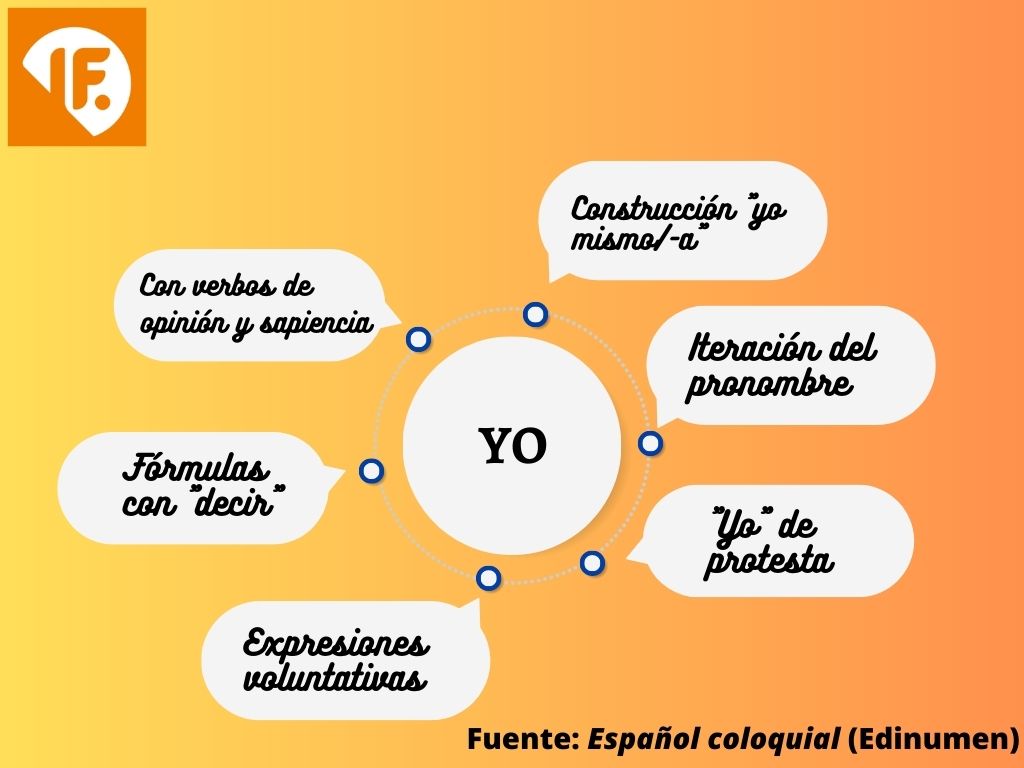
Bueno, te dejamos aquí abajo una pequeña infografíasobre el tema (está chula, la he hecho yo mismo), para que puedas relacionar los usos de “yo” con los ejemplos que aparecen en este texto. Y yo, yo me voy a descansar ahora un rato. . ¿Qué dices? ¿Que soy un vago? ¿Yo?. ¡Eso lo será el señor Freud!
FREUD, THE SPANISH AND THE SUPEREGO
No, we’re not going to talk about psychology. But … isn’t the title cool? 🤨
In any case, although we will not talk about Freud, we will talk about a superpronoun: the “I”. 😎
Everyone knows that, unlike other languages, in Spanish it is not necessary to include the “I” to express the person of the speaker, since verbal desinence is enough.
However, in the colloquial language, we often resort to it. So, if it is not grammatically necessary, why do we use it in certain contexts? 🤔. Well, very simple: because that’s what our pragmatic friend demands of us. Indeed, what we intend in these cases is to assert one’s own criteria, individualizing the speaker in front of other people. ➡️➡️ 😊 ⬅️⬅️
Tranquility, I explain it to you … 😌
And I think that pragmatics should condition the use we make of grammar. Come on, I think. Because, let’s see… how would I say it?… 🤔. It is that, otherwise, we could not achieve our communicative objectives. I tell you, I’ve read something about this… 🤥.
Well, we leave you here a small infographic on the subject (it’s cool, I’ve done it myself), so you can relate the uses of “I” with the examples that appear in this text. And I, I’m going to rest now for a while. 🛋. What are you saying? That I’m lazy? I? 😤. That will be Mr. Freud!
It all started with the pandemic and the boredom during lockdown. I have been a teacher for 23 years and creating my channel BILINGUAL CEREBROS was, especially during the pandemic, a way to motivate and support my students and keep my mind occupied.
However, once our lives went back to normal, I decided to continue with this channel as it had grown into a large community, currently more than 7,000 subscribers from all over the world, Spanish and English students and teachers.
My actual students have given me great feedback and encouraged me to carry on with the project as it really helps them revise the content from our lessons and even practice before exams.
I have also received very positive feedback from independent students from all over the world, thanking me because my videos and resources help them learn and many can’t afford to pay for private lessons, so they find my channel very helpful.
Teachers from all over the world have also given fantastic feedback to the channel as the resources shared help them save planning and preparation time. I also share the PowerPoint versions from the videos shared in the channel and they are all free.
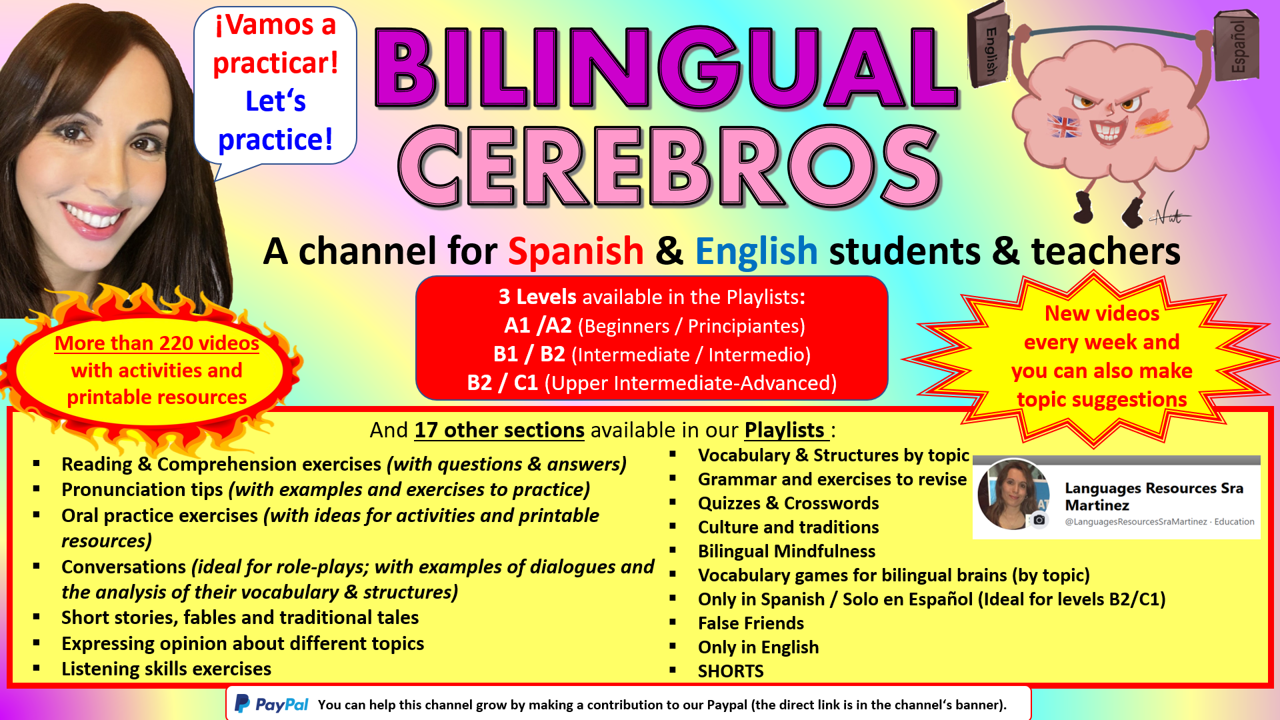
In BILINGUAL CEREBROS you can find different sections in the playlists, including: short stories and fables to reflect on, vocabulary and grammar quizzes, reading and comprehension texts including questions and answers, tasks to train listening skills, cultural texts, bilingual mindfulness, songs and some more. There are more than 240 videos with activities and links to printable resources and I upload new content weekly. You can see in the photo below a summary of the different sections in the Playlists.
I love creating and sharing resources. For me it is a real pleasure to know that my resources help not only my students but also many others, and that this help can have an impact in someone’s life and their future. As we all know, languages open many doors, and if my contribution to improve someone’s language skills can have a role in their future, that is the best feeling in the world.
Have you ever wondered why we teach what we teach? I realized that my professional and personal experiences inform my language curriculum in more ways than I have imagined.
It all started when a few years ago, in the educational and pedagogical arenas, there was a big emphasis on culturally responsive teaching. That is when I decided to revisit my curriculum. Among all the units, I started by digging deeper into the typical ‘get to know students’ one at the beginning of the school year. Yes, it is important to know what students’ preferred name is and learn about their favorites, and I do not underestimate this, but to me that was not enough. I wanted my students to learn about themselves, who they are and who they want to become as language learners.
A children’s book, a trip to a museum, and a fellowship are three examples that informed my unit on identity. I developed, tweaked, and grew this unit throughout the years.
A Professional and Personal Experience: A Children’s Book
I had the privilege of meeting Rafael Lopez in person when he received the Americas Award for illustrating Pat Mora’s Yum! MMMM! Que Rico!. Lopez made an imprint on me that day. I bought most of his titles from then onwards (all worth it!).
When I read Rafael Lopez’s, El dia en que descubres quien eres, I knew I had to introduce it to my students. This book reminds us not to forget how you feel when you are new to a place. It reminds us of the importance of making connections and sharing stories among each other. It touches upon the identifiers of race, ethnicity, gender, class, ability, origin, and age and at the same time it develops empathy. I use the Project Zero Thinking Routine CSI – Color, Symbol, and Image – to have students show understanding of the story.
A Personal Experience: A Trip to a Museum
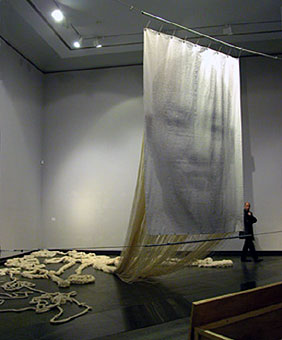
I make a big emphasis throughout the identity unit on the importance of learning about the ‘invisible’ side of people, of others and of our own. Students discover and explore this by walking the same steps I walked many years ago when I saw ‘Braiding’ by Lin Tianmiao while visiting a Chicago museum.
Lin Tianmiao massive installation made a huge impact on me back then. I decided to add this work of art into the identity unit. It seemed the appropriate way of helping students understand how much of what we see and perceive influences what we think about others.
Students use the simple (but powerful) Project Zero Thinking Routine “I see, I think, I wonder” to describe the installation. As a first entry to the art, I only show students the face in the artwork. Once students share what they have written about what they see, think, and wonder, I show them the complete piece of art. In their own words they express what I intended them to understand.
I want to show students that we cannot stop at the visible part of human beings to learn about others. Introducing them to Caja de Memoria Viva II: Constancia Colón Clemente by Adrián Viajero Román seemed the way to go. The following materials are based on the collections developed when Marcela and I participated in the Smithsonian Fellowship.
Students use personal memories to recall what songs or sounds, what smells, what artifacts, and what tastes we associate with home or a special place for us. Only then we analyze the art.
Students observe and analyze the three dimensional work of art first. Then they describe both its exterior and interior. I usually start by showing students some photographs of the visible cube representing the head of a person. The installation is of a black Puerto Rican woman who migrated to the United States in the 1940s.
After they observe the photos from the outside, I have them observe photos of the inside of the piece of art. Students see lots of different objects hanging in the inside walls of the cube.
We continue by using the Project Zero Thinking Routine ‘Layers.’ This routine provides learners with a structure for looking analytically at creative works through its narrative, aesthetic, mechanical, dynamic, and connections.
Example questions for using ‘Layers’
-Who do you think is this person?
-How old do you think she is?
-Where do you think she lives?
-How does this installation make you feel?
-What do you see?
-What is unique in this piece?
-How does it connect with your personal experiences?
The installation helps students concretely see the connection between the ‘visible’ and ‘invisible’ sides of a person. One important aspect about this art piece is the fact that you can hear the voice of Constancia Colon Clemente when you are under the installation. It feels you really are in her head!
Future Professional and Personal Experiences
The examples mentioned above – a children’s book, a trip to a museum, and a fellowship – informed my unit on identity. I will surely keep on developing and tweaking this unit in the years to come.
Though usually unexpectedly, my professional and personal experiences will keep on influencing my language curriculum. Therefore, I wonder where my next inspiration will come from.
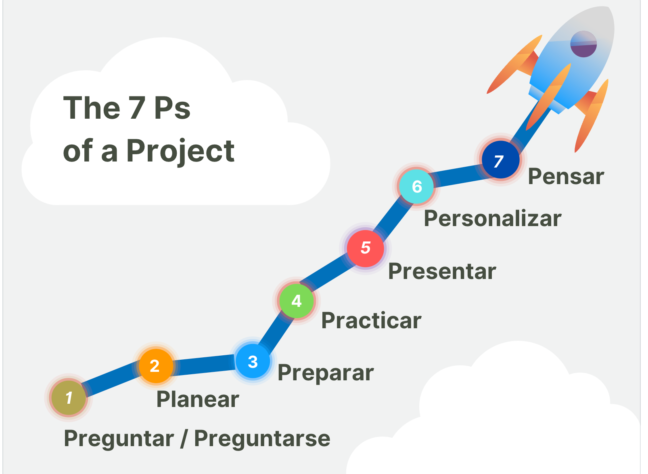
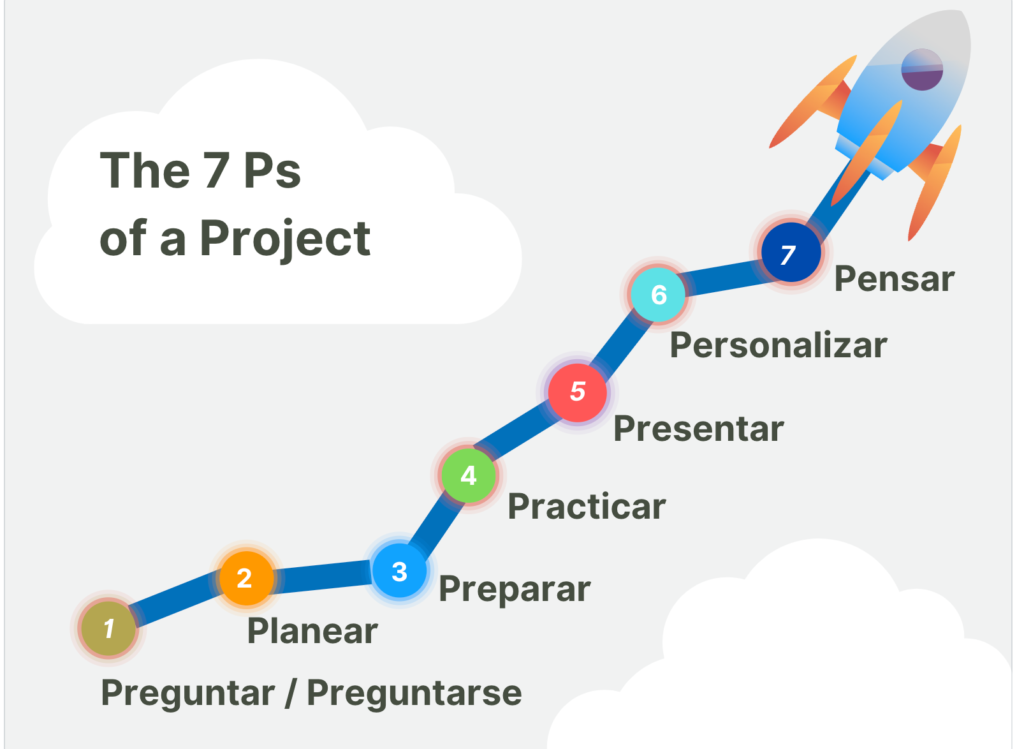
“’P’ is for Project” is one of the frameworks that I usually use to help students complete a project successfully in my Spanish language classes. This framework uses words in Spanish that begin with ‘P’, guiding students to identify and follow the different steps of the process while gaining independence. In Spanish, the 7 Ps of a project include: Preguntar / Preguntarse, Planear, Preparar, Practicar. Presentar, Personalizar, Pensar.
‘P’ is for Project
In English, most of the names for the steps use the word ‘P’ except for the very first one, which stands for ask yourself or questions. The framework includes: ask myself/questions, plan, prepare, practise, present, personalize (give feedback) and ponder (think and reflect).
Having a consistent path when doing projects helps students know where they are and what comes next, which lowers their affective filter. It also focuses them on the task at hand and helps them stay in the language!
In my classes the best learning has happened when students follow all the steps. I am going to show you the path my students – in elementary and early middle school – follow when doing a project in my Spanish classes. You can adapt these steps to use in Early Elementary or in High School.
‘P’ in Preguntar / Preguntarse
We usually start our projects with questions. Questions usually bring more questions. The word for questions in Spanish is ‘preguntas’ and ‘preguntarse’ is the action of wondering. It is the perfect way to start our ‘P is for Project’ framework.
I read the following “If we’re willing to ask the questions, we can begin changing things.” (Turning to One Another: Simple Conversations to Restore Hope to the Future, page 71). Though not all projects in my Spanish class lead to substantial change, students might change their way of seeing the world, their understanding of themselves, and their knowledge of other cultures.
‘P’ in Planear
What may ‘Planear’ include? It may include making a drawing, creating a simple outline, chunking what we need to do into daily doables, getting the materials needed, choosing what technology to use, investigating a topic, etc. Before we jump in, it is better to step back and think about what resources you need and what you need to do to achieve your goal.
‘P’ is for Project: Preparar
‘Preparar’ may include creating a graphic organizer, writing the first draft, preparing a PowerPoint or using another presentation edtech tool. My students have realized that usually this step is the one that takes the longest and after doing a couple of projects, they take their time to complete this step thoughtfully.
‘P’ in Practicar
‘Practicar’ is a key part of any project. Usually, in the first project of the year, my students skip this step. Students immediately get to understand that they should have practiced more before presenting in Spanish. When it is a presentational writing, they realize that they should have gone over, edited, and proofread their writing before turning in their final draft. Some students benefit from doing this step consciously as they realize that practicing compensates their effort.
‘P’ is for Project: Presentar
Once students complete Preguntar/Preguntarse, Planear, Preparar, and Practicar, ‘Presentar’ becomes an easy part of their projects. They are proud and ready! They feel accomplished and it often helps develop their self-esteem.
At the beginning of my career, I would have stopped after their presentation, either speaking or writing, was complete. Now I include two more steps: give feedback and reflect on their work. Why do I do this?
‘P’ in Personalizar
‘Personalizar’ has become my students’ favorite part of any project. It is the time in which they give feedback and celebrate their accomplishments and their friends’. If students created a Flip as a presentational speaking assignment, for example, they give personal compliments on each other’s successes. If students created a ‘gallery walk,’ they proudly give their feedback on other students’ work by posting stickers or post-it notes.
‘P’ is for Project: Pensar
‘Pensar’ has become my favorite part of any project. I get to hear students’ reflections on the process and as well as the product. I get to know how they feel and what they think. Interestingly enough, I also get to know how the project has opened their eyes to new products, practices, and perspectives, how it has transformed the way they see the world, and what personal connections they have made. It also gives me a chance to make changes to the project to help the following group of students. I usually use a form to capture their pondering on the project but other times, I prepare a set of questions and discuss them as a class.
So, to me, the ‘P’ is for Project because in my Spanish classes, following these steps -’Preguntar/Preguntarse (to ask questions), Planear (to plan), Preparar (to prepare), Practicar (to practice), Presentar (to present, in writing and / or speaking), Personalizar (to personalize and give feedback), and Pensar (to ponder, think, and reflect on their learning)’- help students engage in their learning by giving them a choice on what they want to learn about, investigate, communicate, and many times act upon.
It is only one page but it lets you dive into so many topics while personalizing it for each of your students.
Many ways to use ‘Mi día típico’ by Amy Lenord
This one page can be used to review many topics already studied, such as clothing, food, time, sports, meals and food, school, chores and other activities, and grammar structures, such as prepositional phrases, adverbs of quantity, sequencing words, besides the conjugation of verbs in the 1st person singular of regular, stem-changing, and reflexive verbs.
It also gives the perfect context to review the verbs ‘desayunar, almorzar, merendar & cenar’ for the specific meals of the day, as opposed to repeating ‘comer’. This is something quite confusing to language learners as these verbs are used differently in English and in Spanish.
Another application of this great resource is to make comparisons and explore new topics.
How I used ‘Mi día típico’
Reading for understanding
Initially, students read the page, it was easy for them to understand the meaning of the statements by looking at the images Amy Lenord included as a clue, plus my acting out, and drawing when necessary.
Later, I used this page for Interpersonal Speaking, Presentational Writing, and Presentational Speaking.
Interpersonal Speaking
After my fifth grade students read the page multiple times and were familiar with the meaning of each statement, I moved to having them ask and answer questions about themselves. They quickly realized that they needed to change the endings of all the verbs and the pronouns from ‘me’ (about me) to ‘te’ (about you) when asking their partner. There were some giggles when they made the questions without making this change, e.g.: ‘Do you brush ‘my’ teeth in the morning?’ instead of asking ‘Do you brush ‘your’ teeth in the morning?’
Scaffolding in Preparation to Present ‘Mi día típico’
Using the resource for presentational writing and presentational speaking needed some scaffolding. The following are some activities and tasks that my students did prior to presenting.
Draw the activities
I had students use this ‘jewel’ to also think about their typical days. I handed a booklet with three pages with the days of the week on each page. The first page read ‘Por la mañana’ (In the morning). The second read ‘Por la tarde’ (in the afternoon) and the third one had ‘Por la noche’ (at night), Students drew what they do during each part of the day on the specific days of the week. This booklet, along with the page ‘Mi día típico’, were our anchor for the rest of the tasks and activities. Students used both as guides all along.
Self-checking competition
I asked students to study the ‘Mi día típico’ verbs and the next day we played a competition. Each student would say a verb and everybody had to write it down. Students numbered the verbs and wrote them down until they thought they had named them all. Then they self-checked their writing against the ‘Mi día típico’ page for spelling and completion of all verbs. To my surprise, not only had they included all the verbs, but they had also added a few more!
Level up the phrases
Then, students chose one of the drawings from their booklet and wrote a sentence in their notebook that later read aloud to share it with their peers. I have to say that they came up with excellent phrases! To push them a little bit more, I asked them to ‘level up’ the phrases, so we discussed ideas on how to do it. Finally, students practiced ‘leveling up’ their phrases into emerging sentences by writing two more sentences and adding some details. They were very proud to share them in class.
Topic and conclusion sentences
The next class, We discussed which could be a good topic and a conclusion sentence for a presentational writing assignment and we jotted down several possible sentences. We used OneNote so everybody knew where to find the topic and conclusion sentences to study.
“We are in RLA,” they said
For reference, RLA is Reading Language Arts. I asked students if they had written paragraphs in Language Arts and they all said ‘Yes’, and we talked about what makes a good paragraph. I asked them to look at their drawings and circle those which they thought could be good illustrations to write about in Spanish. They could choose up to six pictures from any part of their booklet. While they were planning what to write, I told them they should answer: What can I write that will make an impact on Sra.? That way,I would see complete and original thoughts when I read their paragraphs. In other words, their writing had to catch my attention as a reader.
I also told them that we would be writing a presentation in class only using the booklet with the drawings and it would be an assessment. They practiced with different partners until they had a better idea of what they could write about and how they would write it.
Presentational Writing Assessment
It is imperative that I know what students are able to do. It helps me understand what I need to do to move students along the proficiency levels. Using their drawings as the only resource, most of my students included at least a Novice High sentence, evidence that they have already started creating original thoughts in Spanish. As a teacher, I felt accomplished!
Presentational Speaking & Reflection
For the Presentational Speaking they would be recording ‘Mi día típico’ in Flipgrid the following class. In preparation, they chose what to say, they practiced with friends, asked me questions, and shared strategies on how to do it. Then, they completed a reflection about the following:
What went well for you?
What was challenging?
What did you learn about yourself?
What would you do differently next time?
For the most part, students’ responses showed that the presentational writing was better than the presentational speaking because when writing, you can proofread your text, but when speaking, you have to come up with what to say on the spot. For the most part, they said that they could write and speak in Spanish much better than they could have ever imagined. I was proud of their work, effort, and growth.
I find that ‘Mi día típico’ by Amy Lenord is a resource that helps my students accomplish communication. Thank you, Amy!
What do intercultural conversations look like in your language class?
Depending on the age of the students, intercultural conversations can take many different shapes and forms. For the purpose of this blog, I’ll talk about the experience of bringing a native Spanish speaker to my middle school class. This person was from Spain. Why from Spain? We were getting ready to read “Agentes secretos y el mural de Picasso” by Mira Canion and I wanted to introduce them to Spain in a different way. My first impression was that (in general), my students knew little about Spain and had misconceptions about this country. Off to an interesting start!
How might you prepare students to have intercultural conversations?
I am sure that there are many ways to have students get ready for intercultural conversations but I decided to go with questions, facts, and maps.
Asking Questions:
I asked my students what they wanted to know about Spain and wrote each one of their questions. I could see how their minds fed from each other’s ideas, and I was impressed with the array of questions they had. We created a long list of questions.
Categorizing questions:
Next class, I asked them to work in groups of three. They had to read the questions generated in our previous class, find connections among them and group them in categories. They also had to come up with the names for the categories. When they finished, I asked one group to tell me a category and read the questions that were in it. If others disagreed, they would have to explain why and what they would do differently. When all the questions were classified and everybody was in agreement, we paused for a second and re-read all the questions in each category.
Delving Meaning:
Now, it was time to think deeper and discuss how the visitor would feel or react to the questions. We wanted to avoid questions that sounded too direct or even unintentionally offensive, i.e. ‘Why did you come to America?’ We rearranged the questions and tweaked some of them so that they would provoke a positive response in our speaker. When we finished, we re-read the questions once more and … finally, we all liked how they sounded!
This step of the process proved to be a fundamental part of the experience, it sparked empathy and kindness. Students could see that the way we ask questions is as important as what we ask.
Finding Facts:
Now that the questions were ready, students had to investigate and find three to five facts about Spain.The next day, they came excited about their findings. “Quite interesting facts, Sra!” they said. “Did you know that the Spanish anthem does not have lyrics? Did you know that Spain has many World Heritage Sites?”
Reading Maps:
We found Spain and its islands on a world map and also read a couple of simple articles that explained Spain’s location and regions. Students were surprised to find out that Spain is similar to Texas in size. Now, I felt students were ready to meet our guest speaker.
Time to meet our guest speaker
Finally, the day to meet our guest speaker had come! I had sent her the questions in advance so she could prepare for our meeting. She had made a short presentation with images based on the questions my students had asked. As I had anticipated, students were intrigued by all she had to show them about Spain but she did not stop there. She also asked students personal questions such as, favorites, sports, and traveling, to compare their experiences with hers and so that they could relate to what she was talking about. They gave her a round of applause when she finished.
Time to reflect on the learning of intercultural conversations
As my guest speaker spoke practically all in Spanish (really! the 90% suggested by ACTFL) I was curious to know how much my students had understood. I decided to have them do a short reflection using the PZ Thinking Routine: I used to think … But now I think / I know. I added “I learned” and “I liked” for those that needed to express more concrete thinking. I was amazed at how much students had understood and learned through this experience.
In sum, I was happy to see the growth in my students’ thinking and learning. Moreover, I felt very accomplished to have facilitated a successful intercultural conversation.
Presenting global views connects language students to the experiences of others. It engages their minds, hearts, and hands. There are wonderful resources that help language students broaden their perspective of the world, not necessarily limited to the people in the countries that speak the language they are learning. Why wait until they are at an intermediate level? You may start with novice learners. It all depends on what you show them and what you do with it, i.e. how you use the resource, as well as why you are using that specific resource.
Why global views?
I part with the idea that we live in one world and the more that we learn from each other, the better. As a Spanish teacher myself, I moved from showing only things related to the Spanish-speaking world to showing my students the whole world. Of course, a big part of what we do in class is related to the Spanish world, but I intersect resources that go beyond that. Learning about others helps break down stereotypes, expands our worldviews, and helps us become aware of our interconnectedness and common humanity. In sum, it is about helping my students become globally competent.
How do we use photographs as global views ?
To successfully reach the minds, hearts, and hands of language learners, it is necessary to think through how we introduce, develop, and conclude each lesson. It is also important to think about what background knowledge students need in order to understand the topic and what prior knowledge they bring to class. Using resources thoughtfully is key.
Many times I choose to use photographs to do this type of work because they are potent visuals. They tell stories and we can all relate to stories. Photographers have a unique eye as their lens captures a precious moment in time. It is up to us to show these global views and choose how to do it.
The following are some ways in which I have presented global views to my students.
When I taught elementary school, my students particularly enjoyed when I showed them photographs of classrooms around the world and they had to compare and contrast those with their own classroom. As an added benefit, I learned about students’ prior experiences and their families’ history.
My students love when they can choose. When presenting them with several photographs, I let them choose one that talks to them and ask them to do different activities, from simply describing the photograph to creating a story to only asking and answering questions. Other times, I present them with two photographs and we compare them to find similarities and differences. These types of activities propel great conversations.
The National Portrait Gallery has many classroom resources to use when describing portraiture, and some of them can be applied to analyzing photographs successfully. I especially enjoy:
There is no doubt that using the Project Zero Thinking Routines makes perfect sense when analyzing photographs. For this type of work, I would go with the Global Thinking Routines ones.
The Library of Congress has a special tool when it comes to analyze photographs that differs from the tools used to analyze other media. It is a wonderful way to start a conversation about photographs. Check it out!
There are so many ways to go when it comes to introducing global views to students. Of course, the images per se are key in making it a powerful experience.
What resources can we use to engage learners with global views ?
The following are some resources based on photographs. Some of these photographs include the topics of school, food, identity, and landscapes and I have used some of them with my novice students. What is important is to choose what to show and how to present it to students.
As an Amazon Associate LTL earns from qualified purchases.
Each time I present global views to students, their engagement is palpable as global views engage language learners’ minds, hearts, and hands. If you haven’t already, give it a try and let me know how it goes in your classes.
“EdTech”is a column of Language Teaching Lab where we highlight the use of educational technology in the world language class
What is VideoAsk?
VideoAsk allows you to build stronger relationships with students by getting a personal almost face-to-face response from them. A wonderful way of capturing all your students’ thoughts and ideas at once, in video! Start video asking with your students right away.
Why is it essential for language teaching and learning?
The VideoAsk widget lets you get a personal almost face-to-face response from students on day one and keep on building it. With VideoAsk you welcome students every day, every week, or every semester. It allows you to start an authentic dialogue with each student and add a more personal touch to any assignment. It engages your students with its welcoming and easy to use interface. Students get to know YOU better as well.
Best of all, students do not need an account to answer your questions or give you feedback. In one click, they respond to your video and you get their answers by video, audio, or in writing. You decide. As an added value, you can organize the answers in different folders, name the folder and the video response and much more.
‘Why do we teach…?‘ is a column of Language Teaching Lab. It might help us think deeper on why we teach a certain topic. In addition, it might show a new perspective on how to teach it.
Learning about ‘cognates’ and ‘circumlocution’ helped students feel successful during an assessment. When my students finish their assessments most of the time I ask for feedback. I want to know what my students are thinking and feeling. After the last presentational writing, I asked my students what helped them while they were writing.
In a group of ten students, two said that they thought of cognates to help them write or figure out words to use in their writing. A third student told me that he thought of the game we play where “you say words about something without mentioning the word”. He said that it helped him come up with words to use in his writing.
Why I teach the word ‘cognate’ the first day of class
Many years ago, as summer reading, my students read Cuba 15 by Nancy Osa. As far as I remember, very early in the novel, we learn about the power of ‘cognates.’ That was one of the first words the Spanish teacher taught her class. I teach my students the word ‘cognate’ the very first day we meet as a class.
Learning about cognates makes a huge difference in the quantity of vocabulary a novice proficiency level language student might acquire. I invite students to act like detectives, trying to find clues in words by comparing them to their native language.
How I use ‘cognates‘
Once students feel comfortable being language ‘detectives,’ I purposefully ask them to find cognates in interpretive reading taks and listen for cognates in interpretive listening tasks first of all.
Students immediately realize that by looking for cognates, they already understand many words in the text or audio, even before starting to analyze it.
While having class discussions or group conversations they tend to ask ‘how do you say…?’ I immediately tell them that the word is a cognate and ask them if they can figure out what it can be, which they do 90% of the time. Some of my students even create their own list of cognates and refer to it during practice assessments or assignments.
Where I find resources
Co-creating a list of cognates or presenting students with lists of cognates are ways of increasing the variety of vocabulary they can use. My go to lists are Colorin Colorado and Mondly.
Why I teach ‘circumlocution‘
Teaching circumlocution increases communication in world language classes. I learned about circumlocution during an OWL (Organic World Language) professional development training many years ago. According to dictionary.com, circumlocution is “a roundabout or indirect way of speaking; the use of more words than necessary to express an idea.” In general, we are taught to use the best words to express our thoughts so it seems that circumlocution is contradictory. When it comes to languages, it is not.
Why do I think that teaching ‘circumlocution’ is one of the best gifts I can give my students? Simply put, it helps students stay in the language using words that they know and figuring out how to express their thoughts with the content they own.
How I teach ‘circumlocution‘
Circumlocution expands students’ vocabulary and at the same time, It helps learners categorize. Categories help students be able to express themselves in the language they are learning by making associations among words that share the same or similar carachteristics. Learning circumlocution is a game changer!
I usually use games to help students use circumlocution, like the one my student mentioned after the assesment. I call that ‘Adivina’ which basically means ‘guess.’ It is a low prep game where you show a picture to students. One of them describes one of the objects in the picture and the others (usually in groups) have to guess what it refers to. The one who guesses chooses the next word. A similar game is the famous ‘20 questions’ in which students have 20 questions to find out the chosen word. Both games are favorites in my classes.
What are some structures to use
A simple search in Quizlet or Kahoot will give you ready-to-use activities to practice circumlocution. If you search Teachers Pay Teachers or Pinterest you will also find lots of useful resources.
‘Cognates’ and ‘circumlocution‘
My premise is that I teach a language with the purpose of having my students think and communicate (locally or globally) what they want to say and how, in another language. When I provide tools like cognates and circumlocution, students take ownership of their learning and feel successful in class. I want students to stay in the language and also to take risks, so cognates and circumlocution give students superpowers.
Resources mentioned
–Cuba 15 by Nancy Osa – As an Amazon Associate LTL earns from qualifying purchases
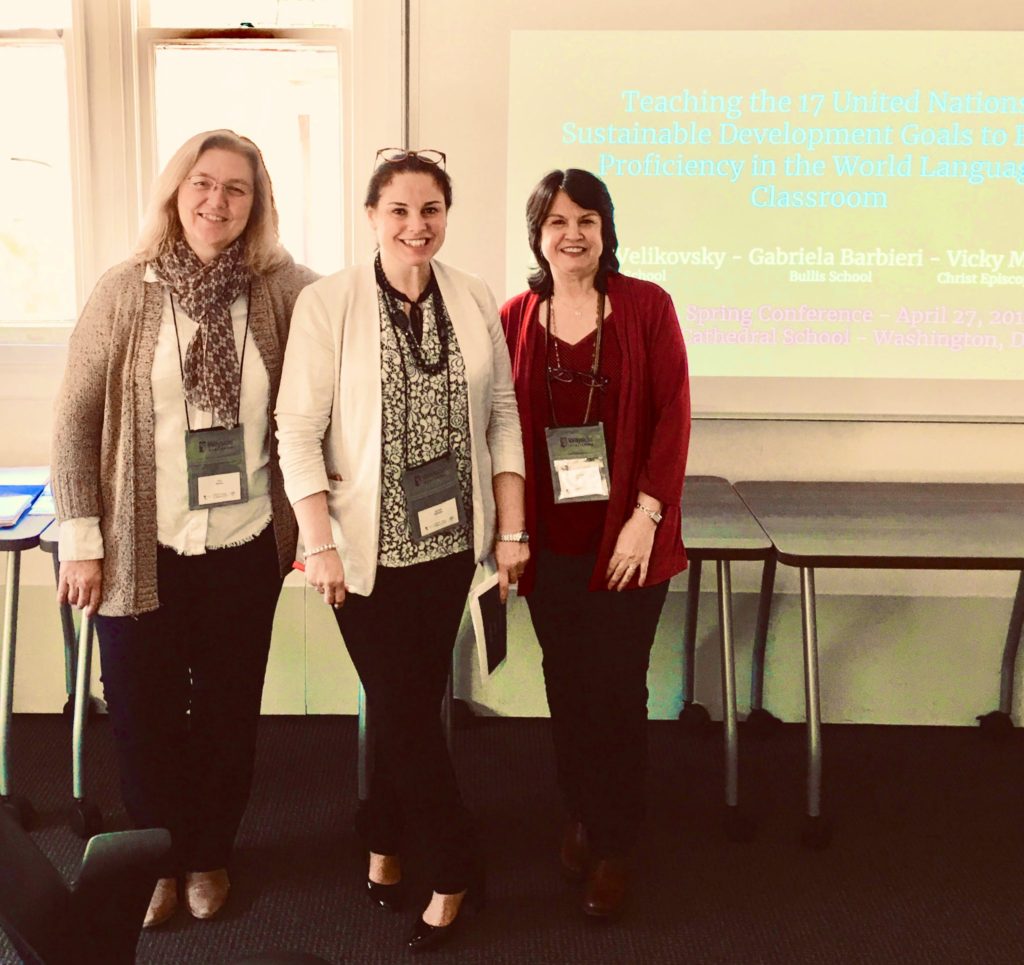
by Marcela Velikovsky, Gabriela Barbieri & Vicky Masson
Interdisciplinary Connections is a column of Language Teaching Lab to show specific examples of connections between world language teaching and other subjects at school
Back by popular demand! After publishing our blog “How do you celebrate El Dia de los Muertos / Day of the Dead?” in October, readers’ interest grew on having other lists of classroom tested resources. Marcela, Gaby, and I decided to start gathering what we use for Winter and December Holidays. Though not exhaustive, this list reflects some of our go-to resources. Enjoy!
‘What’s in a framework?’ is a column of Language Teaching Lab. A framework informs our teaching and it shows a unique philosophy. It gives us a shared language and purpose, and it lets us see teaching and learning from diverse perspectives
DKDK – Don’t Know what you Don’t Know
You do not know what you do not know. What counts is what you do when you get to know something, i.e. when you learn something. That is what happened to me when I learned about the 17 UN Sustainable Development Goals. The SDGs are a path to action for people, planet, prosperity, peace, and partnerships. The SDGs consider sustainability from the economic, environmental, and social perspectives. As we know them now, the SDGs started in 2015 with a plan to achieve the 17 goals by 2030. I had to do something so I became a Cohort 3 #TeachSDGs Ambassador.
17 Goals
When I saw the image of the seventeen goals and started reading each one, I happily realized that most of the teaching happening in my Spanish classes related directly to them. I committed to introducing the 17 goals to my students, our changemakers.
There is so much more information about the SDGs now than when I started introducing them in my classes. Fortunately, lots of these materials are in different languages!
Let’s start by learning about some of these resources. Then, let me share some of the things that I did in my language classes.
SDGs in different languages
Let’s start with some places where you can find materials on the SDGs in different languages:
The Wonderment (mostly in English but your students can submit ideas in the language they are learning)
This is a short list with lots of information. These sites are great starting points for introducing the SDGs in language classes.
How I prepared to teach SDGs
In order to teach about the SDGs, I first informed myself. I took courses, I read books, I created a Wakelet, and I presented together with Gaby and Marcela in language conferences.
Since I became a #TeachSDG ambassador, I have introduced the SDGs to all my students. Learning about the SDGs is engaging and empowering for students, therefore, it boosts proficiency. Students want to learn, read, and talk about the SDGs. Most importantly, they want to take action.
How I teach SDGs in my language classes
I usually show them the Global Goals icons. I ask students their favorite goal or the one that catches their attention and why, how old they will be in 2030 and what they see each other doing differently than they do now. Then, I explain what the SDGs are and their importance, and connect them to what they are studying in class. In no time students realize that the SDGs are an intrical part of their life and of what we do in class.
SDGs = Enduring learning
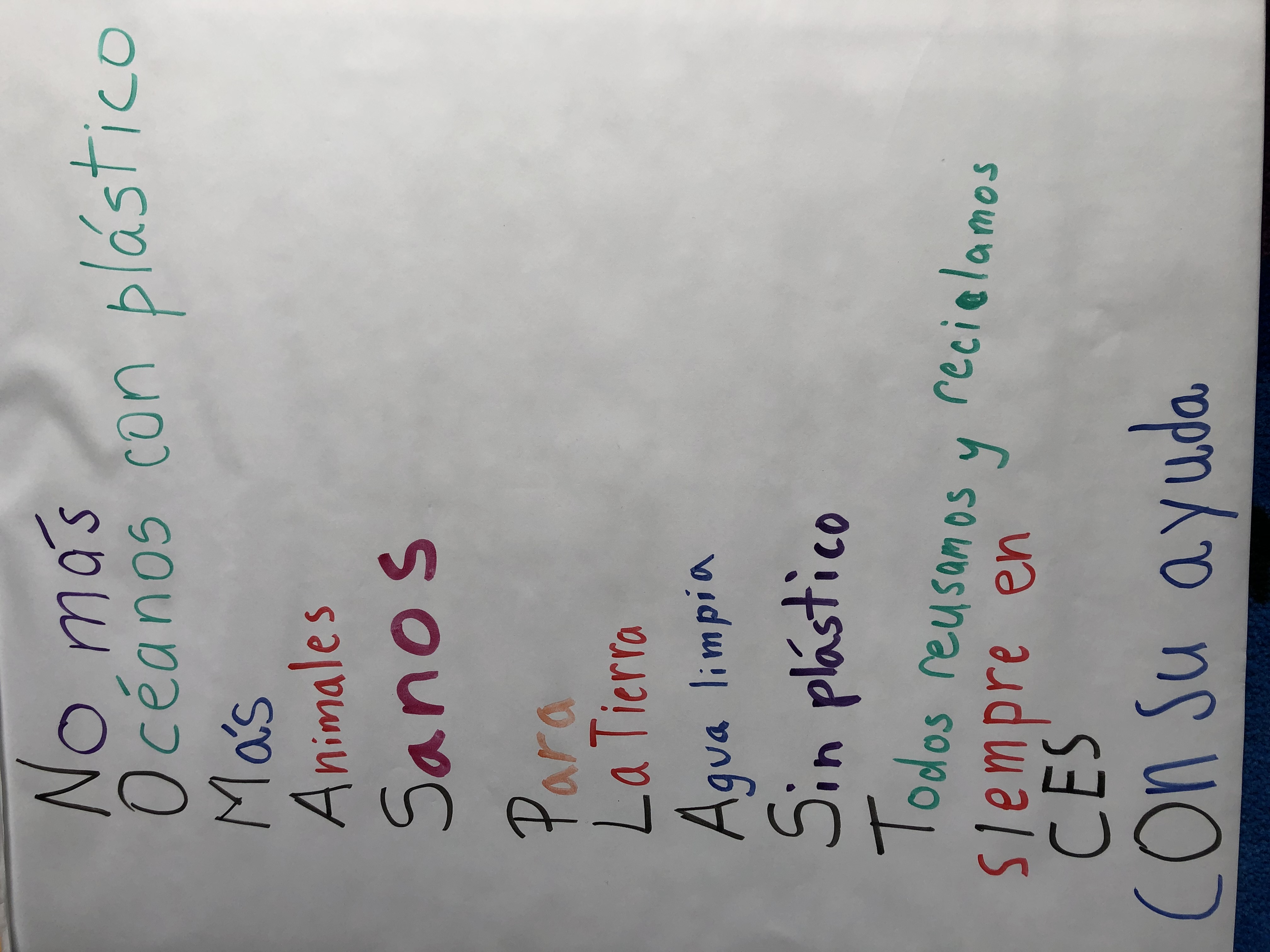
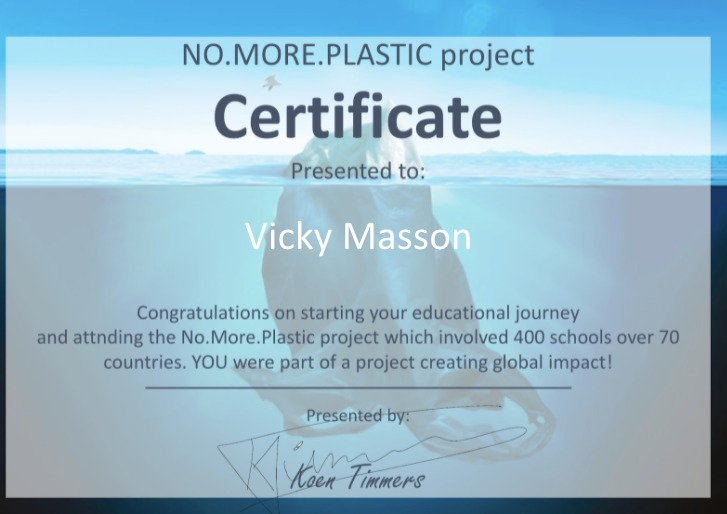
The most enduring learning happens when students are connected with other students to solve problems. The No.More.Plastic. project was one of these instances. It was a three week project where 4th grade students had to attempt to answer:
What’s the problem?
Are there any solutions? Let’s try to fix the problem!
Action! The students take action and try to bring change at school and at home.
Students researched about plastic, brainstormed possible solutions for reducing the use of plastic at school, and wrote a chant to share with the rest of the elementary school. They posted the chant in the cafeteria as a reminder of the importance of reducing the use of plastic. All in Spanish!
Students also saw some of the projects done by other schools around the world and felt part of it!
My students were engaged in the content and empowered to make change happen. They were also proud when they received a certificate of participation.
SDG in language classes
The SDG framework is perfect for language classes. It is a powerful tool to raise awareness of sustainability, to empower students as changemakers, and to have students see that learning a language might have an impact outside the classroom.
Don’t wait one more minute to introduce the SDGs in your language classes if you haven’t yet done that. Don’t wait to have students ask you: Why has no other teacher taught us about them?
Cookie Consent
We use cookies to improve your experience on our site. By using our site, you consent to cookies.
Cookie Preferences
Manage your cookie preferences below:
Essential cookies enable basic functions and are necessary for the proper function of the website.
Name
Description
Duration
Cookie Preferences
This cookie is used to store the user's cookie consent preferences.
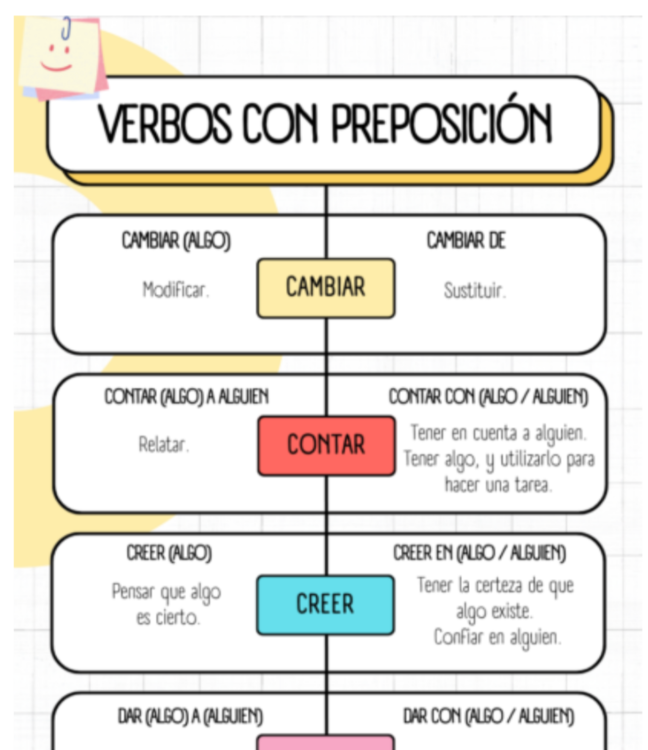

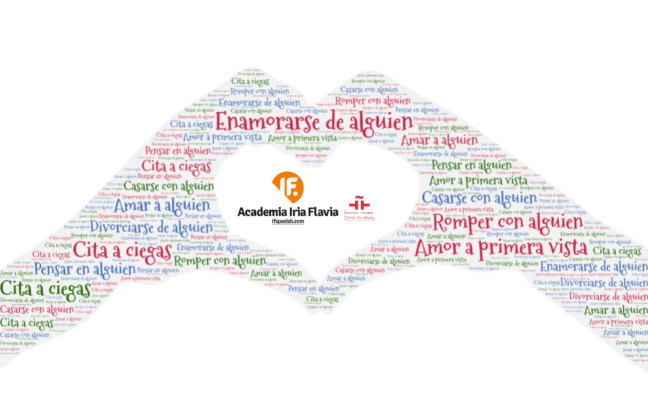

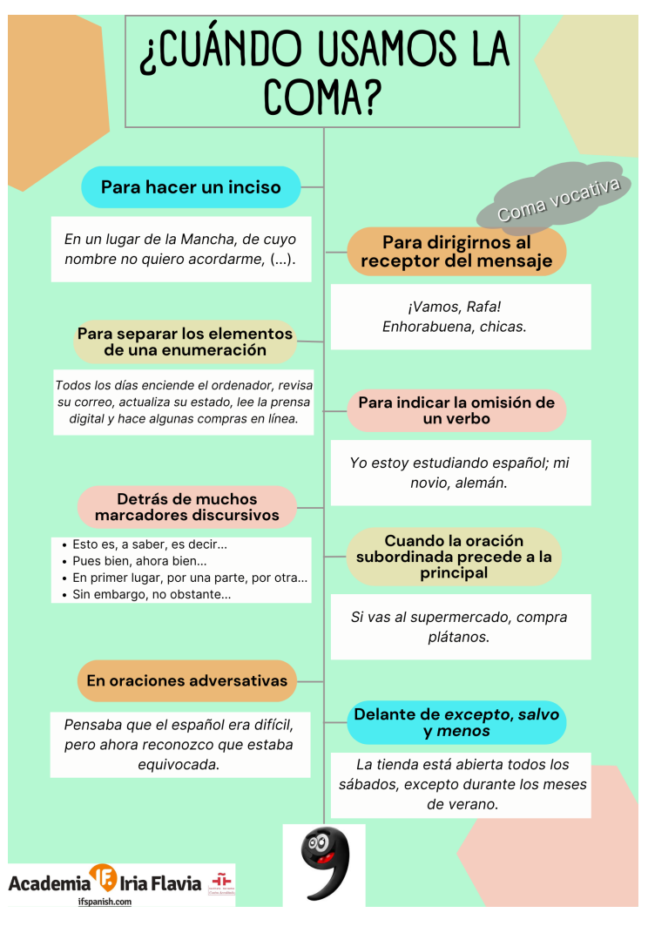

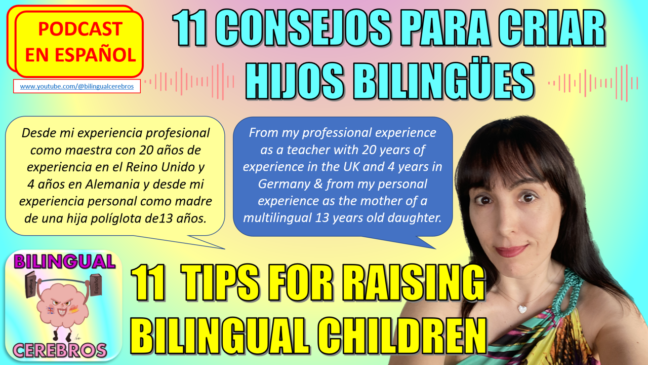
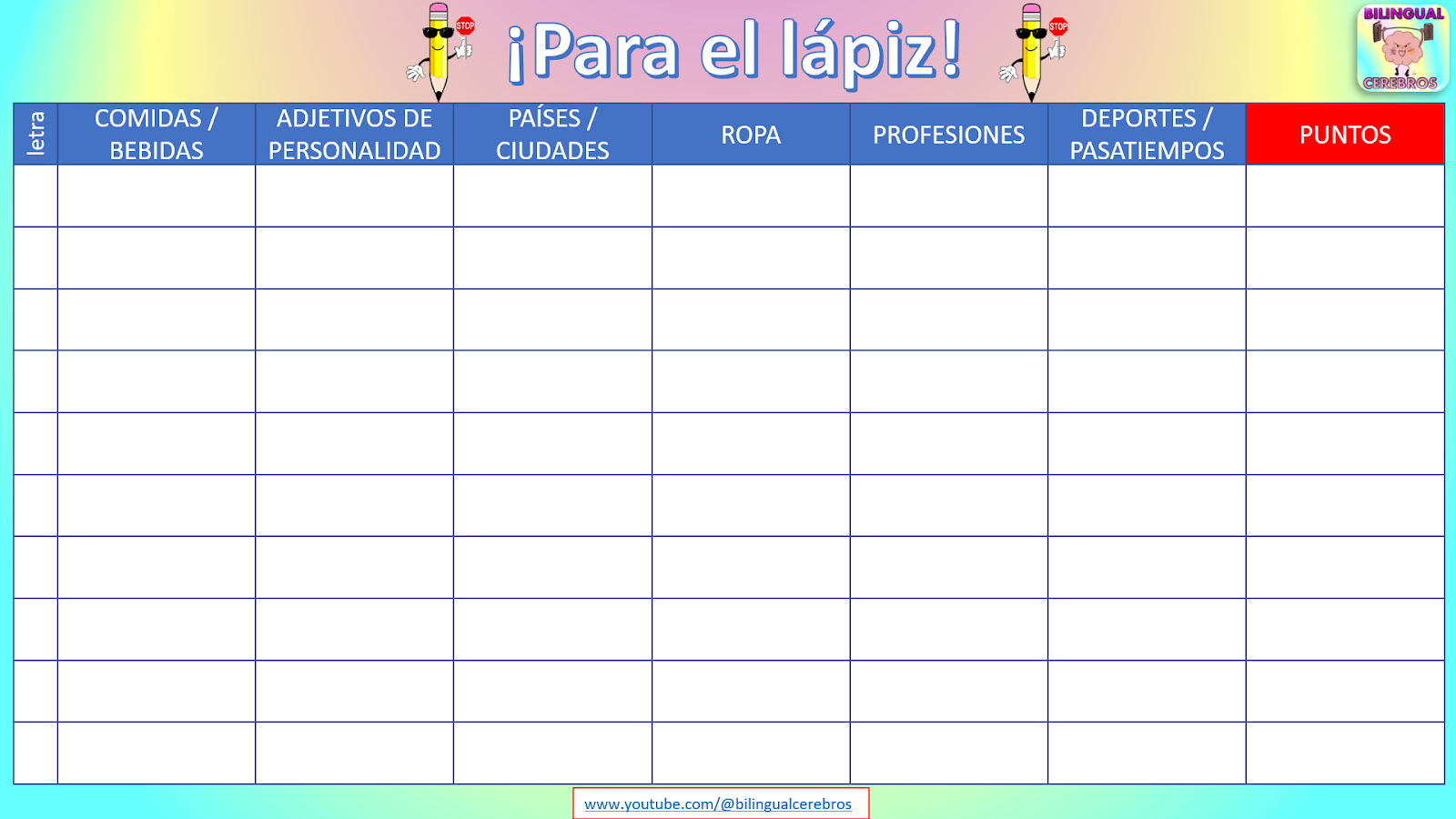
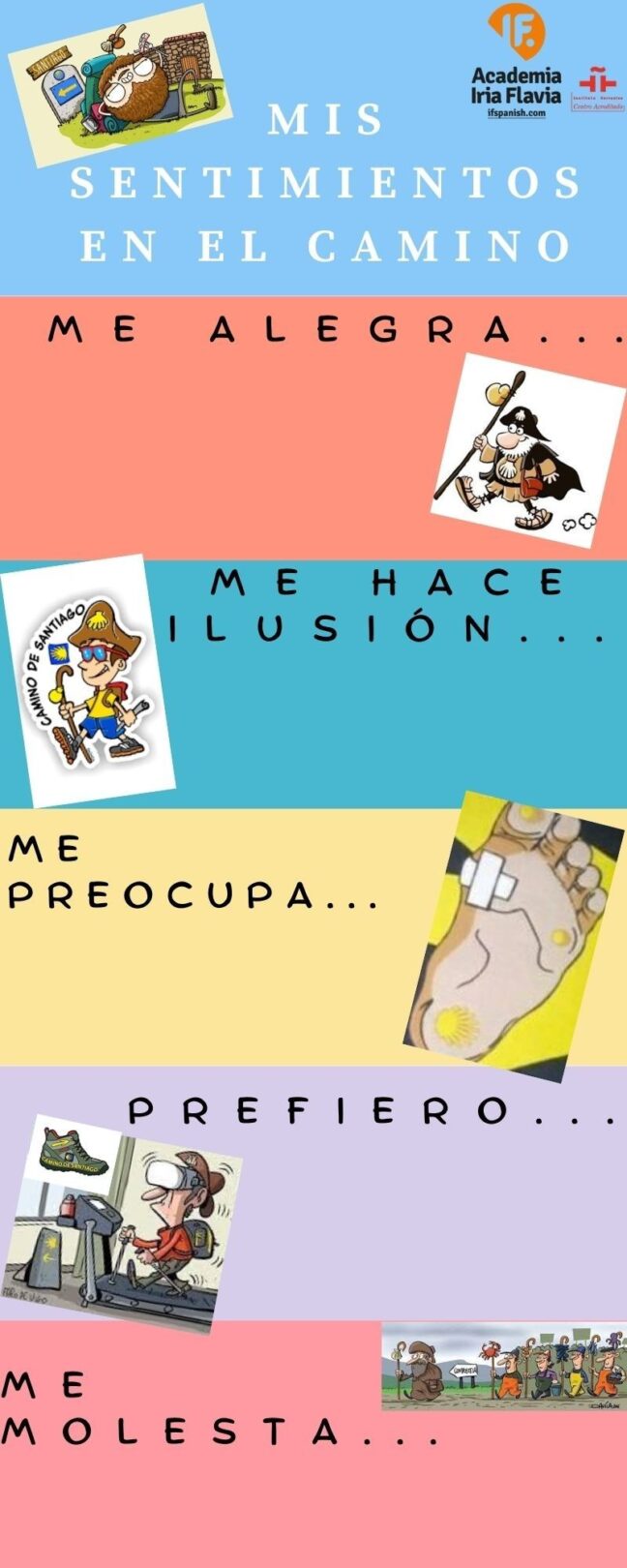
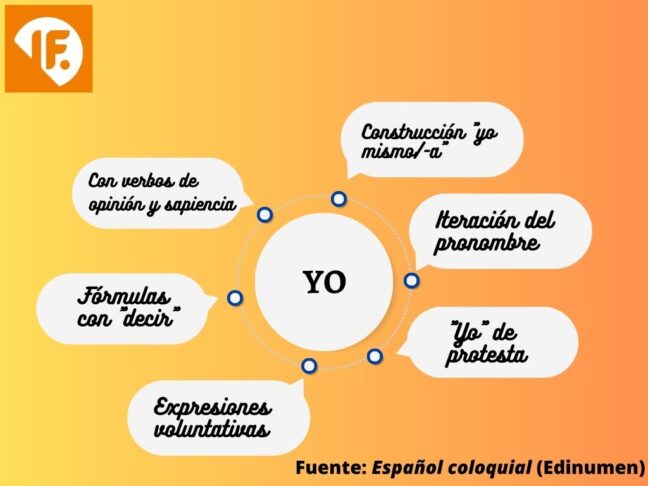


 . Pues muy sencillo: porque así nos lo exige nuestra amiga la pragmática. En efecto, lo que pretendemos en estos casos es hacer valer el propio criterio, individualizando al hablante frente a otras personas.


 . Es que, de otra forma, no podríamos alcanzar nuestros objetivos comunicativos. Os lo digo yo, que algo he leído sobre esto…
  .
. . ¿Qué dices? ¿Que soy un vago? ¿Yo?
 . ¡Eso lo será el señor Freud!