No pases de esta entrada (Interpersonal Communication)

pases

by Ramón Clavijo (LTL Contributor)

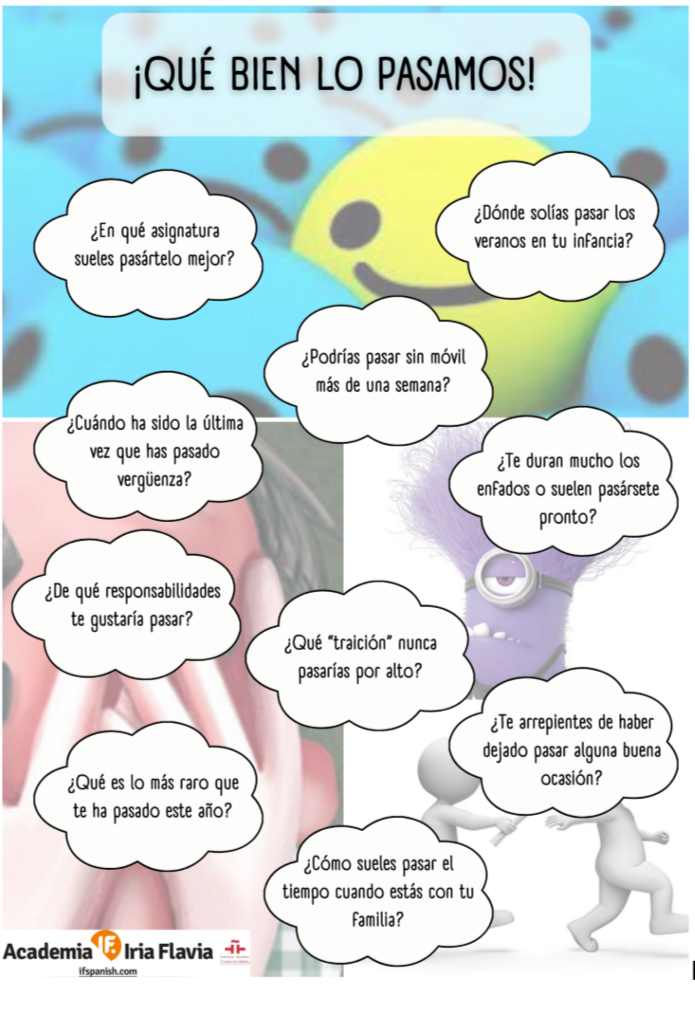
En la entrada anterior hablamos de cómo expresar ayuda y cooperación, así que, aprovechando que el Pisuerga pasa por Valladolid, no podemos dejar pasar la ocasión de pasarte algunos de los usos más habituales del verbo pasar. Y es que tus estudiantes no pueden pasar sin conocerlos.

Para que no pases tanto tiempo buscando significados y ejemplos, ya nos hemos pasado nosotros por las 64 acepciones que la RAE le otorga a este verbo. Ahora bien, no queremos pasarnos de prolijos (y que acabes pasando de leer esta entrada), así que hemos pasado por alto muchos de ellos.

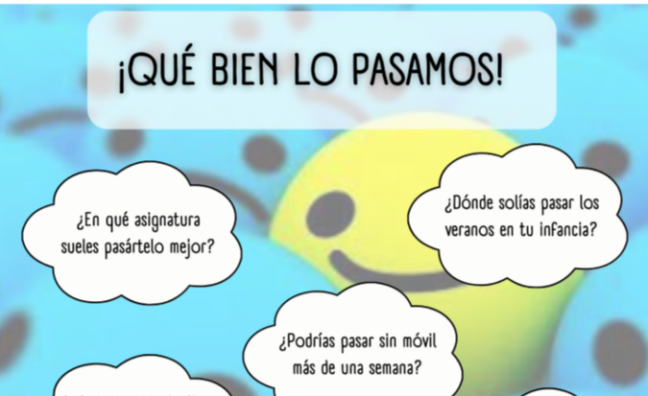
Sin más dilación, pasamos a explicarte en qué consiste la 👉 infografía que incluimos con este post: se trata de una serie de preguntas para fomentar la conversación entre tus estudiantes, permitiéndoles usar dicho verbo en un ambiente desenfadado.

Descárgate la infografía, úsala en tus clases… y a ver qué pasa 🤔.

pases

Let’s talk about AI

by Victoria Berasaluce Guerra (LTL Contributor)

Whenever we start a technology unit or lesson in my class, AI is brought to the forefront of the conversation as an example. Students are not sure how to feel about it. They express it is helpful but will make people lazy and that it someday might take a lot of jobs off the market. Their concerns are valid. As educators, we cannot ignore the presence of AI in our contemporary world. Like teaching how to browse for online information and assess sources, how to use AI and what to be aware of is going to become one of the skills for the 21st century. We have a responsibility to help our students develop critical thinking skills regarding this area of technology. 

How do I get Started?

One of the ways you can start or deepen the conversation around AI is with a movement activity, such as the Likert scale. In this activity, students will hear a question and move across an imaginary line to show their positions between “strongly agree” and “strongly disagree”, or a scale from 1 to 10.  

The first questions are guided towards ethics and “how bad is AI?”. The last questions are geared towards “have you ever used AI?”. After students take positions, the teacher guides the discussion around the students’ answers. Students start smiling when some of them don’t want to give away if they have used it for homework or essays.

When using AI in your classroom, remember that it is imperative to discuss how AI works, the advantages and disadvantages. In the next section, I am going to focus on some of the ways you can implement AI to engage students and enhance your teaching experience.

Some AI tools to try out

Mizou

If you have used Chat GPT to make your students chat with a bot using their language skills, Mizou is a more accurate and personalized way to do that. It basically let’s teachers create and customize AI chatbots for 1-1 student interactions. It does require skills at writing specific prompts that will guide the chatbot and not let them go into “hallucination” mode (when the bot starts getting confused or deviates from the prompt). A nice feature is that you can include your rubrics or lesson materials for the chatbot to consider when responding and even grading. 

Suno

Is an amazing tool to create music based on styles, prompts and vocabulary you choose. Warning: you might get some of your musician students to feel “cringey”. However, Suno is unbelievable to refresh your lessons. I never tell my students who the artist is when I first play a song, I let them guess the artist only to reveal to them later that it is AI-generated. I can assure you I’ve seen many mouths drop with this tool. No matter the lesson or level of your students, you can customize a song based on your lesson needs and tackle new vocabulary and tenses in a new way. No more scrolling the internet or Spotify to find that perfect song that will fit your lesson, although if you do, that’s great also!

Diffit and QuestionWell

Diffit and QuestionWell platforms allow you to use existing curriculum or generate content, including assessments and different templates for student activities. Teachers can customize the results to make them specific to their grade level, the lesson and language. Some of the outcomes for Diffit for example include fiction, non-fiction, images, summaries and key vocabulary. You can even make the information customized to be based on real, cited sources.

Khanmigo and Magic School AI

Khanmigo and Magic School AI all-encompassing websites are the closest thing you will get to a teacher’s personal assistant. And we all need one, right? Explore AI-generated rubrics, lesson plans, classroom newsletters, exit tickets and even teacher jokes! One of the great assets of these platforms is that it saves teachers’ valuable time. Think about always reviewing and editing the materials before use.

AI enlightenment

The AI universe will continue evolving and expanding. If we want to foster AI literacy in our classes, we need to become AI enlightened educators and help our students analyze the implications of using AI. Teachers should prepare to acquire the necessary skills to grow their practice and knowledge around AI to engage students by teaching them about and with twenty-first-century instruments.

To be continued…

Follow our upcoming LTL in the next months for actionable strategies on how to apply these AI tools. I will demonstrate with specific examples and considerations, how to integrate these resources into your curriculum to transform your practice. You will never look back!

Multilingualism and Globalization: Balancing Global Communication and Cultural Identity

multilingualism

by Alonso Cano (LTL Contributor)

In an increasingly interconnected world, multilingualism has become more relevant than ever. While English continues to rise as a global lingua franca, concerns about the preservation of local and heritage languages are growing. Bilingual education plays a crucial role in shaping cognitive development, cultural awareness, and identity formation. As globalization accelerates, societies must find ways to balance the benefits of widespread communication with the need to protect linguistic diversity.

The Rise of English as a Global Lingua Franca

English has established itself as the dominant global language in business, science, technology, and international relations. The rise of the internet, the influence of American and British media, and the expansion of multinational corporations have all contributed to its dominance. Today, English is the most commonly learned second language worldwide, often becoming the bridge for communication between speakers of different native languages.

While English facilitates international trade, diplomacy, and education, its widespread adoption also raises concerns about linguistic homogenization. Many minority and indigenous languages face extinction as younger generations prioritize English over their ancestral tongues. The dominance of a single language risks the loss of cultural perspectives, traditions, and unique ways of thinking that are embedded in native languages.

Bilingual Education and its Cognitive Benefits

Bilingual education provides an essential tool for fostering multilingualism while ensuring cognitive and social benefits for learners. Research has shown that individuals who speak multiple languages exhibit:

  • Enhanced cognitive flexibility – the ability to switch between tasks more efficiently.
  • Stronger problem-solving and critical-thinking skills due to increased brain plasticity.
  • Delayed onset of dementia and other neurodegenerative diseases in later life.
  • Greater career opportunities in a globalized job market.

Educational systems that promote early bilingualism help students develop fluency in multiple languages without the disadvantages of delayed exposure. Immersion programs, dual-language instruction, and content-based language learning have all been effective in fostering multilingual competence.

The Importance of Heritage Language Learning for Cultural Identity

Heritage languages—languages spoken at home or within ethnic communities but not necessarily in wider society—play a fundamental role in shaping personal and collective identity. For many immigrants and minority communities, maintaining a heritage language connects individuals to their family history, traditions, and values.

Unfortunately, language shift is common among immigrant families, where second and third generations often lose proficiency in their ancestral language. This can lead to a sense of cultural disconnection and difficulties in communication between generations. Heritage language learning programs can help reverse this trend by providing structured opportunities for language maintenance and intergenerational transmission.

Governments, educators, and communities must support policies that promote linguistic diversity and cultural sustainability. This includes funding bilingual education, creating incentives for multilingual proficiency, and fostering appreciation for linguistic heritage in public discourse.

Finding Balance in a Globalized World

While English remains a powerful tool for global communication, it should not come at the cost of losing linguistic diversity. Encouraging bilingual and multilingual education, supporting heritage language learning, and promoting cultural identity through language can help societies achieve a balance between global interconnectedness and local heritage preservation.

Multilingualism Connects

By recognizing the value of all languages, we can create a world where multilingualism thrives—not as a barrier, but as a bridge that connects people across cultures and generations.


Multilingualism can be defined as “the ability of societies, institutions, groups and individuals to engage, on a regular basis, with more than one language in their day-to-day lives” (European Commission, 2007: 6).

Enamórate de lo que haces – Fall in Love with What you Do

love

by Justa Rebollo Paz (LTL Contributor)

Enamórate de lo que haces

❤️ ¡¡¡Y siiiii!!! Febrero. El mes de los enamorados. Y te propongo enamorarte.

❤️ Enamórate de lo que hagas. Lo que hagas, hazlo con amor, hazlo con toda la dedicación, el tiempo y el cuidado que puedas y tengas para ofrecer.

❤️ Porque cuando uno se enamora, da todo.

❤️ Y cuando uno da todo, la cosa sale mejor.

❤️ Si eres mamá, sé la mejor mamá y enamórate de ser mamá.

❤️ Si eres papá, sé un papá con todas las letras, un ejemplo a seguir e imitar.

❤️ Si eres maestra/o, deja todo en el aula, da todo por esos chicos que te esperan cada día.

❤️ Si trabajas en una empresa, hazlo con alegría y contagia buen humor. Diviértete.

❤️ Si eres profesional de la salud, cuida a tus pacientes de la mejor manera que puedas, sabiendo que ellos se entregan a ti confiando.

❤️ Si pasas tus días en un comercio, contagia buena onda a cada cliente que pase a comprar o a mirar lo que vendés.

❤️ Si tienes a cargo muchas personas, lidéralas mostrándoles el camino, arremangándote a la par y enamorándote de tu equipo

❤️ Si trabajas solo/a, independiente, y no estás en contacto con tanta gente en la cotidianeidad, felicítate, cuídate, busca algo que te haga sentir mimado/a y disfruta de ese trabajo.

❤️ Hagas lo que hagas, hazlo con amor.

❤️ Enamórate de lo que hacés.

❤️ Y mágicamente, todo va a fluir mucho más…

❤️ Después cuéntame…

IG @educaraconsciencia


Fall in Love with What you Do

❤️ ¡¡¡Yes!!! February. The month of love. And I propose to you to fall in love.

❤️ Fall in love with what you do. Whatever you do, do it with love, do it with all the dedication, time and care that you can and that you have to offer.

❤️ Because when you fall in love, you give everything.

❤️ And when you give everything, things turn out better.

❤️ If you are a mother, be the best mother and fall in love with being a mother.

❤️ If you’re a dad, be a dad ‘with all the letters’, a role model to imitate.

❤️ If you are a teacher, give everything in the classroom, give everything for those children who wait for you every day.

❤️ If you work in a company, do it with joy and spread good humor. Enjoy yourself.

❤️ If you are a healthcare professional, take care of your patients in the best way you can, knowing that they trust you.

❤️ If you spend your days in a shop, spread good vibes to every customer who comes to buy or look at what you sell.

❤️ If you have a lot of people under your charge, lead them by showing them the way, rolling up your sleeves and ‘falling in love’ with your team

❤️ If you work alone, independently, congratulate yourself, take care of yourself, look for something that makes you feel pampered and enjoy that job.

❤️ Whatever you do, do it with love.

❤️ Fall in love with what you do

❤️ And magically, everything will flow better..

❤️ Then, let me know about what you LOVE

IG @educaraconsciencia
Bilingual Book Walks: A Dynamic Tool for Multilingual Learning and Curriculum Enrichment

book walk

by Enrique Moras (LTL Affiliate Corner)

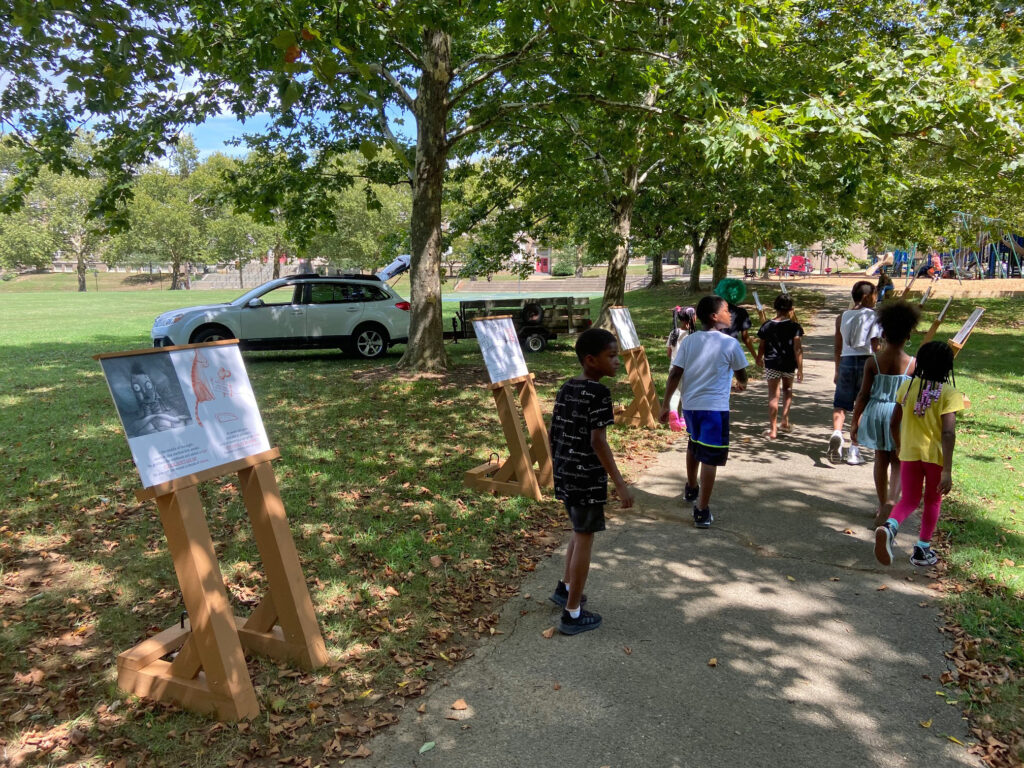
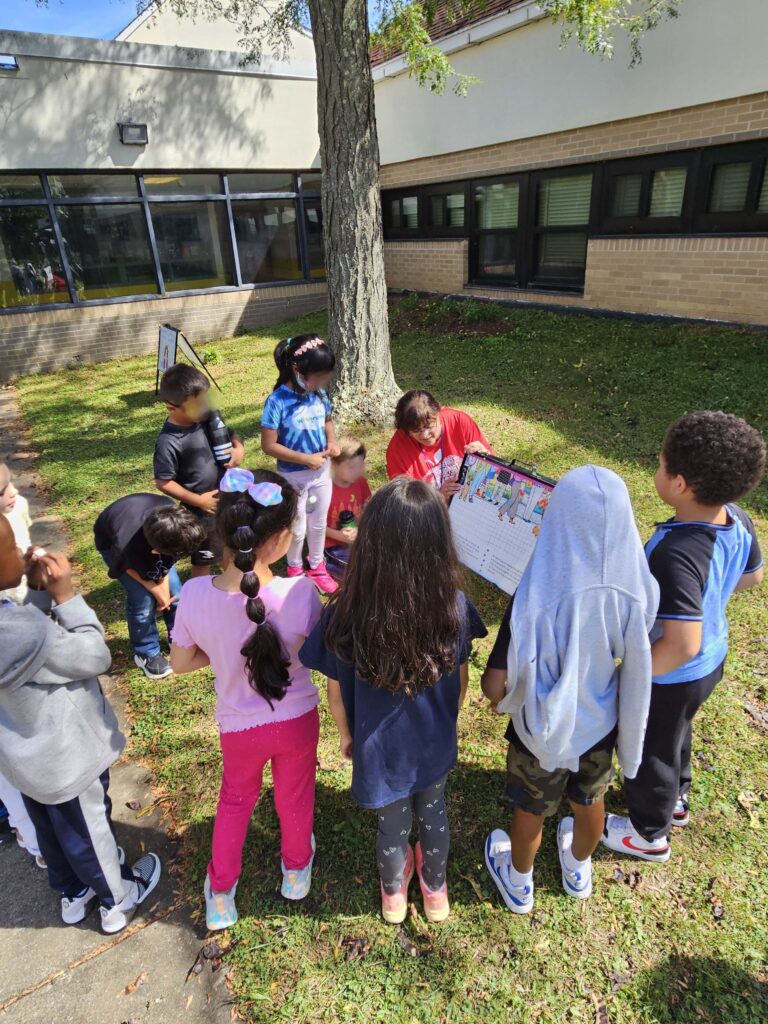
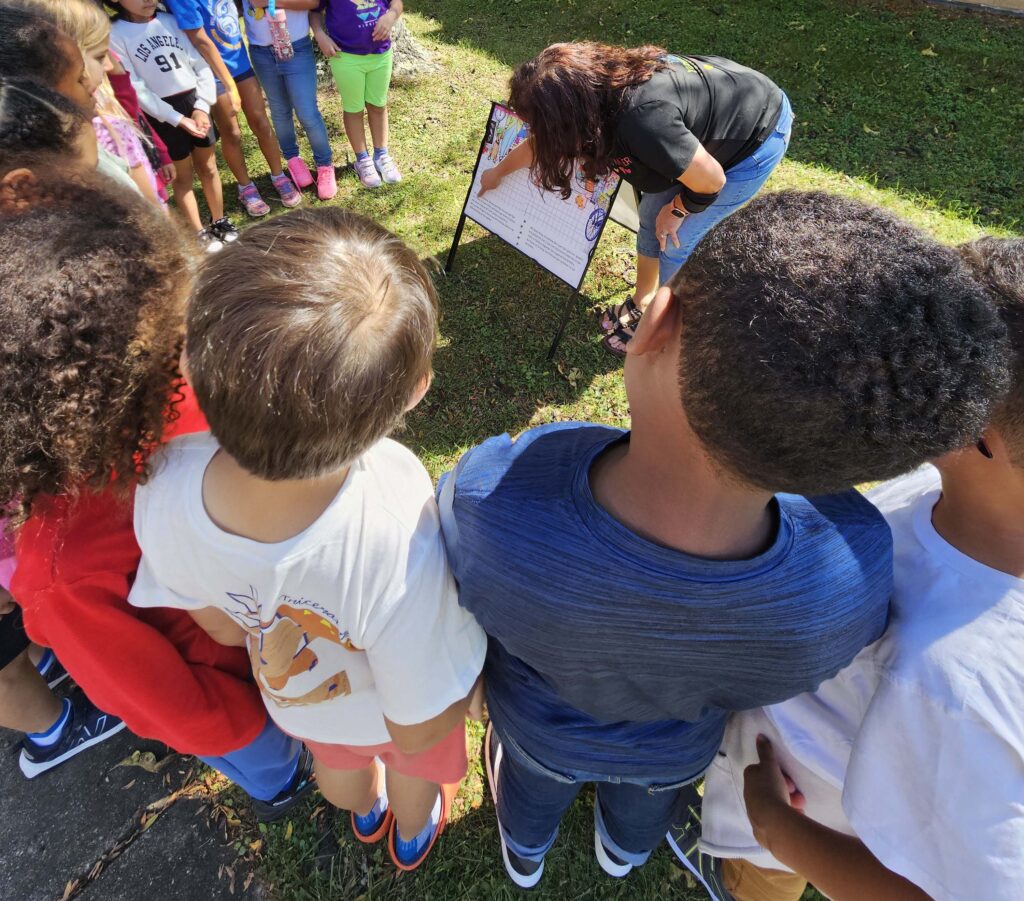
In an era where education thrives on creativity, inclusivity, and hands-on engagement, Bilingual Book Walks are emerging as a powerful resource for schools. These immersive installations transform children’s stories into larger-than-life learning experiences, blending literacy, art, and curriculum-based themes into a single, interactive journey. Let’s dive into how these innovative displays captivate students, support teachers, and unite communities.

What Exactly are Bilingual Book Walks?

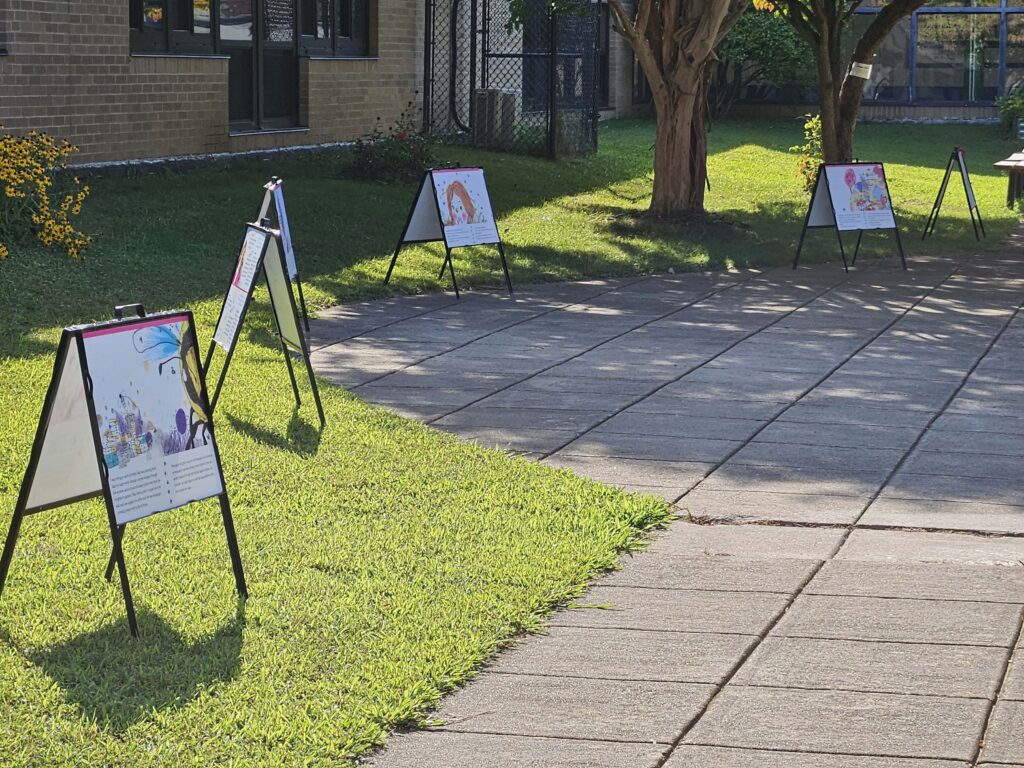
A Bilingual Book Walk is a curated installation that breaks a children’s book into 16 vibrant panels (each 24”x18”), displayed sequentially on durable wooden or metal stands outdoors or mounted on wall frames indoors. Each panel features:

  • A section of the story in two languages (default: English and Spanish, though they are customizable to any language).
  • Eye-catching illustrations that bring the narrative to life.
  • Optional prompts or questions to spark discussion, critical thinking, or ties to classroom subjects.

Designed for flexibility, these walks can be set up in school gardens, hallways, libraries, or community spaces, creating a “story trail” that families and students explore together.

Why Schools Love Bilingual Book Walks

1. Curriculum Connections Made Easy

Teachers use Book Walks to reinforce lessons in:

  • Environmental Science: Pair with books about ecosystems or conservation (e.g., bees, habitats, tree ecosystems, recycling, etc.).
  • Social-Emotional Learning (SEL): Choose stories about empathy, resilience, self- awareness, etc.
  • Art & Storytelling: Analyze illustrations or inspire students to create their own bilingual story panels.

2. Supports Multilingual Learners

  • English Language Learners (ELLs) gain confidence by reading in their native language while practicing English.
  • Native English speakers explore new languages in a low-pressure, visual context.

3. Engages All Learning Styles

  • Visual learners connect with bold illustrations.
  • Kinesthetic learners thrive while moving between panels.
  • Social learners discuss themes with peers or family.

4. Fosters Family and Community Involvement

  • Families bond over stories in their home language, breaking down barriers to school engagement.
  • Schools can partner with local artists to design panels or host cultural storytelling events.

5. Durable and Adaptable

  • Weather-resistant outdoor stands or indoor frames ensure year-round use.
  • Themes and languages rotate to reflect curriculum needs or community diversity.

Real-World Applications in Schools

  • Science Class: After reading a Book Walk about pollinators, students explore the school garden to spot real-life bees and butterflies.
  • Art Project: Kids create their own bilingual story panels inspired by the walk, displayed in a school-wide exhibit.
  • Family Literacy Night: Parents and children follow the Book Walk together, with teachers providing discussion guides in multiple languages.

Ready to Launch Your Own Book Walks?

Bilingual Book Walks are more than just stories—they’re gateways to curiosity, inclusion, and academic growth. Whether you’re highlighting STEM themes, SEL, or cultural heritage, these installations turn school spaces into dynamic, interactive classrooms.

Next Steps:

Schedule a meeting with a Book Walk specialist at Syncretic Press. Use the code LTL5% for a 5% discount on a purchase for your school or institution. Agenda items will include:

  • Displays that best adapt to your goals and budget
  • Review purchase and rental options for stories
  • Explore grant opportunities for funding the project

Transform your school’s corridors, courtyards, and classrooms into bilingual learning adventures. Let’s walk the talk—one panel at a time! 🌟📖🌍

Curso de perfeccionamiento del Español con el teatro

teatro

by Mercedes Pellitero (LTL Contributor)

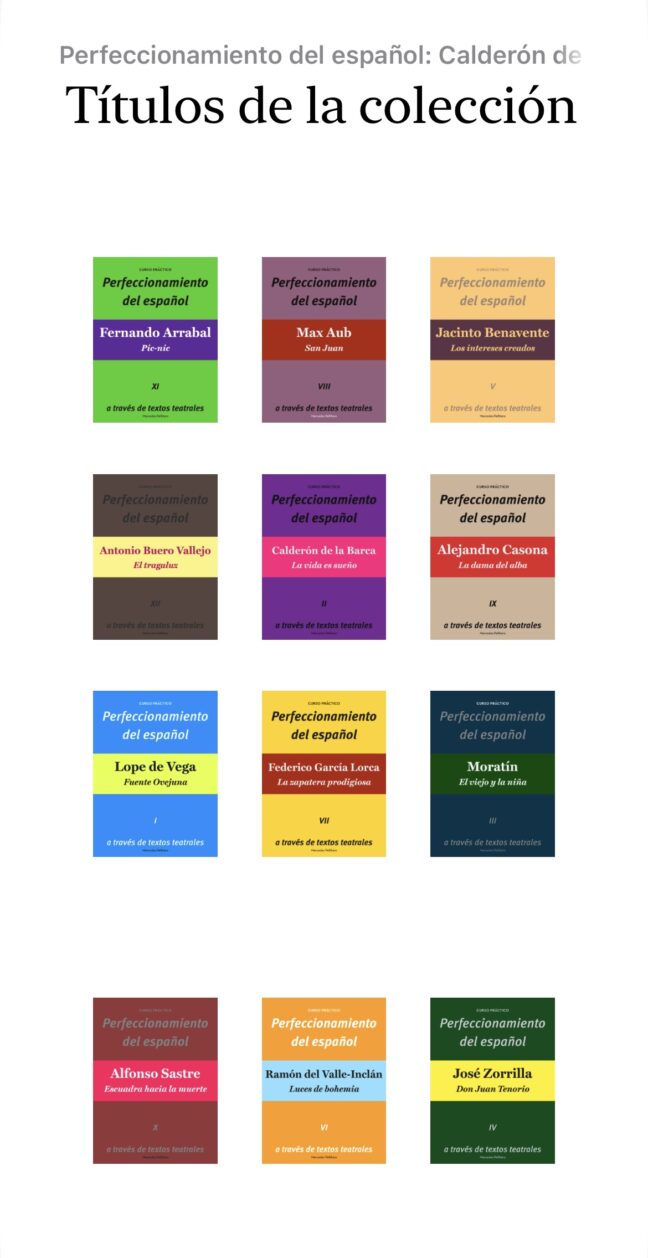
Este Curso, “Practicar el español con el teatro: doce autores del teatro clásico,” nace de la experiencia de muchos años de enseñanza de la lengua española en institutos y universidades.

Seleccionar material útil para los profesores y atractivo para captar la atención y el interés de los alumnos ha sido siempre el objetivo principal que me he propuesto a la hora de escribir un texto para la enseñanza del español. El teatro me ha interesado siempre.

En realidad son muchas las instituciones que aconsejan utilizar el teatro para enseñar el español, pero son muy pocos los libros que ponen en práctica este consejo, y por esta razón he realizado este Curso.

Mi primera experiencia en la enseñanza del español con un texto teatral fue con mis alumnos del Instituto Sthendal de Roma, leyendo “Pic Nic” de Fernando Arrabal. Recuerdo todavía con placer la atención con la cual los alumnos participaban en la lectura y después repetían las frases del texto. Continué el experimento con “La vida es sueño” de Calderón de la Barca y a pesar de ser un texto de difícil comprensión lingüística resultó fácil subsanar el problema con alguna aclaración previa. El diálogo entre el padre -el rey Basilio- y su hijo Segismundo dio pie para muchos otros diálogos.

Los autores y obras elegidas son:

Cada uno de los capítulos del libro impreso o cada ebooks contiene los siguientes apartados: breve biografía del autor, características de su obra dramática, presentación de la obra elegida y un fragmento antológico precedido de un glosario.

Sobre cada uno de dichos apartados se realizan ejercicios de comprensión, expresión y elaboración,

Se puede iniciar el estudio de los autores independientemente del orden cronológico, porque no existe una dificultad creciente desde el punto de vista gramatical y su elección está dictada únicamente por las preferencias individuales.

El Curso está disponible como libro impreso, conteniendo los doce autores, en Amazon y como ebooks, conteniendo un solo autor, en Amazon, Google y Apple:

– va dirigido principalmente a los estudiantes de idiomas de las clases superiores y de la Universidad,

– utiliza textos del teatro clásico español de los siglos XVII-XX.

– su objetivo es mejorar la pronunciación, ejercitar la memoria, facilitar la comprensión, buscar el equilibrio entre la regla establecida y la naturalidad expresiva, dando prioridad a la comunicación y mostrar la realidad socio-cultural.

Con este curso se logra el objetivo principal de captar la atención y el interés de los alumnos para aprender el idioma español.

Equipazo: cómo expresar ayuda y cooperación – intermediate

cooperacion

by Ramón Clavijo (LTL Contributor)

El aprendizaje, para ser efectivo, ha de ser cooperativo. De este modo, se fomenta el sentido de la responsabilidad y la conciencia de grupo, lo que lleva, finalmente, a la resolución de la tarea asignada en el aula. La cooperación es fundamental para lograr los objetivos.

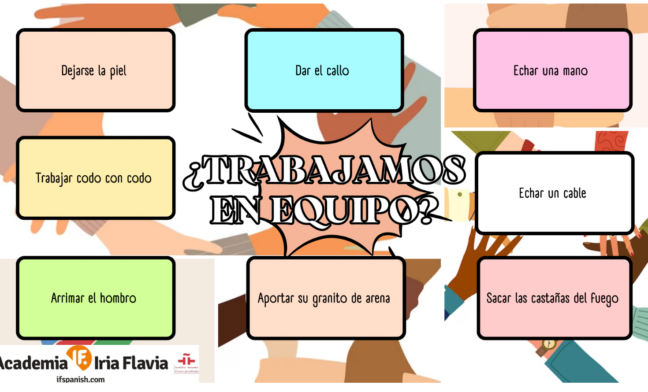
🤝 Cuando divides a tus estudiantes en grupos de trabajo, todos han de arrimar el hombro, esforzarse por igual, repartirse tareas y trabajar codo con codo. Cada integrante tiene sus propias habilidades, con las que puede aportar su granito de arena al conjunto del grupo.

💪 La tarea deberá realizarse de manera eficaz, por lo que han de dejarse la piel, poner todo su esfuerzo y dar el callo para resolver los problemas que se les planteen.

🫳 Habrá también quienes necesiten ayuda. A esas personas hay que echarles un cable, aunque ese sentido de la responsabilidad del que antes hablábamos debe hacerles ser conscientes de que no deben esperar que sus compañeros les saquen siempre las castañas del fuego.

🫶 O, más que un equipo, un equipazo.

Son muchas las expresiones que tenemos en español para expresar ayuda y cooperación. Aquí te presentamos unas cuantas, de las que esperamos que te sirvan para aumentar el léxico de tus alumnos y hacerles ver el valor de trabajar como un equipo.

Enseñar a Empatizar / Teach to Empathize

by Justa Rebollo Paz (LTL Contributor)

Empatizar

¡Qué verbo gigante es empatizar!

Me parece una de las más lindas cualidades que puede tener una persona…. empatizar, ponerse en el lugar del otro con intención, entender a una persona desde su punto de vista en vez del propio.

Howard Gardner habla de inteligencia interpersonal y se refiere a la habilidad cognitiva de una persona para comprender las emociones de otra.

Por ejemplo… solemos decir “siento mucho que tu perro haya muerto”. Y esto está bien…. pero una persona con mayor empatía, podría decir: “Te debés haber sentido muy mal con la muerte de tu perro”.

Aunque la diferencia pueda parecer sutil, la persona empática puede comprender cómo se siente la otra persona.

La empatía es fundamental. Sin embargo, no es una habilidad que se dé de forma natural en los niños pequeños. En los primeros años de vida, los niños son inherentemente egocéntricos. Tienden a pensar solo en sí mismos y en sus propias necesidades, sin pensar en cómo su comportamiento impacta en los demás.

¿Como educar a nuestros hijos o alumnos a empatizar?

Hablar acerca de las emociones y sentimientos, propios y de los otros. Si vuelvo del trabajo cansada, VALE decirlo, con palabras. Si estoy triste o angustiada, es mejor mostrar mis emociones y no disimularlas.

Preguntarles cómo se sienten ayudándolos a poner en palabras las distintas emociones.

Contándoles cuentos con situaciones cotidianas (aunque fueran animales los protagonistas) y preguntarles “cómo se habrá sentido el patito al no encontrar a su mamá pata” por ejemplo.

Elogiarlo cada vez que muestre empatía por los demás, haciéndole ver que su gesto o actitud es muy valiosa para el otro (y para él/ella)

Las obras de títeres (preparadas o caseras) en donde se actúan situaciones similares a las que ellos pueden estar viviendo, con ejemplos claros de empatía.

¡Ojo con tus expectativas! que sean acordes a la edad de cada niño.

¡A ser empáticos también se educa!


empatizar

Empathize

What a giant verb!

I think it is one of the most beautiful qualities a person can have… empathize, put yourself in somebody else’s place with intention; understand a person from their point of view instead of your own.

Howard Gardner talks about interpersonal intelligence and refers to the cognitive ability of a person to understand somebody else’s emotions.

For example, we often say, “I’m so sorry your dog died.” And this is fine… but a person with greater empathy might say, “You must have felt very bad about your dog’s death.”

Although the difference may seem subtle, the empathetic person can understand how the other person feels.

Empathy is essential. However, it is not a skill that comes naturally to young children. In the first years of life, children are inherently egocentric. They tend to think only of themselves and their own needs, without thinking about how their behavior impacts others.

How do we educate our children or students to emphasize?

Talk about emotions and feelings with your students, both your own and those of others. If they come to school tired, it is OK to say it with words. If they are sad or distressed, it is better to show their emotions than to hide them.

Ask students how they feel, helping them to put different emotions into words.

Tell them stories with everyday situations (even if the protagonists were animals) and ask them “how did the duckling feel when he couldn’t find his mother duck?” for example.

Praise them every time they show empathy for others, making them see that their gesture or attitude is very valuable for the other (and for him/her)

Use puppet shows (prepared or homemade) where situations similar to those they may be experiencing are acted out, with clear examples of empathy.

Note: Be careful with your expectations! Make sure they are appropriate for the age of each child.

Empathy is also taught and can be learned!